


Last updated: November 2026
Apricot is the golden summer fruit Armenians call tsiran (ծիրան). Apricot is easy to know by its scent and by the soft orange skin with a red cheek. If you come in June, you will see it piled in boxes at the markets.
The Latin name is Prunus armeniaca, the Armenian plum. Below are the season, the main varieties, drying, and what the sources say about its origin. It belongs on the table of Armenian cuisine.
Key facts
- Name: tsiran (ծիրան); Latin Prunus armeniaca
- Season: late May in Meghri, June and July in the Ararat valley; small lots in August and September (2012 review)
- Varieties: Yerevani (Shalakh), Sateni, Spitak
- Per 100 g raw: 48 kcal, vitamin A, vitamin C and potassium (USDA)
- Wood: the body of the duduk
- Exports: more than 40,000 tonnes by late July 2025, about 86 percent of it to Russia
In this guide · 5 sections
Apricot in Armenia
For Armenians, tsiran has long been more than an orchard fruit. In 2010 Eva Rivas sang Apricot Stone for Armenia at the Eurovision final in Oslo. She finished seventh.
Among the plums, Pliny praises only the Armenian one for its smell, a fruit from foreign parts.
The soft wood of the apricot tree is the body of the duduk. UNESCO says so in the 2008 listing of the instrument. The reed, called ghamish, grows by the Arax River, and the wood is apricot.
What a serving contains
In 100 grams of raw fruit, the USDA record gives 48 kilocalories. The same line lists about 96 micrograms of vitamin A, 10 milligrams of vitamin C, and 259 milligrams of potassium. That is the makeup of a serving, not a promise to treat illness.
Pages online still claim that apricot prevents cancer and raises hemoglobin. The nutrient table does not say that. The old line, over 42 kilocalories, is replaced here by 48.
Where the apricot comes from
However, botanists do not treat Armenia as the first home of the species. Following Vavilov, a 2020 genetics paper ties wild apricot to the Ili valley, by the Tien Shan. China and Central Asia are the two old centres of domestication.
Armenia is a different chapter. The Romans already knew the fruit by an Armenian name, and the Ararat valley has grown it for a long time. So the Latin name remembers the road into Europe, not the birthplace of the species.
The old page puts Alexander the Great and Lucullus in one year. Alexander lived centuries earlier. Pliny’s cherry, not the apricot, came from Pontus with Lucullus, in the year of the City 680, that is 73 BC.
Stones from Garni and Shengavit
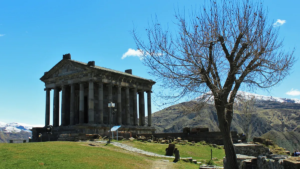
A horticulture paper cites charred stones from two digs. They come from Shengavit, near Yerevan, and from the lower layers at Garni Temple. Sardarian published Shengavit in 1967, and Arakelyan published Garni in 1964.
Slow Food also writes of stones found near the temple at Garni. Both sources agree that apricots were grown here more than 3,000 years ago. Babken Arakelyan was an archaeologist, not a naturalist.
Varieties and the season
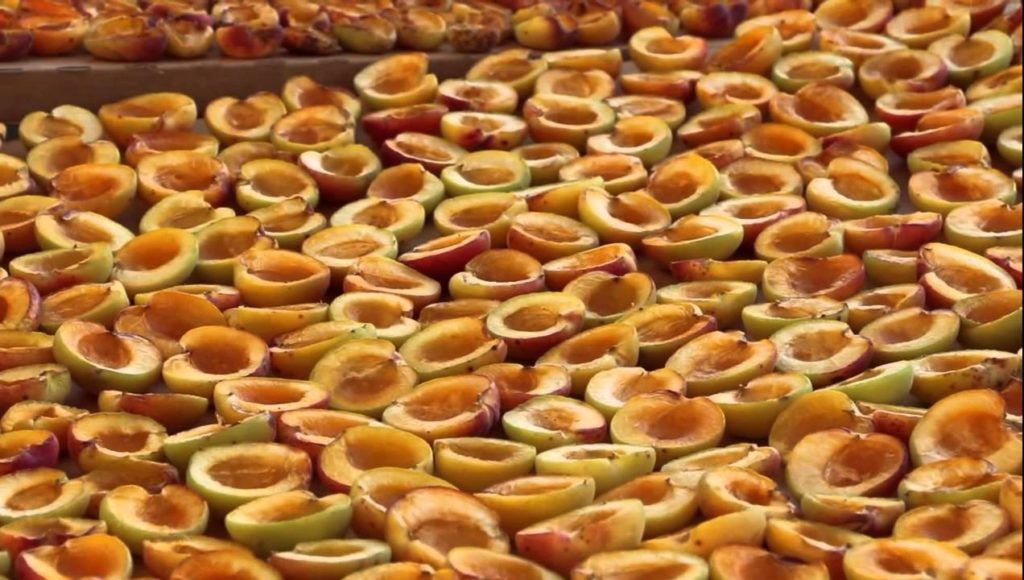
The market season is long, and it is not the same in every valley. A 2012 Shen review says the fruit ripens in Meghri, in the south, at the end of May. June and July fill the Ararat valley, and August and September leave only small lots.
The same older paper names four growing zones of its time. They are the Ararat valley and its foothills, Zangezur, and Yeghegnadzor. Do not draw today’s orchard map from those lines, because the report is old.
Yerevani, Shalakh and Sateni
The valley’s main variety is Yerevani, also called Shalakh. In the 2012 review it made up about 85 percent of the orchards in Ararat and Armavir. The fruit has an aroma compared to pineapple, and it travels better than the others.
A Shalakh fruit usually weighs 80 to 100 grams and is yellow, with a light blush. Slow Food puts its ripening in the first ten days of July. The flesh averages 11.3 percent sugar and about 0.63 percent acid.
Farms dry the Sateni variety. The same 2012 review gave it about 500 hectares, because the flesh keeps its taste as the halves dry. Fresh exports then were mostly Yerevani. The review names Spitak as the third variety in wide demand.
- Yerevani, or Shalakh – the main Ararat valley variety, for the fresh table and for travel
- Sateni – the variety the 2012 review called best for drying
- Spitak – the third name on that short list of varieties in demand
How people eat apricot
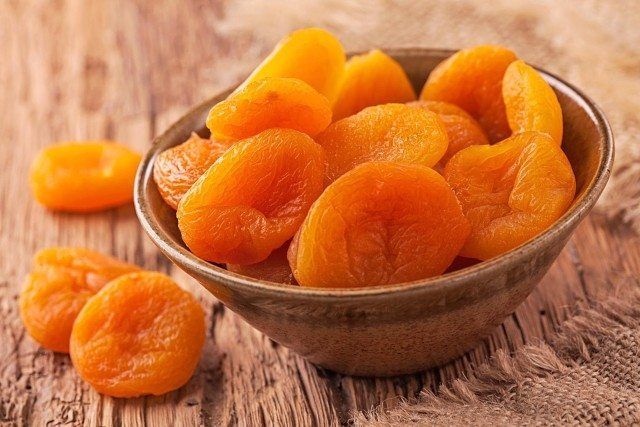
People eat fresh apricot in season, from the market and from the tree. Part of the crop is dried for winter. Another part is cooked into jam and compote. Both the farm review and Slow Food describe the fruit this way.
Dried tsiran is sold in bags, and visitors take it home. In November 2015 Conan O’Brien and Sona Movsesian stopped at a Yerevan market. In the Team Coco piece they were buying dried apricot.
Jam
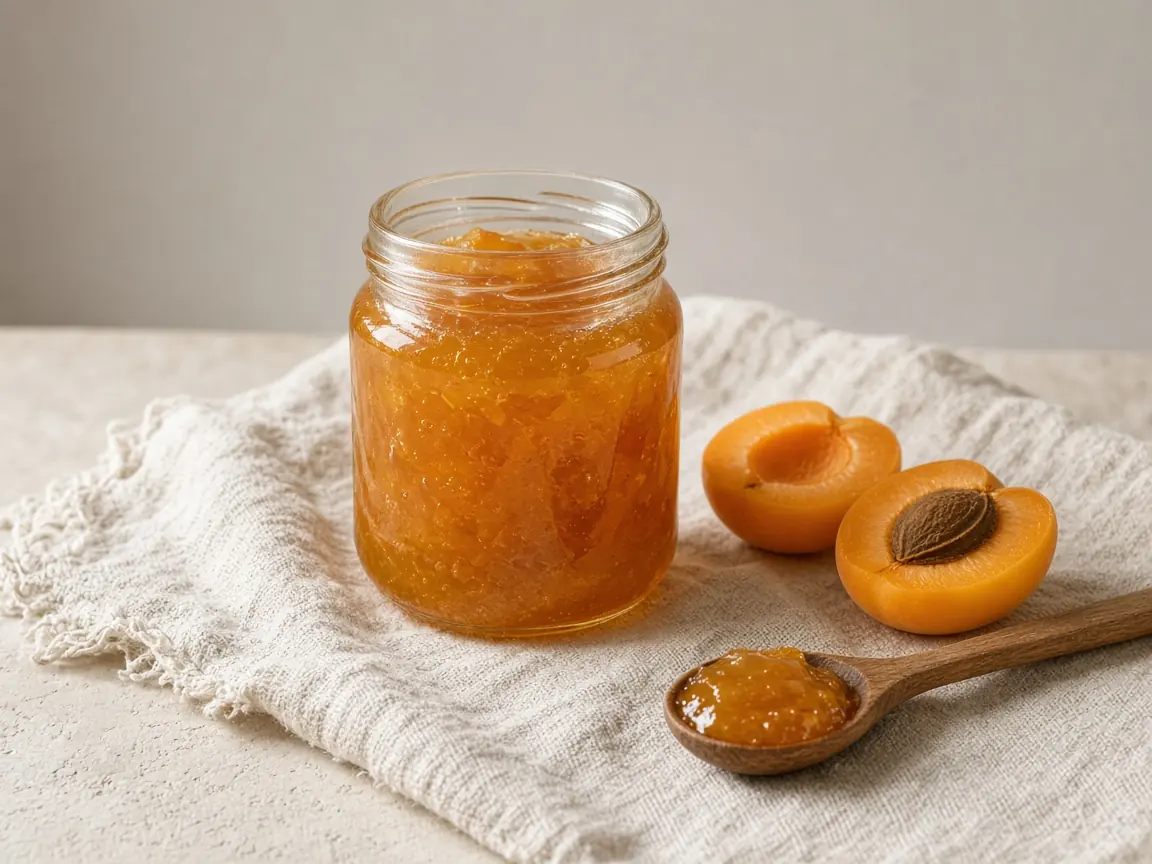
Jam and compote are kept for winter, once the fresh fruit is gone. Slow Food notes the firm flesh of Shalakh, which suits jam. This page gives no juice recipe, because the sources do not list quantities.
Where to try apricot
In Yerevan you will find fresh fruit at the markets in season, and dried tsiran all year. In summer, stalls also stand on the roads toward the monasteries. Choose a soft fruit. When it is warm, it already smells.
By late July 2025, Armenia had exported more than 40,000 tonnes of apricots. Two reports give slightly different totals, one from the Ministry of Economy and one from customs data. Both put Russia far ahead, with about 86 percent, and Georgia second.
The old line, 27,800 tonnes in the first eight months, gave no year. It cannot be checked, so it is gone. The ministry’s 2025 report adds a comparison: by 1 August 2023 exports had already reached 88,652 tonnes.
Try a fresh apricot at a market in June, or take home a bag of dried tsiran. If you go on to Garni, remember the stones from the lower layers of the fortress.
Questions visitors ask
Is Armenia the home of the apricot?
The Latin name points to Armenia, and the Romans called the fruit Armenian. Genetic work places the origin of the species in the Ili valley and in China. The Ararat valley is an old region of growing, not the first centre.
When is apricot season?
The 2012 review has the early fruit ripening in Meghri at the end of May. In the Ararat valley the busy months are June and July. Slow Food puts Shalakh in the first ten days of July.
How is Shalakh different from Sateni?
Shalakh, also called Yerevani, is the main fresh variety of the valley, and it is the one that travels. The 2012 review calls Sateni best for drying. Spitak is the third name on that list.
Sources
- How many apricots Armenia exported, and to which countries, Sputnik Armenia, 25 July 2025, quoting the Ministry of Economy
- Apricot exports reach more countries, but the volume fell fivefold, Factor TV, 31 July 2026, with State Revenue Committee data for 2025 (Armenian)
- Genetic diversity, population structure, and relationships of apricot, Horticulture Research, 2020
- Apricot selection in Armenia, S. L. Agulian and co-authors, ISHS
- Pliny, Natural History, book 15, chapter 12, Bostock translation, Perseus
- Pliny, Natural History, book 15, chapter 30, the cherry and Lucullus, Perseus
- Eva Rivas — Apricot Stone, Eurovision, Oslo 2010
- Duduk and its music, UNESCO, 2008
- Apricot Value Chain in Armenia, Shen NGO, Yerevan, 2012
- Shalakh Apricot, Slow Food Ark of Taste
- Conan and Sona Visit an Armenian Marketplace, Team Coco, 17 November 2015
- Apricots, raw, FDC 171697, USDA SR Legacy as printed by foodinfo.us
More on Armenian food, places and traditions is on iArmenia.

1 thought on “Apricot”