Last updated: 11 November 2026· Facts checked November 2026
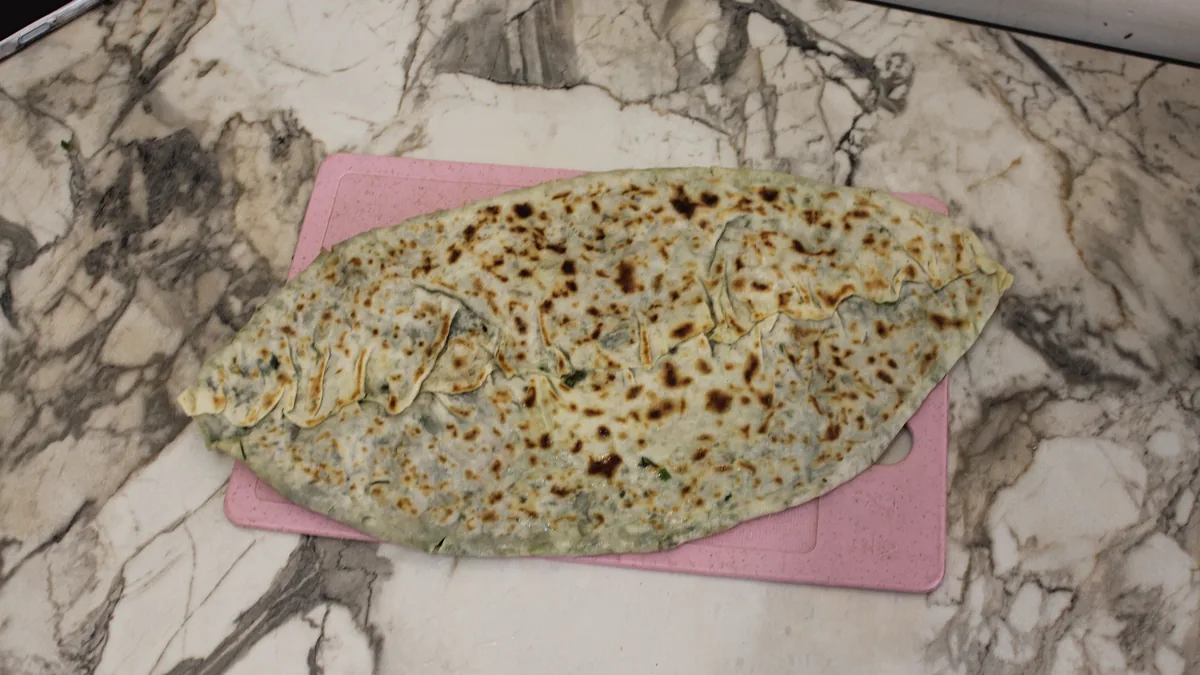
Zhingyalov hats (Ժենգյալով հաց) is a thin flatbread folded around a filling of chopped herbs and greens, then cooked on a hot griddle. The name means “bread with greens” in the local dialect of Artsakh (Karabakh), where the dish comes from. It is also baked in Syunik in southern Armenia.
The filling has no fixed recipe. Cooks mix whatever greens are in season, often 10 to 20 kinds. To make it at home, you need flour, water, salt, a big pile of greens, spring onions, a little oil and a dry frying pan.
Key Facts
- Type of dish: unleavened flatbread stuffed with herbs and greens; no meat, and no dairy in the basic version
- From: Artsakh (Karabakh) and Syunik
- Greens: usually 10–20 kinds; some cooks name more than two dozen
- Season: traditionally early spring and autumn, when wild greens grow; made all year with garden greens
- Prep time: about 45–60 minutes, most of it washing and chopping
- Cook time: about 5 minutes per bread
- Makes: 8 flatbreads
- Where to taste it: small bakeries and snack bars in Yerevan, many run by cooks from Artsakh
In this guide · 6 sections
What Is Zhingyalov Hats?
The dough is rolled out very thin and a heap of dressed greens goes in the middle. Then the edges are pinched shut over the filling and the bread is pressed flat. Traditionally it is cooked on a saj, a domed iron griddle, or in a tonir, the clay oven also used for lavash.
You eat it hot, straight from the griddle. In Artsakh it was often served with red wine. Because the basic version has no meat or dairy, it is a popular dish during Lent. For how it fits into the wider table, see our guide to Armenian cuisine.
The Name and Its Spellings
The second word, hats (հաց), is the Armenian for “bread”. Because the first word comes from a dialect, English spellings vary a lot. You will see zhingyalov hats, zhengyalov hats, jingalov hats and zhingalov khats. They all mean the same dish.
Zhingyalov Hats in Armenian Tradition
A Bread for Lean Times
Zhingyalov hats is a traditional dish of the Armenians of Artsakh. It was born of scarcity: families gathered whatever wild greens they could find and wrapped them in a little dough. An ethnographer quoted by RFE/RL says the dish first appears in writing about 200 years ago.
There is no fixed list of greens: each cook uses what grows nearby, and the mix changes with the season.
Festivals in Artsakh
Before 2020, Artsakh held spring festivals devoted to the bread. The first took place in the village of Tsakhkashat in April 2015. Later editions moved to the village of Haterk and drew visitors from abroad.
From Stepanakert to Yerevan
In late September 2023, more than 100,000 Armenians left Nagorno-Karabakh for Armenia within about a week, according to the UN refugee agency. Among them were cooks who had sold zhingyalov hats at home and in the Stepanakert market.
Many now bake it in Yerevan and in towns such as Abovyan and Etchmiadzin. For these families the bread is both a living and a link to home. As a result, it is easier to find in Armenia today than ever before.
The Herbs and Greens
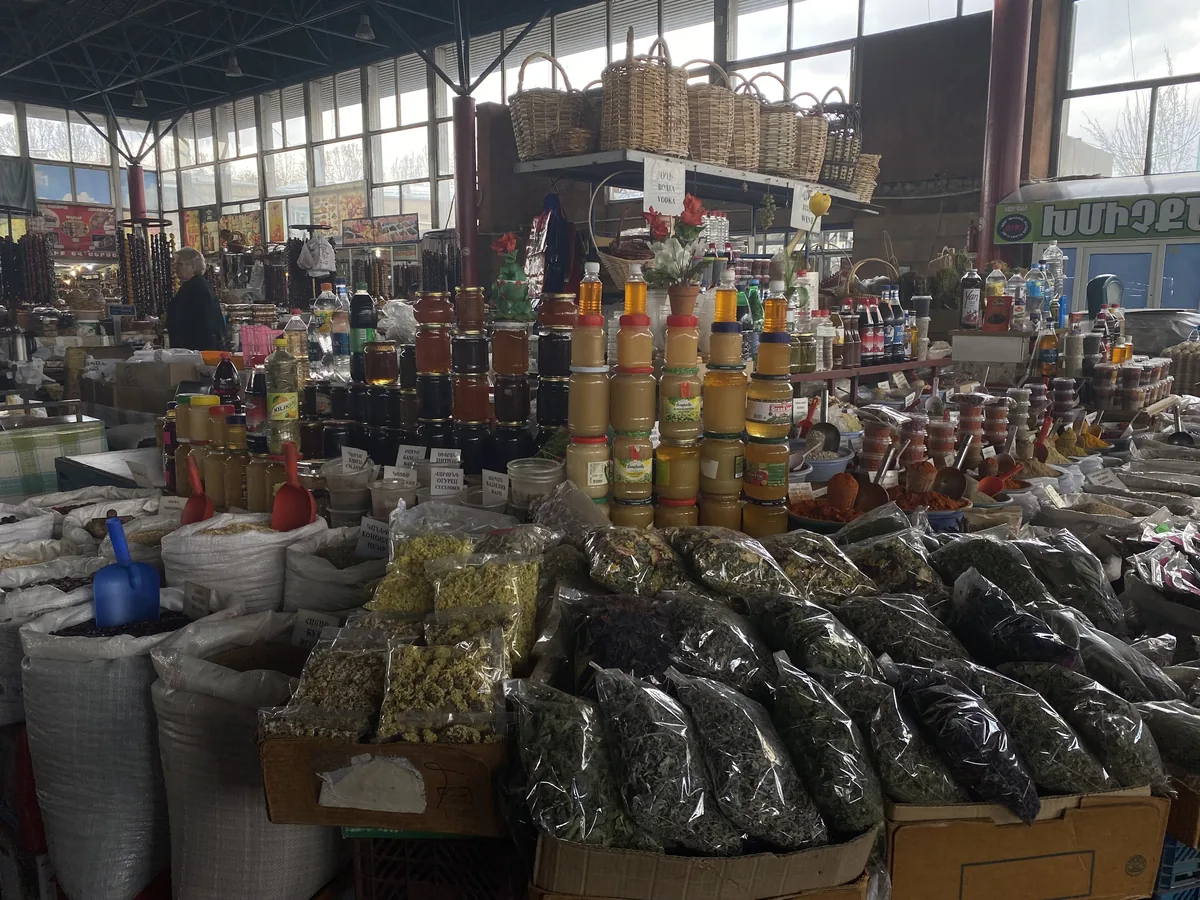
Cooks combine a mild, leafy base with smaller amounts of sour, aromatic and slightly bitter greens. These are some of the most often named, with their standard Armenian names:
| Armenian name | English | Role in the filling |
|---|---|---|
| եղինջ (yeghinj) | Stinging nettle | Base; loses its sting when cooked |
| թրթնջուկ (trtnjuk) | Sorrel | Sour, lemony |
| ավելուկ (aveluk) | Curly dock, a wild sorrel | Sour, earthy |
| ճռճռուկ (chrchruk) | Chickweed | Mild, juicy base |
| սինձ (sindz) | Goatsbeard (salsify) leaves | Mild |
| դաղձ (daghdz) | Wild mint | Aromatic, small amounts |
| համեմ (hamem) | Coriander (cilantro) | Aromatic |
| սամիթ (samit) | Dill | Aromatic |
| սպանախ (spanakh) | Spinach | Mild base |
| ճակնդեղի տերև (chakndeghi terev) | Beet leaves | Mild base; leaves only, without the stems |
| կանաչ սոխ (kanach sokh) | Spring onion | Almost always included |
A survey of Yerevan markets also lists wild chervil, shepherd’s purse and wild onions among the greens sold for the filling. Some cooks add pomegranate seeds, sour plum leather or ground barberry for extra tartness. Opinions differ on parsley: some Artsakh cooks never use it, while others do.
How to Make Zhingyalov Hats
The quantities below are a consensus of three published recipes, scaled to 8 breads. They come from the cookbook Lavash, The Vegan Armenian Kitchen and The Armenian Kitchen. The method follows the same sources.
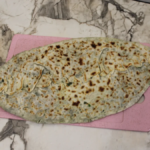
Zhingyalov Hats
Equipment
- large, heavy frying pan or griddle (saj)
Ingredients
For the dough
- 420 g plain (all-purpose) flour about 3⅓ cups, plus extra for rolling
- 280–310 ml warm water about 1¼ cups, add gradually
- 1 tsp salt
For the filling
- about 900 g mixed greens and herbs trimmed and chopped, roughly 1 kg as bought; at least 5–6 kinds, see the tips
- 6–8 spring onions green and white parts
- 3 tbsp sunflower or other neutral oil
- about 1½ tsp salt add just before filling
- black pepper to taste
- 1–2 tbsp lemon juice optional, for sourness if you have no sorrel
- paprika or chilli flakes optional, a pinch
Instructions
- Make the dough. Mix the flour and salt, then add the water a little at a time. Knead for 4–5 minutes into a soft, smooth dough. Cover and rest for 20–30 minutes.
- Prepare the greens. Wash them and dry them well, because wet greens tear the dough. Remove tough stems. Wear gloves for nettles until they are chopped.
- Chop. Chop all the greens and the spring onions finely by hand.
- Dress the filling at the last minute. Just before shaping, mix the greens with the oil, salt, pepper and any lemon or paprika. Salt draws water out of the leaves, so don’t do this early.
- Roll out. Divide the dough into 8 balls. Roll each one on a floured surface into a thin round about 20 cm (8 in) across.
- Fill and close. Pile a generous handful of filling in the middle, leaving a border. Bring the edges up over the filling and pinch them together along the centre. Turn the bread over and press it flat with your palm. Alternatively, fill one half and fold it into a half-moon.
- Cook. Heat a large, dry, heavy frying pan or griddle over medium-high heat. Cook each bread for 2–4 minutes per side over medium heat, until browned in spots and cooked through.
- Serve hot. Brush with a little butter or oil if you like. Stack the breads between clean towels to keep them soft, and eat them warm.
Notes
- Substitutes for wild greens – build the base from spinach, chard or beet leaves. Then add something sour (sorrel, or lemon juice), something aromatic (coriander, dill, tarragon or chervil) and something peppery (watercress or radish leaves).
- Thin dough – dough rolled too thick, or cooked too briefly, stays doughy.
- Freezing – cool the cooked breads completely, freeze them, and reheat from frozen in a hot oven.
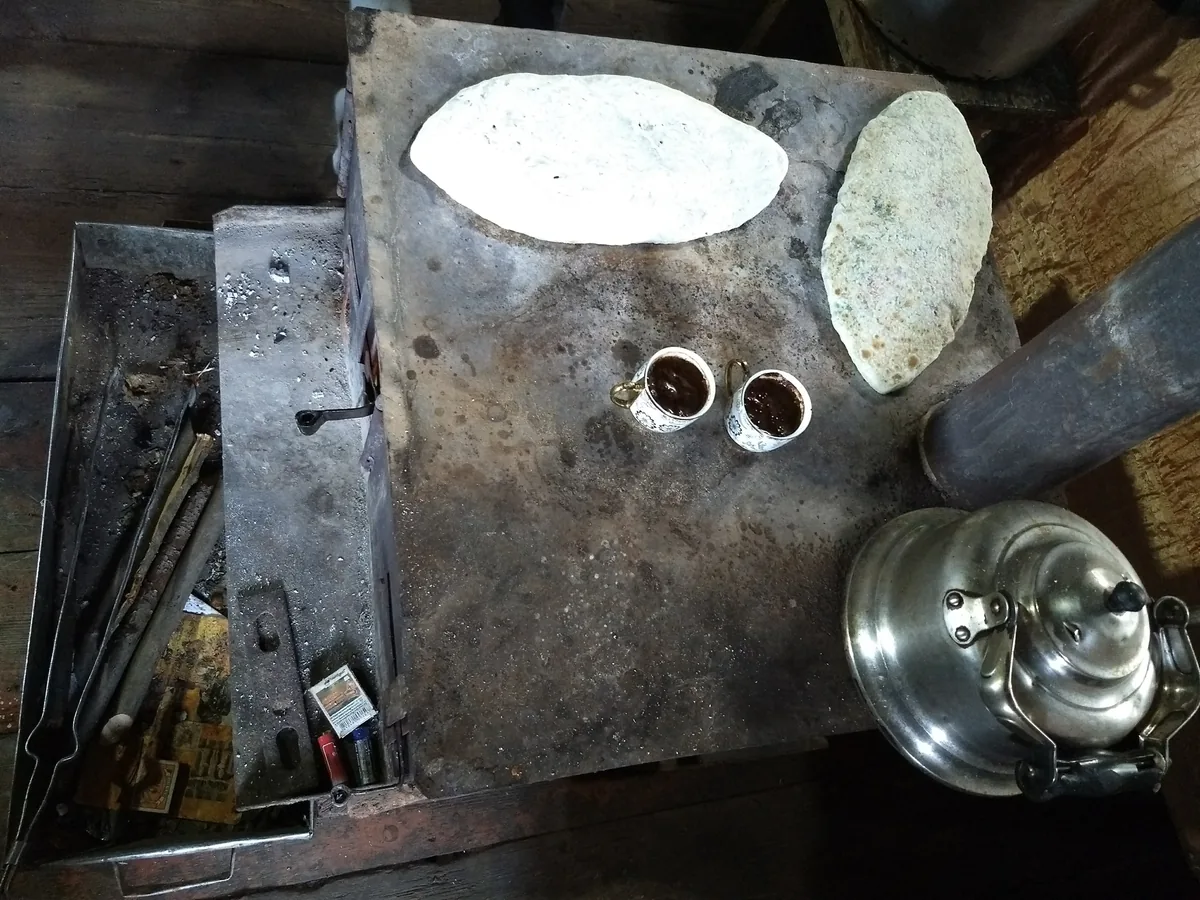
Where to Taste Zhingyalov Hats
In Yerevan, zhingyalov hats is sold by small bakeries, snack bars and street stalls, many of them opened by cooks from Artsakh since 2020. Small places like these open and close often, so this guide does not list names. Look for the words Ժենգյալով հաց on a sign or menu.
It is cheap street food: in 2024, a stall at a Yerevan metro station charged 500 AMD (about $1.40) per bread.
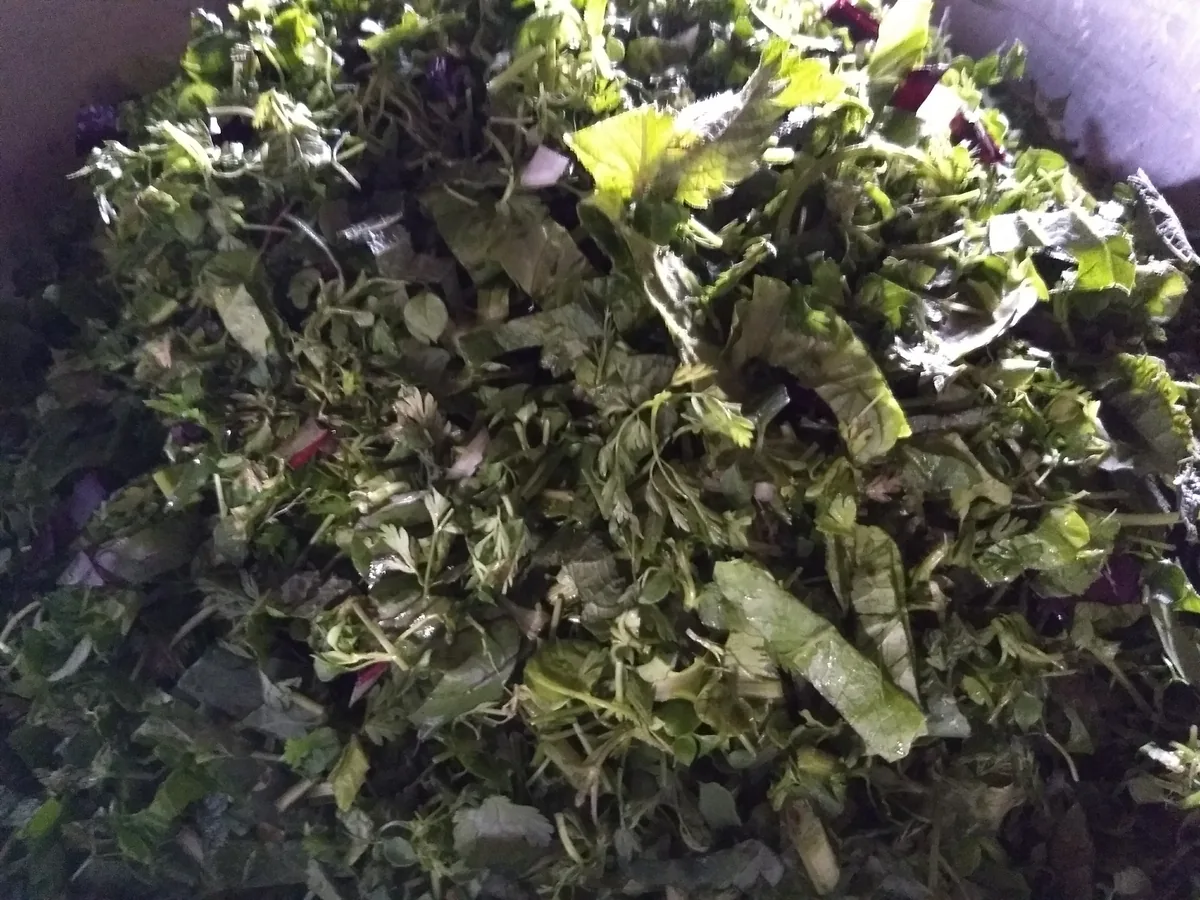
So, if you are in Yerevan, look for a bakery with a griddle and a pile of greens on the counter, and try zhingyalov hats while it is hot. At home, bake a batch with whatever greens you can find. That is exactly how Artsakh cooks have always made it.
Questions Visitors Ask
How do you pronounce zhingyalov hats?
Roughly “zhen-gya-LOV hats”, with “zh” as in “measure”. Spellings vary because the name comes from the Artsakh dialect.
Is zhingyalov hats vegan?
The basic version is: flour, water, salt, greens and oil. Some cooks add feta or brush the bread with butter, so ask if it matters to you.
How many herbs go into zhingyalov hats?
Usually 10 to 20 kinds, and some cooks speak of more than two dozen. At home, five or six well-chosen greens give a good result.
Sources
- Ժենգյալով հաց (Zhingyalov hats), JAMnews (read 9 November 2026)
- Ժենգյալով հաց – jingalov hats, American University of Armenia, 1000 Leaf project (read 9 November 2026)
- Jingalov Hats: The Flatbread Creating A Lifeline For Armenia’s Karabakh Refugees, RFE/RL, 5 March 2024 (read 9 November 2026)
- Wild plants and fungi sold in the markets of Yerevan (Armenia), Journal of Ethnobiology and Ethnomedicine, 2020 (read 9 November 2026)
- Jingalov Hats (Flatbreads Filled with Greens), from Lavash by Kate Leahy, John Lee and Ara Zada, via Foodwise (read 9 November 2026)
- Jingalov Hats (Armenian Stuffed Flatbread), from The Vegan Armenian Kitchen by Lena Tashjian, via Oldways (read 9 November 2026)
- Jingalov Hats, The Armenian Kitchen (read 9 November 2026)
- Recipe Corner: Serge Madikians’s Jingalov Hats, Armenian Mirror-Spectator, April 2023 (read 9 November 2026)
- The Hirshon Armenian Zhingyalov Hats, The Food Dictator (read 9 November 2026)
- Karabakh leader attends Zhengyalov Hats festival, ARKA, April 2015 (read 9 November 2026)
- Second Zhingyalov Hats festival in Haterk, Artsakhpress (read 9 November 2026)
- Karabakh emergency escalates, thousands still pouring into Armenia, UN News, September 2023 (read 9 November 2026)
- UNHCR Armenia Factsheet, February 2024, UNHCR via ecoi.net (read 9 November 2026)
- Nagorno-Karabakh’s Armenians Struggle to Cling to Their Identity, OC Media via Armenian Mirror-Spectator, January 2025 (read 9 November 2026)
- Knights of Vartan Launches Economic Sustainability Program for Artsakh Refugees, Asbarez, 2024 (read 9 November 2026)
- Wiktionary entries for թրթնջուկ, ավելուկ, սինձ, համեմ, սամիթ, սպանախ, ճակնդեղ, տերև, սոխ (read 9 November 2026)
- Central Bank of Armenia exchange rate, 1 USD = 360.43 AMD on 9 November 2026
Discover more Armenian food, places and traditions on iArmenia.