Last updated: November 2026 · Facts checked 11 November 2026
The Spitak Earthquake struck northern Armenia at 11:41 on 7 December 1988. In less than a minute it destroyed the town of Spitak and badly damaged Leninakan, today Gyumri, and Kirovakan, today Vanadzor. The official death toll is 25,000, and other estimates run higher.
Every year on 7 December, Armenia remembers the victims. This page explains what happened, why so many buildings fell, how the world answered, and where you can learn about it today.
In this guide · 6 sections
Background
Armenia lies where the Arabian plate presses against the Eurasian plate. As a result, the region has known strong earthquakes for centuries. A US Geological Survey note lists one in 893 that killed an estimated 20,000 people, and another in 1667.
In 1988 Armenia was a Soviet republic, and the year was already tense. Since February, huge crowds had gathered in Yerevan over Nagorno-Karabakh. In November a state of emergency and a night curfew were declared. Then, on a cold December morning, the ground moved.
What Happened on 7 December 1988
The Shock (11:41)
The earthquake began at 11:41 local time, 07:41 UTC. Its surface-wave magnitude was 6.8, and the source lay only about 5 km deep. Because the source was so shallow, the Institute of Geophysics and Engineering Seismology in Gyumri says the shaking reached the surface almost undiminished.
The USGS records two events about three seconds apart. In fact, the fault broke the surface for about 10 km, with a step of up to 1.5 m. Four minutes later, at 11:45, a strong aftershock of about magnitude 5.8 to 5.9 struck while rescue had barely begun.
On 7 December 1988 at 11:41, a shallow magnitude 6.8 earthquake destroyed Spitak in less than a minute.
Spitak, Leninakan and Kirovakan
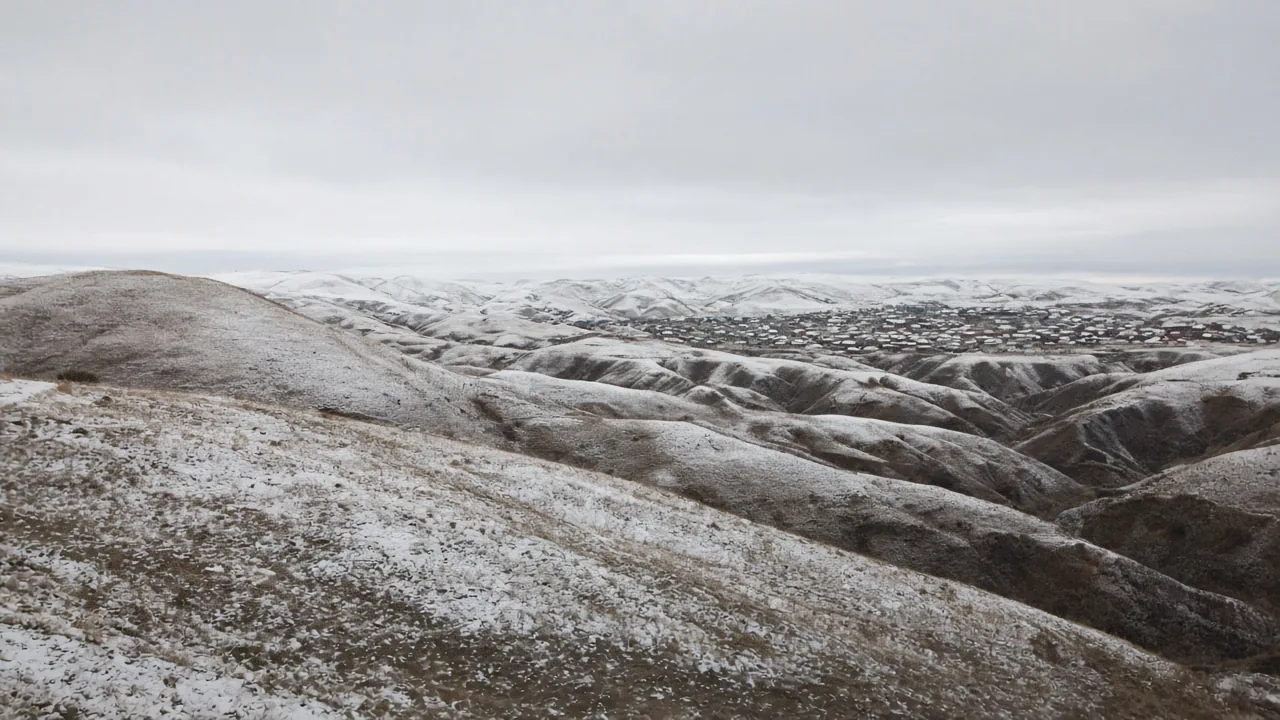
Spitak, a town of about 25,000 people, was almost completely destroyed. However, the damage reached far beyond it. A NOAA report says more than half of the buildings in Leninakan, a city of about 250,000, were damaged or destroyed.
Kirovakan and Stepanavan were also hit hard. According to the USGS, more than 20 towns and 342 villages were affected, and 58 of those settlements were completely destroyed. Also, power lines failed and landslides buried railway tracks near the epicentre.
The Human Toll
The official figure is 25,000 dead. The USGS gives at least 25,000 killed, 19,000 injured and 500,000 left homeless. However, other estimates are higher, and the Gyumri institute notes that casualty figures differ between sources.
Later estimates run from about 30,000 to as many as 50,000 deaths. [CHECK: the higher range; Wikipedia cites a February 1989 UN relief report that called 30,000–35,000 a conservative estimate.] Therefore this page gives the official number first and the range beside it.
In fact, NOAA called it the largest earthquake disaster since the 1976 earthquake in Tangshan, China. That is notable, because the Armenian shock was of only moderate size. The difference lay in the towns and the buildings it struck.
The NOAA report adds that 517,000 people were made homeless and 15,000 were rescued, most in the first hours. It also says many medical buildings were destroyed, and that the freezing weather and the time of day made the losses worse.
Why So Many Buildings Fell
The earthquake was strong, but not huge. Instead, engineers blamed the buildings. NOAA describes both design faults and poor construction, and many modern multi-storey blocks did not survive.
The Gyumri institute makes the same point. In Leninakan and Kirovakan many multi-storey frame and panel buildings collapsed, while well-built masonry often stayed standing. For example, NOAA says survivors were about 3.5 times more common among people trapped on ground floors than on upper floors.
The disaster showed that the quality of construction decides how many people survive.
How the World Answered
Mikhail Gorbachev was in New York when the earthquake struck. He cut his visit short and returned to the Soviet Union. Within days the Kremlin asked the United States for help, which Wikipedia describes as the first such request since the late 1940s.
The Gyumri institute calls it one of the first times the Soviet Union accepted large-scale international help. More than a hundred countries sent rescuers, doctors and supplies. Also, a 2025 Armenian news report names Belgium, Israel, Italy, France, Germany, Japan, China and Switzerland among them.
Rescue teams came from Austria, Canada, France, Switzerland, the United Kingdom and the United States, among others. However, about eight days after the shock, foreign rescuers were asked to leave so that demolition could begin. [CHECK: second source for the eight days.]
Pour Toi Arménie
The singer Charles Aznavour answered almost at once. According to an Armenian report from 2025, he set up the charity Aznavour for Armenia on the second day after the earthquake. Then he organised concerts and auctions for the relief fund.
In 1989 Aznavour and the composer Georges Garvarentz released the song “Pour toi Arménie” (“For You, Armenia”), sung by many French artists. Wikipedia says it sold almost two million copies and paid for 47 schools and three orphanages. [CHECK: second source for the sales and the schools.]
After the Spitak Earthquake
By July 1989, about 500 million dollars in donations had reached Armenia from 113 countries, according to Wikipedia. At that time officials said 130 factories had been destroyed and 170,000 people were out of work. [CHECK: second source for the 1989 figures.]
Rebuilding took far longer than first promised. In the years that followed, Armenia also became independent in 1991, and the work went on in a new country. You can read about that year on the page about Armenian Independence Day.
The Gyumri institute lists how the country changed. In 1991 a National Survey for Seismic Protection was founded. Then building codes were strengthened in 1994, a new seismic zoning map followed in 1996, and the codes were updated again in 2006.
The institute itself lost its building in Leninakan in 1988. Its researchers worked in temporary rooms for 27 years, until they moved into a new building in Gyumri in 2015. Today its network sends earthquake data in real time to the centre there.
How Armenians Remember It Today
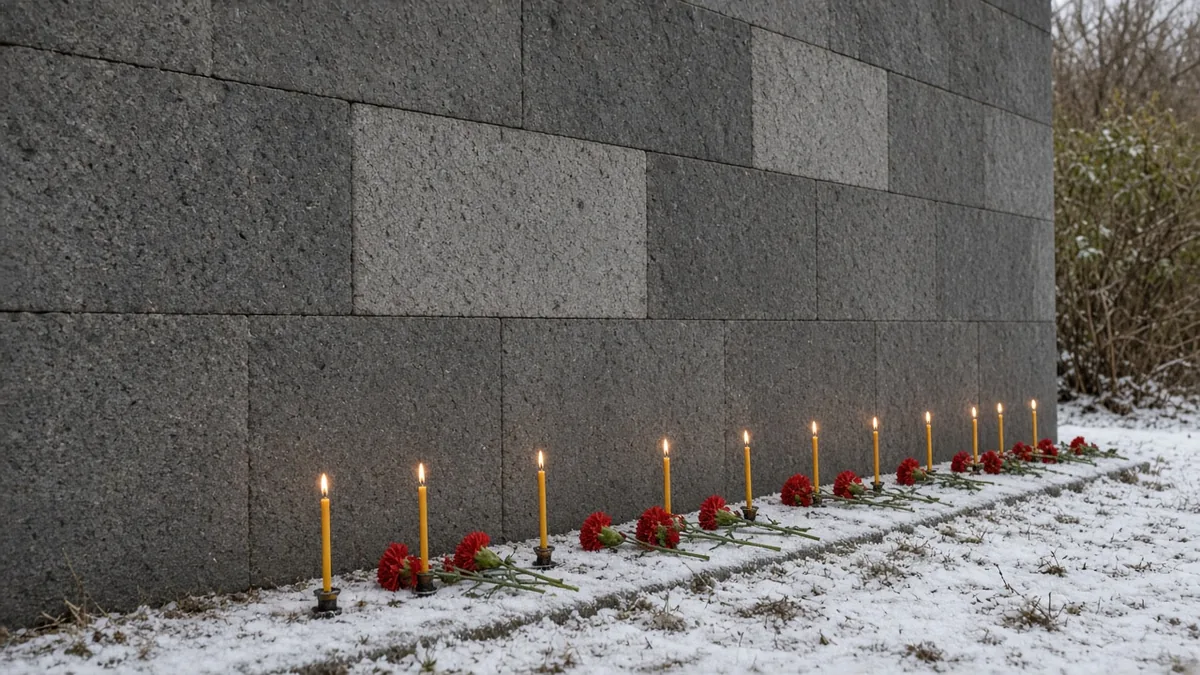
Under Armenian law, 7 December is the Earthquake Victims’ Commemoration Day. It is a working day. Still, people across the country stop to remember, and many light candles at home or in church.
On 7 December 2025, the 37th anniversary, the prime minister and the president laid wreaths at the memorials in Spitak, Vanadzor and Gyumri. Afterwards they attended a memorial liturgy at the Holy Seven Wounds Church (Yot Verk) in Gyumri.
In Gyumri, the city symphony orchestra plays a concert in memory of the victims on the evening before the anniversary. In 2025 it chose Pergolesi’s Stabat Mater, according to Armenpress.
Memorials and Museums
Gyumri has a memorial complex to the victims, and Spitak and Vanadzor have their own memorials. These are the places where the state lays its wreaths each year. [CHECK: names and addresses of the three memorials.]
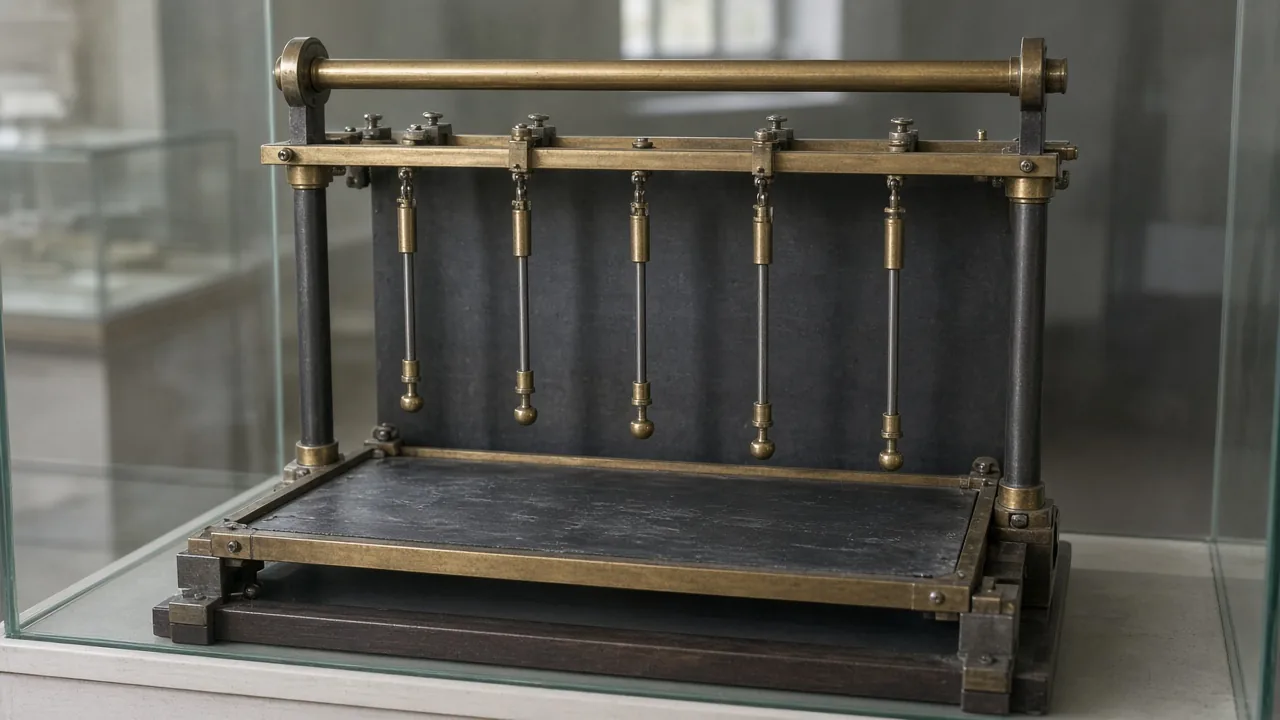
In Gyumri, the Institute of Geophysics and Engineering Seismology keeps a museum about the earthquake. It holds the first multi-pendulum seismometer designed by Academician Armen Nazaryan. Its address is 5 V. Sargsyan Street, and the phone is +374 312 31261. [CHECK: museum opening hours and whether visitors need to book.]
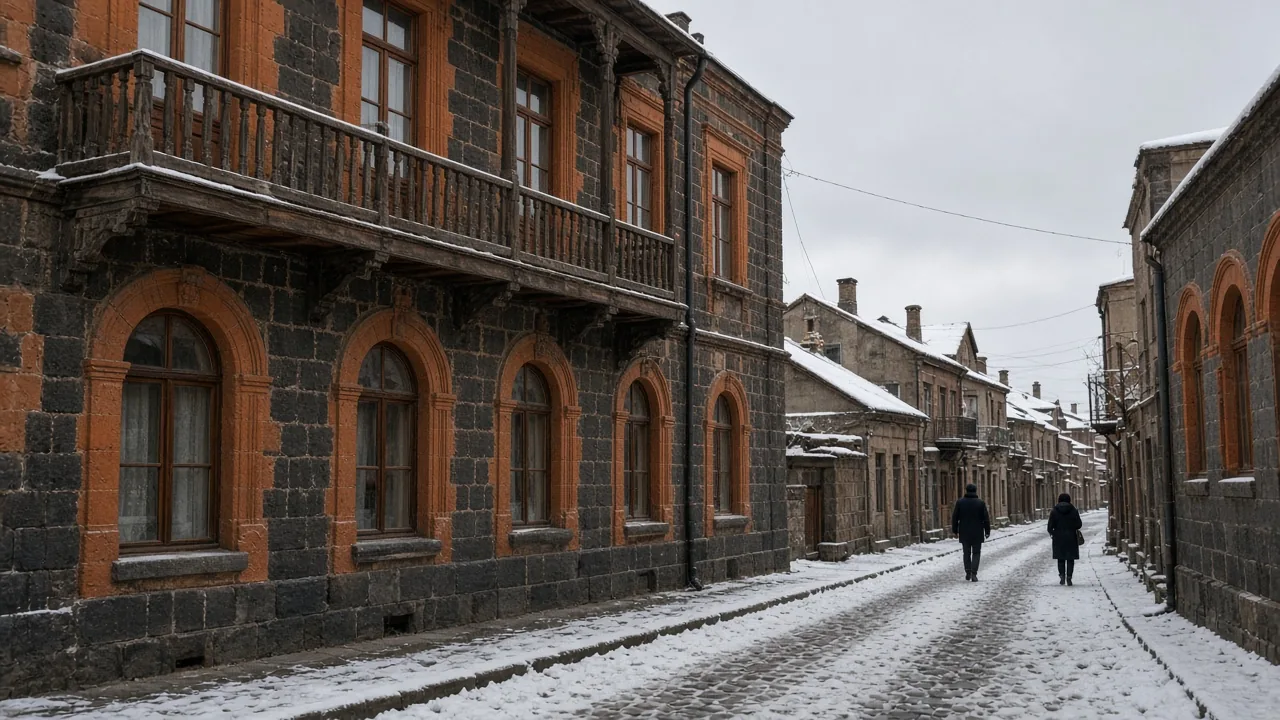
Gyumri is also a good place to see what survived. Many older houses of local tuff still stand in the historic centre. The city is covered on the page about Armenian cities.
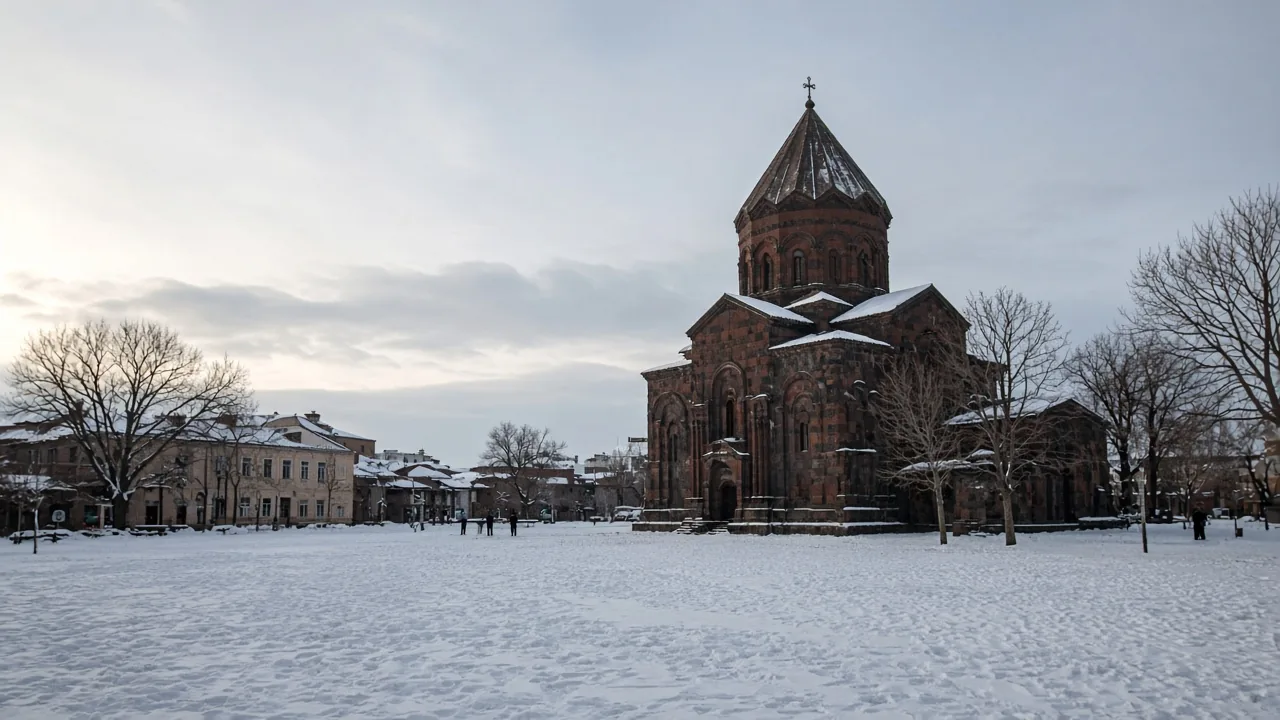
So, if you travel north from Yerevan, visit Gyumri or Spitak and stop at the memorial for a few quiet minutes. On 7 December you will see the candles and the flowers that people still bring.
Questions Visitors Ask
How many people died in the 1988 earthquake?
The official figure is 25,000. Other estimates are higher, from about 30,000 to as many as 50,000, and sources differ.
How strong was the earthquake?
Its surface-wave magnitude was 6.8, at a depth of about 5 km. Some older reports give 6.9. The shallow source made the shaking at the surface very strong.
Is 7 December a public holiday?
No. It is the Earthquake Victims’ Commemoration Day, and it stays a working day. Memorial services are held in Spitak, Vanadzor and Gyumri.
Sources
- Today in Earthquake History, 7 December, US Geological Survey (read 11 November 2026)
- Notes about the Armenia earthquake, 7 December 1988, R. A. Kerr, USGS Earthquakes & Volcanoes, 1989 (read 11 November 2026)
- The Earthquake in Armenia, December 7, 1988, NOAA National Geophysical Data Center (read 11 November 2026)
- Spitak earthquake, 1988, Institute of Geophysics and Engineering Seismology, Gyumri (read 11 November 2026)
- Holidays and memorial days, Yerevan Municipality (read 11 November 2026)
- The Prime Minister visits Spitak, Vanadzor, and Gyumri on the 37th anniversary of the earthquake, Office of the Prime Minister, 7 December 2025 (read 11 November 2026)
- Gyumri Symphony Orchestra memorial concert, Armenpress, 7 December 2025, in Armenian (read 11 November 2026)
- The 37th anniversary of the Spitak earthquake, Armenia Today, 7 December 2025, in Armenian (read 11 November 2026)
- 1988 Armenian earthquake, Wikipedia, for the relief chronology and the song (read 11 November 2026)
More Armenian history, places and traditions are on iArmenia.