Last updated: November 2026 · Facts checked 13 November 2026
Armenian etiquette at a meal starts with a full table and a toast. The U.S. Commerce Department says Armenians are known for hospitality, and that a long meal and long toasts often come with a visit. A guest who turns the meal down can seem rude.
This page is for a visitor who is invited home, or to a celebration, in Yerevan or outside it. It covers the gift, the toastmaster, and what to do if you do not drink.
Key Facts
- At the door: bring a small gift. Chocolates, dessert or wine are the examples Repat Armenia gives
- On the table: fruit, pastry and coffee are a common welcome
- Toastmaster: the tamada. The guest gets an honoured seat and an early toast
- Cheers: Genats, as the Smithsonian Folklife Festival spells it
- If you do not drink: Repat Armenia says hosts usually respect that
- Thank you: shnorhakalutsyun. Checked November 2026
In this guide · 5 sections
What Armenian Etiquette Asks of a Guest
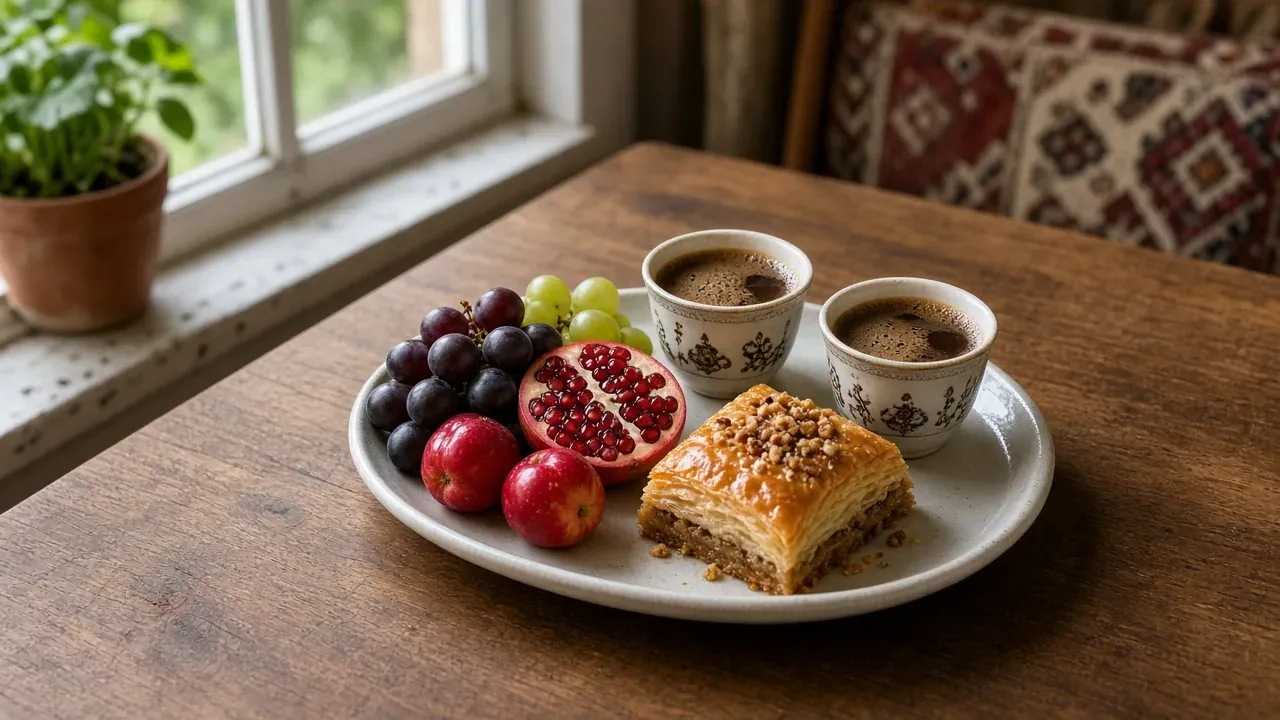
Repat Armenia, which helps people who move to the country, says a home visit often opens with fruit, pastry and coffee. However, a flat refusal of food or drink can feel awkward. A small taste is usually enough.
A Small Gift
The same guide says a small gift is welcome. For example, chocolates, a dessert or a bottle of wine. The U.S. Commerce Department also says gifts are common when Armenians host visitors, and that hosts often take guests to historic places.
In fact, Commerce warns that turning down a long meal, or a whole-day outing, can read as disrespect. Also, you do not have to finish every dish. Taste what you are offered, and thank the person who cooked it.
A small taste is better manners than a flat no.
The Table and the Tamada
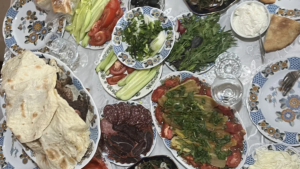
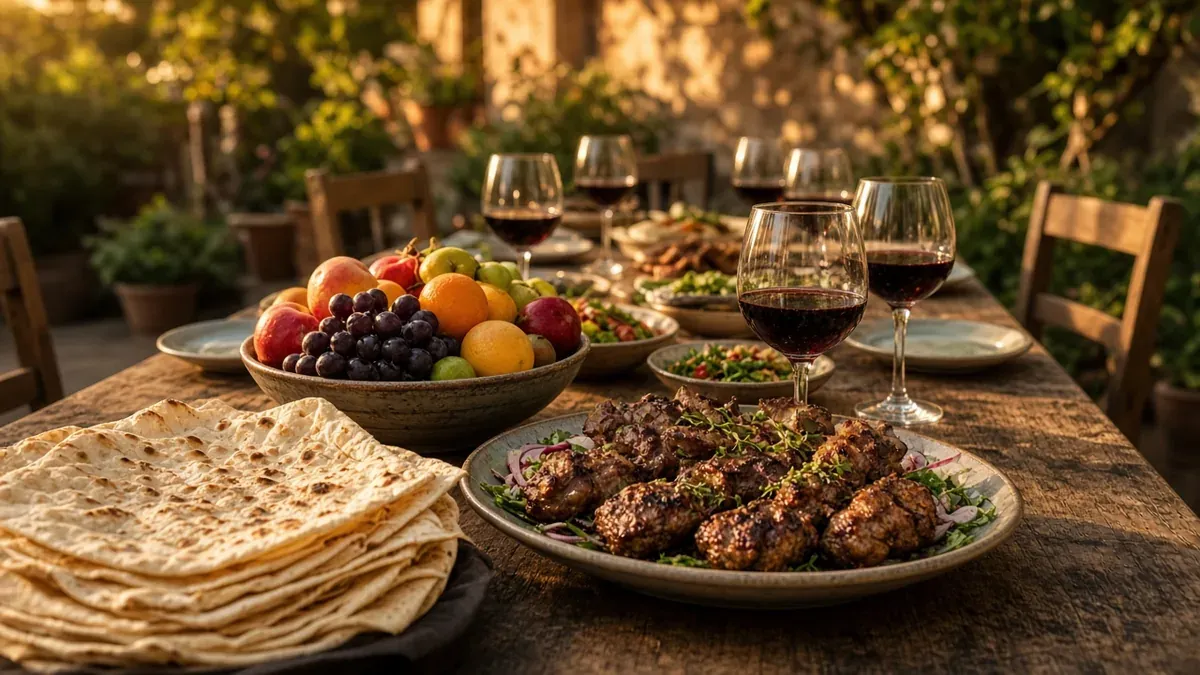
The Smithsonian Folklife Festival, at its 2018 Armenia programme, described a traditional feast as a table with a tamada, a toastmaster chosen to lead it. The tamada knows the order of the toasts and the place of each person at the table.
The guest matters. Smithsonian says the host asks the guest to sit in one of the honoured places, and the tamada offers the guest’s toast among the first. Then the tamada’s own first toast welcomes everyone and thanks the host.
Smithsonian spells the cheer as Genats. After that opening, other people toast elders, then children, then the hearth, which the festival text treats as another word for the family. Also, the food is for sharing, and the table stays full.
Repat Armenia treats a shared meal as the way a relationship starts. Therefore the dishes sit in the middle, and people eat them together rather than from a private plate. A guest who takes a little of several dishes is following that habit.
Repat Armenia names three dishes you will meet at that table: lavash, the flatbread, khorovats, meat grilled on skewers, and dolma, stuffed grape leaves. Armenian wine is what Smithsonian tells a host to pour.

If You Do Not Drink
Toasts, and therefore drinking, are part of most gatherings, Repat Armenia says. However, the same page says hosts usually respect a guest who refrains. Armenians, it adds, have long taken care of their guests.
Stay for the toast even if your glass holds water. Sit until it ends. Do not walk away in the middle. The point is that you heard the words. You can raise a glass of water or juice when the toast comes, and still say a short thank-you. In fact, Smithsonian’s feast rules are about the order of the toasts, not about forcing every guest to finish the bottle.
Greetings, Elders and Time
Repat Armenia says greetings are often a warm handshake or a kiss on the cheek. Elders have a high place. On the metro, people give up a seat for women, children and older passengers.
Ask for directions and the answer may run long. Repat Armenia says a person who helps you can become someone you greet later. If you see someone often, they may add jan after your name. Repat Armenia calls jan a term of affection. Also, strangers on the street may not smile at you first. The same guide says that reserve drops as soon as you actually speak to them.
Time works two ways. Punctuality is appreciated, especially at work. Meanwhile, a social gathering may start later than the hour on the invitation. Be patient, and do not treat a late supper as an insult.
A Few Words That Help
Repat Armenia suggests three phrases for a market. Inch arje means “how much does it cost?” Tarm e means “is it fresh?” Shnorhakalutsyun means “thank you.” The spellings here follow that page.
English is common in hotels and restaurants in Yerevan that serve visitors, the Commerce Department says. Outside the capital, fewer people speak it. Therefore a thank-you in Armenian still does more work than a perfect sentence.
The people you are meeting have their own longer story. That sits on the page about Armenian people. This page is only the manners of a visit.
At Work
The Commerce Department says the usual week is Monday to Friday, about 9 a.m. to 6 p.m. A business meeting can still turn into a long meal. Also, check that both sides have understood the words of a deal, because some business terms are new in Armenia.
The same guide tells U.S. visitors not to pay a bribe to speed a permit. If an official hints at a tip, Commerce says to speak to the U.S. Embassy. That rule is the Foreign Corrupt Practices Act, and it applies even when a delay feels normal.
A long lunch can be part of the meeting. A payment to an official is not.

So if you are invited in, bring a small gift, take the seat you are offered, and taste what is put in front of you. Then raise your glass when the tamada does, or lift a soft drink and still say thank you.
Questions Visitors Ask
What should I bring to a home?
Chocolates, a dessert or wine. Repat Armenia lists those three. A small taste of the food you are offered matters more than the price of the gift.
Do I have to drink?
No. Toasts are common, but Repat Armenia says hosts usually accept a guest who does not drink. You can still join the toast with another glass.
Who leads the toasts?
The tamada, the toastmaster. Smithsonian says the guest sits in an honoured place and receives one of the early toasts. The cheer is Genats.
Sources
- Armenia – Business Travel, International Trade Administration, last published 16 December 2025 (read 13 November 2026)
- Armenia – Feasting, Smithsonian Folklife Festival, 2018 (read 13 November 2026)
- Tips for Connecting with Local Armenians, Repat Armenia (read 13 November 2026)
More culture, food and places are on iArmenia.