Last updated: 20 November 2026
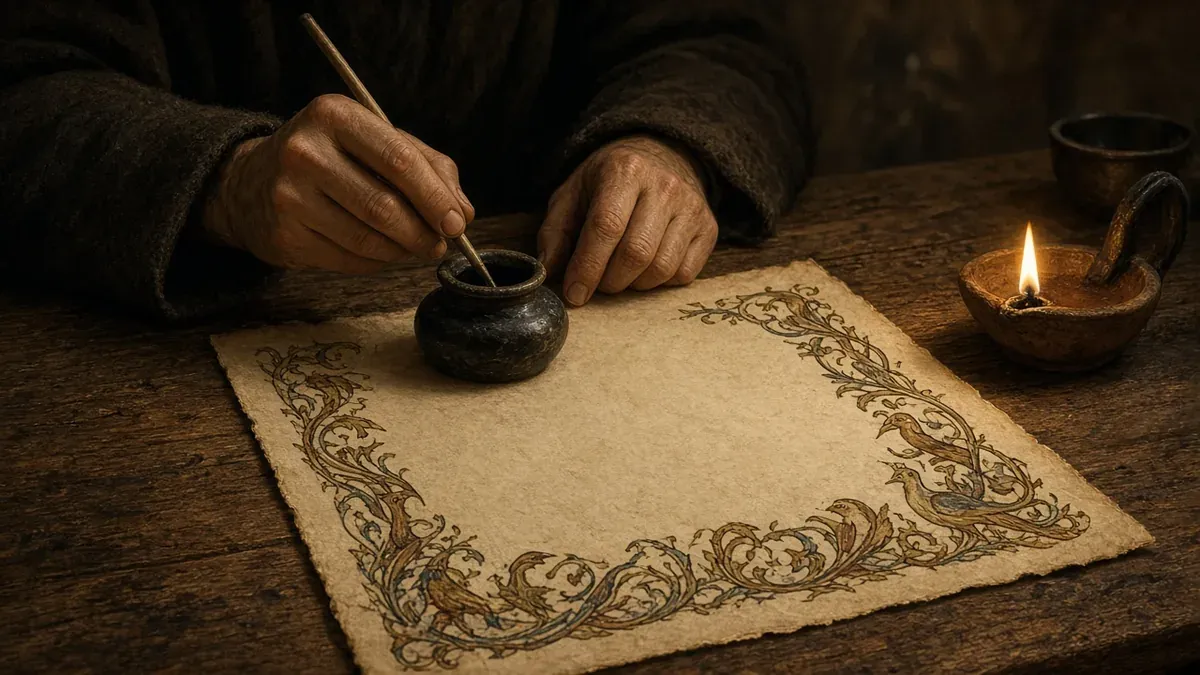
Mesrop Mashtots was the monk who gave Armenians their letters. In about 405 he created an alphabet of 36 letters, one for each sound of the language, and with it the first books in Armenian.
Sixteen centuries later, Armenians still write with his letters. His name is on the Matenadaran, his statue stands at its foot, and the church honours him every October. This is the story of the man and of why he made the alphabet.
Key Facts
- Born: about 360–364, Hatsekats, in the district of Taron
- Alphabet: 36 letters, about 404–405
- Died: 17 February 440, Vagharshapat
- Buried: Oshakan, Aragatsotn
- Main source: The Life of Mashtots by his pupil Koriun
In this guide · 8 sections
Armenia Without Letters
At the end of the 4th century Armenia had been Christian for almost a hundred years, but it had no script of its own. Church services were read in Greek or Syriac, which only the educated understood. Ordinary believers heard the Bible in languages they did not speak.
Politics made the problem sharper. In 387 the Byzantine Empire and Persia divided the kingdom, and Persia took by far the larger part. A written language of their own would help Armenians on both sides of the new border keep their faith and their identity.
Early Life of Mesrop Mashtots
Mashtots was born in the village of Hatsekats, in the district of Taron, west of Lake Van. His father was a man named Vardan. Britannica gives his birth as about 360, and most recent scholars place it between 361 and 364.
As a boy he learned Greek letters. As a young man he served as a clerk in the royal army at Vagharshapat, today’s Ejmiatsin. Then he left that service, became a monk in the 390s and gathered a small group of hermits around him. According to Britannica, he became a priest, kept a lifelong love of the ascetic life and founded several monasteries.
His turning point came on a mission to the district of Goghtn, in the south-east. There he preached to people who could not read the scriptures, because no Armenian books existed. According to the Encyclopedia of Religion, this was where he conceived the idea of an alphabet.
Mashtots did not set out to be a linguist. He was a preacher who wanted his people to read the Bible in their own language.
The Search for an Alphabet
Mashtots took the idea to Sahak, the head of the Armenian Church, and to King Vramshapuh. Both supported him. They learned that a Syrian bishop named Daniel had a set of letters for Armenian, and they sent for them.
Daniel’s letters, the Encyclopedia of Religion explains, were unsuited to the phonetic structure of Armenian. Mashtots needed a script built for the language itself, not borrowed from another one. So Mashtots and his pupils went south to Edessa, a great centre of Christian learning, and then to Samosata. There a Greek calligrapher named Rufinus helped him give the new letters their final shape.
The result was an alphabet of 36 letters, built on what UNESCO calls the one-letter-for-one-sound principle. The traditional date is 405. In fact, the art historian Dickran Kouymjian notes a rare advantage here: we know both when, between 404 and 406, and by whom Armenians got their alphabet.
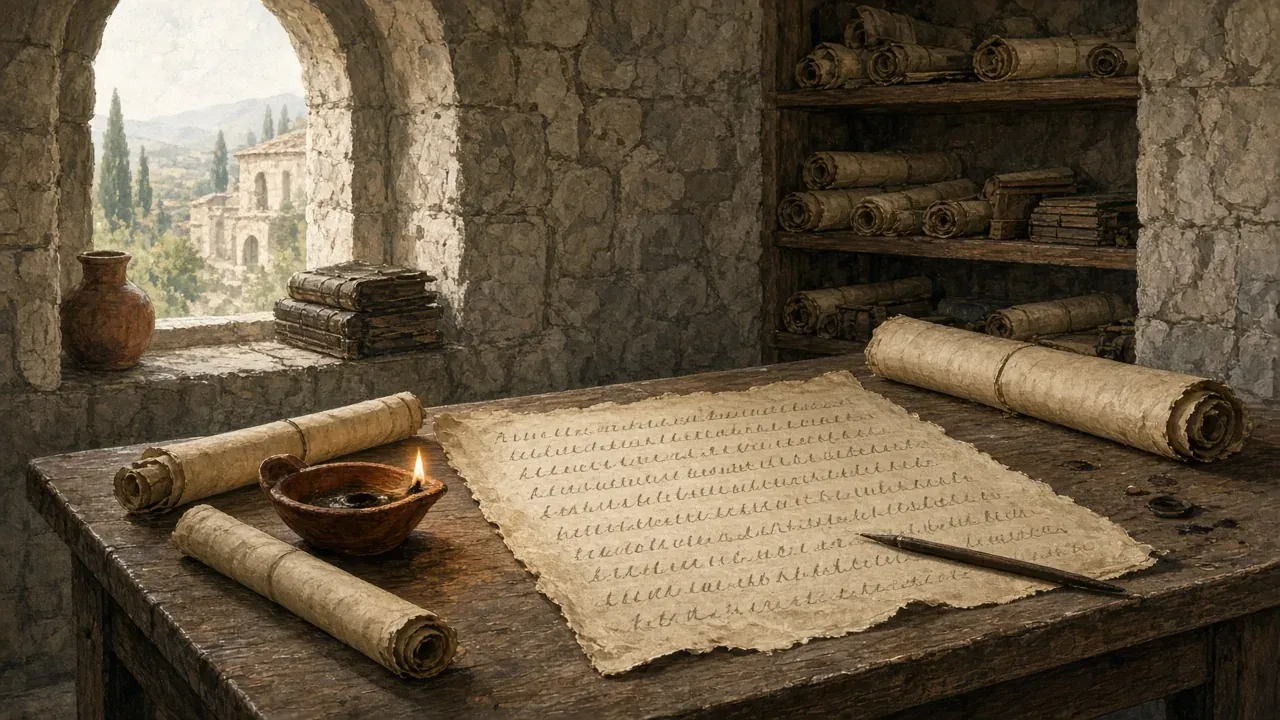
The 12th century brought two more letters, a long O and an F, for sounds that entered the language later. Otherwise the letters are the ones Mashtots made. For the letters themselves, their names and their number values, see our guide to the Armenian alphabet.
The First Words in Armenian
According to tradition, the first sentence written in the new letters was from the Book of Proverbs: “To know wisdom and instruction; to perceive the words of understanding.” It was a fitting choice for a script made to teach.
Mashtots then went home to Armenia. His biographer Koriun compares that return to Moses coming down from Mount Sinai. With the support of Sahak and the king, he opened schools where young people learned the new letters, and he taught in them himself.
The great task was the Bible. Mashtots, Sahak and their pupils, later honoured as the Holy Translators, turned the scriptures into Armenian. They went on to translate the works of the Church Fathers, and the 5th century became the golden age of Armenian writing.
The first translation came from Syriac. The translators soon judged it imperfect, so they sent pupils to Edessa and Constantinople for good Greek copies. They then translated the Bible again from the Greek, and the Armenian Church still uses that version, finished in about 434.
Georgian and Albanian Letters
Koriun also credits Mashtots with alphabets for two neighbours: the Georgians and the Caucasian Albanians, a people of the eastern Caucasus. Both claims come from Armenian sources, and the Albanian script has long since fallen out of use.
The Georgian claim is the harder one. Kouymjian notes that many Georgian scholars fiercely dispute it. So it is fair to say that Armenian tradition credits him, and that the question is still argued.
How We Know His Story
Almost everything we know about Mashtots comes from one book: The Life of Mashtots by his pupil Koriun. Koriun wrote it within about ten years of his death, at the request of Catholicos Hovsep, another of his students. It is also the first biography ever written in Armenian.
Later historians, Ghazar Parpetsi and Movses Khorenatsi, relied largely on Koriun. Interestingly, Koriun only calls him Mashtots. The name Mesrop appears in later writers, and its origin is still unknown. The oldest surviving copy of Koriun’s book dates from the 12th century, and a library in Paris holds it today.
Death and the Tomb at Oshakan
Mashtots spent his last two decades writing homilies and letters, though none of them survives. He died in Vagharshapat on 17 February 440.
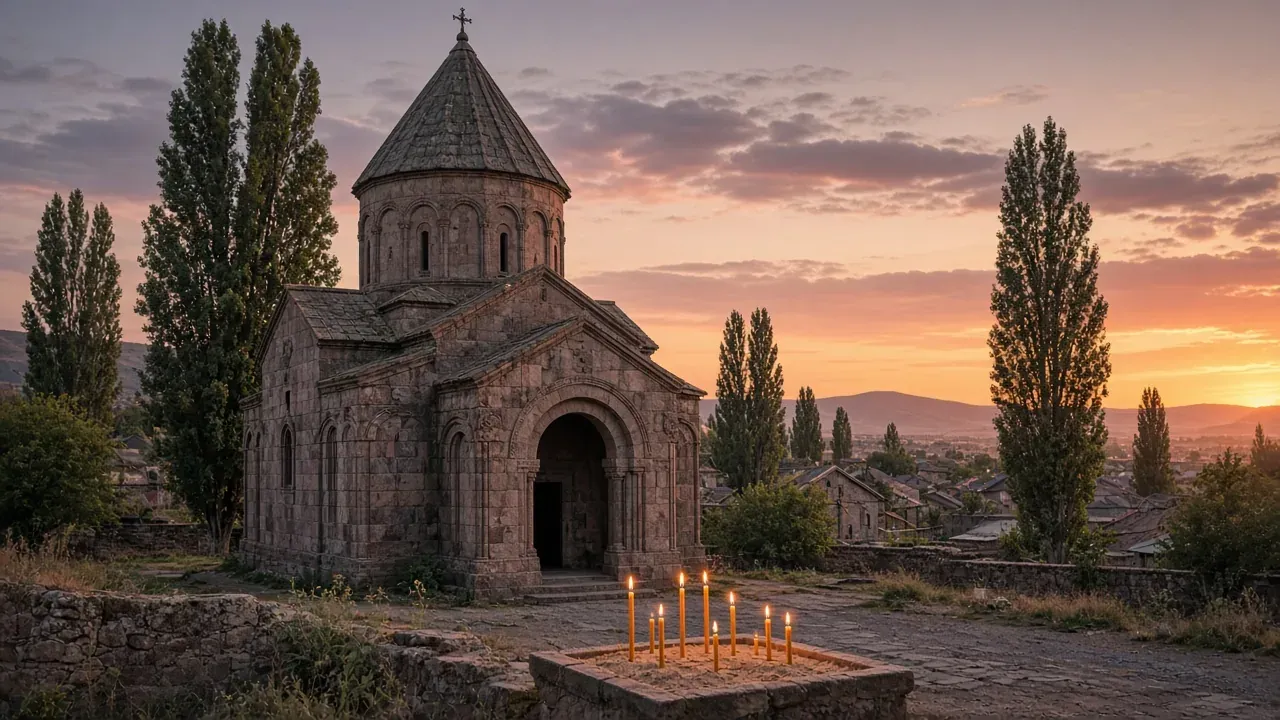
He was buried in the village of Oshakan, in today’s Aragatsotn province, about 8 km south-west of Ashtarak. Soon a martyrium rose over the grave, and it is still a major place of pilgrimage. Armenian churchmen sometimes call him simply “the Saint of Oshakan”.
Mesrop Mashtots Today
The Matenadaran, Yerevan’s great library of ancient manuscripts, bears his name. In front of it stands the statue of Mashtots with his pupil Koriun, carved by Ghukas Chubaryan in 1962, the year of the 1,600th anniversary of his birth.
Soviet Armenia marked that anniversary, in May 1962, with large official celebrations. Historians describe them as a powerful boost to Armenian national pride. The historian Vahakn Dadrian wrote that Yerevan became an “arena of nationalist fervor” that spring.
The Armenian Church honours him as a saint. Armenians remember him, with other early writers, on the Feast of the Holy Translators, on the second Saturday of October, a national holiday since 2001. On that day pilgrims visit his grave at Oshakan. From 1994 he and the Matenadaran also appeared on the first 1,000 dram banknote.
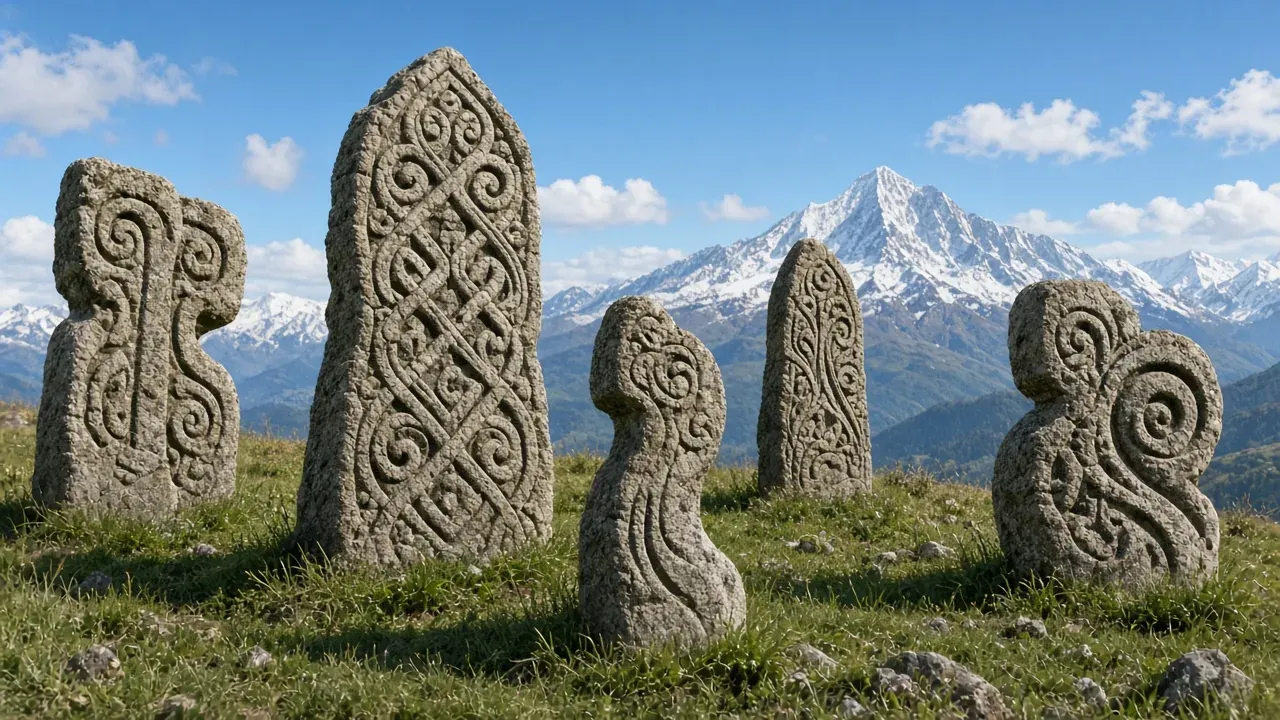
In 2019 UNESCO added “Armenian letter art and its cultural expressions” to its list of the intangible heritage of humanity. Its decision starts from his alphabet of 405, and from the way the letters live on in carpets, carving, jewellery and design.
Visiting the Places of Mashtots
You can follow Mashtots in a single day from Yerevan. Start at the Matenadaran, where his statue with Koriun stands at the top of Mashtots Avenue. The statue opened on 26 May 1962, and on the same day the library took his name.
Then drive out to Oshakan, about 8 km south-west of Ashtarak. If you come on the second Saturday of October, you will meet the pilgrims of the Feast of the Holy Translators at his grave.
So, visit his statue in Yerevan and his grave at Oshakan, and read more about the Armenian language he gave a written form.
Questions Visitors Ask
When did Mesrop Mashtots create the Armenian alphabet?
About 405 AD, according to tradition and UNESCO. Scholars place the work between 404 and 406.
How many letters did his alphabet have?
Thirty-six. Two more came in the 12th century, which makes 38 today.
Where is Mesrop Mashtots buried?
In the village of Oshakan in Aragatsotn province, about 8 km south-west of Ashtarak.
Sources
- “Mashtotsʿ, Mesrop”, Encyclopedia of Religion, via Encyclopedia.com, read 20 November 2026. encyclopedia.com
- Encyclopaedia Britannica, “St. Mesrop Mashtots”, read 20 November 2026. britannica.com
- World History Encyclopedia, “Mesrop Mashtots”, read 20 November 2026. worldhistory.org
- Kouymjian, D., “Notes on Armenian Codicology. Part 2. Armenian Palaeography”, COMSt Newsletter, 2013. fresnostate.edu
- UNESCO, “Armenian letter art and its cultural expressions”, inscribed 2019 (decision 14.COM 10.b.1). ich.unesco.org
- Wikipedia, “Mesrop Mashtots”: first sentence, statue, feast days, banknote, read 20 November 2026. wikipedia.org
More history is on iArmenia.