
Last updated: 10 November 2026· Facts checked November 2026
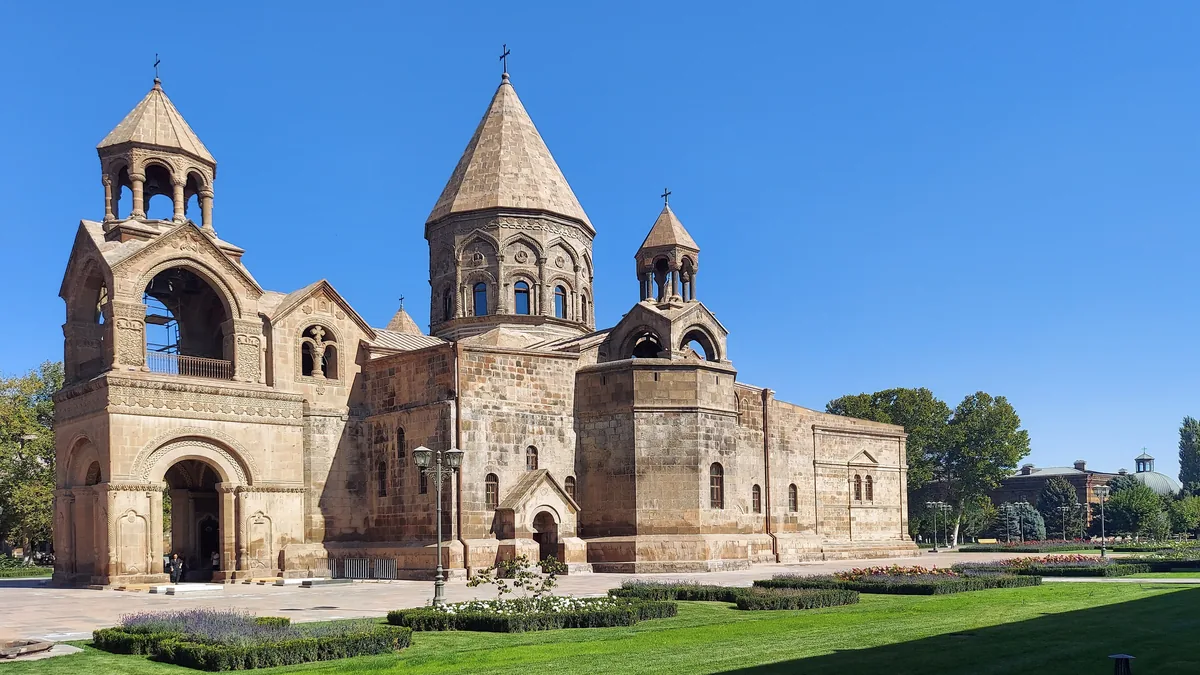
Etchmiadzin (Էջմիածին) is the spiritual centre of the Armenian Apostolic Church and the seat of its head, the Catholicos of All Armenians. It stands in the town of Vagharshapat, about 20 km west of Yerevan. Inside its walls is the Mother Cathedral, which is often called the oldest cathedral in the world.
The cathedral reopened in September 2024 after six years of restoration. Entry to the grounds and the churches is free, and bus 203 gets you there from Yerevan in about half an hour. Plan half a day for the cathedral, the Treasury museum and the churches of Saint Hripsime and Saint Gayane. Then stop at the ruins of Zvartnots on the way back.
Key Facts
- Where: Vagharshapat, Armavir province, about 20 km west of central Yerevan
- Built: early 4th century according to tradition; the present building is largely from 483–484
- Getting there: bus 203 from Kilikia Central Bus Station, about 30–35 minutes, 250–300 AMD in cash
- Tickets: grounds and churches free; Manoogian Treasury 2,000 AMD (about $5.50) for foreign visitors
- Museums open: Tuesday–Sunday 10:30–17:30, closed Monday (Mother See website, checked November 2026)
- Sunday liturgy: late morning, usually around 11:00
- Time needed: 3–4 hours, plus about 1 hour for Zvartnots
- UNESCO: World Heritage Site since 2000, together with Zvartnots
In this guide
What Is the Mother See of Holy Etchmiadzin
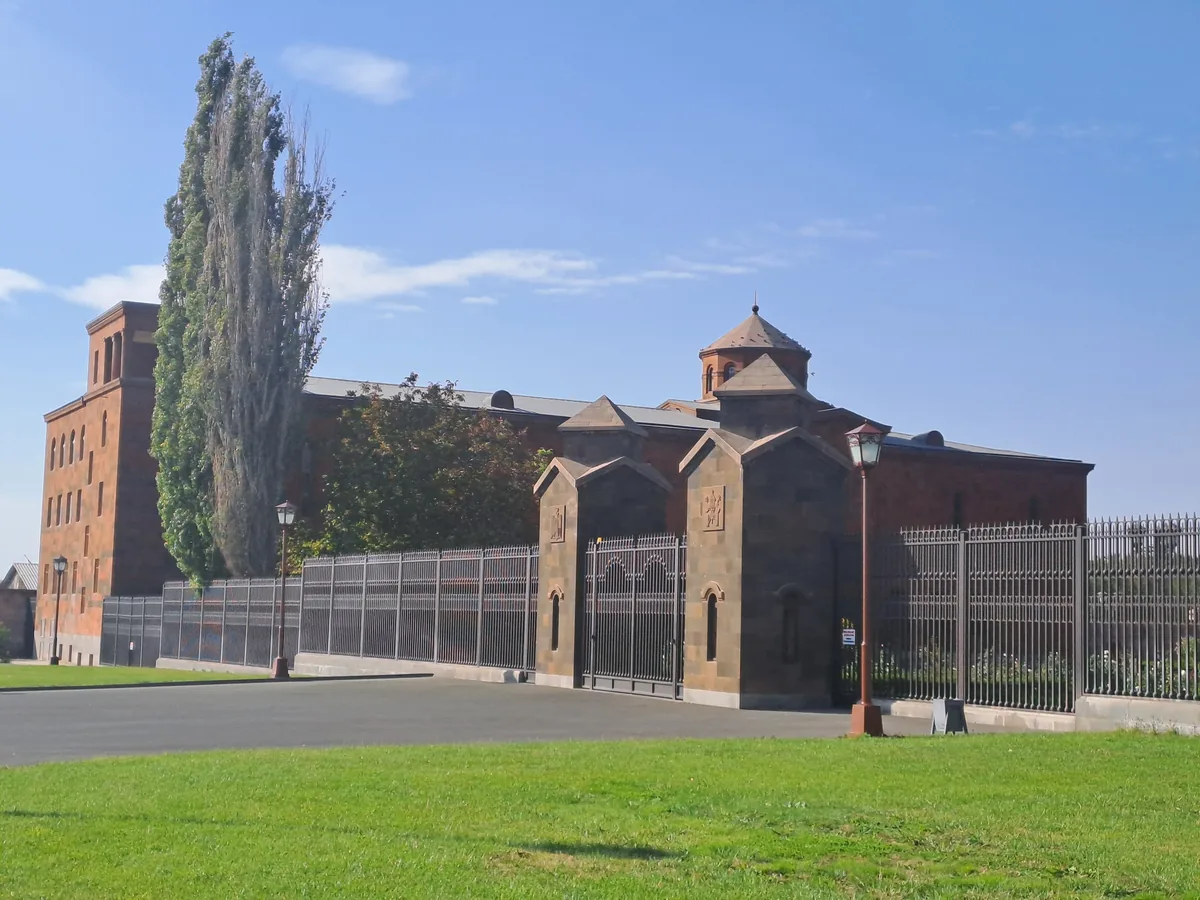
The Mother See is the headquarters of the Armenian Church and the residence of the Catholicos. Inside its walls you find the Mother Cathedral, the Catholicos’s residence, a theological seminary, offices and museums. It is a working religious centre, not an open-air museum. Clergy, seminarians and pilgrims make up much of the crowd.
The town around it has carried several names. Its official name is Vagharshapat, but from 1945 to 1995 it was officially called Etchmiadzin. Most Armenians still use that name for both the town and the monastery. You will also see the spellings Echmiadzin, Echmiatsin and Ejmiatsin.
A UNESCO World Heritage Site
In 2000 UNESCO inscribed the cathedral, the nearby churches of Saint Hripsime, Saint Gayane and Shoghakat, and the ruins of Zvartnots as one World Heritage Site. Its full name is “Cathedral and Churches of Echmiatsin and the Archaeological Site of Zvartnots”.
According to UNESCO, these buildings show how the Armenian domed church developed. They also shaped church building across the wider region.
History of Etchmiadzin Cathedral
The Legend and the Founding
According to the Church’s tradition, Saint Gregory the Illuminator saw Christ descend from heaven in a vision and mark the place for a church. That is where the name comes from: Etchmiadzin means “the Only-Begotten descended”. The first cathedral rose here in the early 4th century, soon after Armenia adopted Christianity.
The building you see today is largely the work of 483–484. According to the historian Ghazar Parpetsi, it was then rebuilt with the support of Vahan Mamikonian. The three-storey bell tower at the west entrance was completed in 1657–1658. In 1720 the painter Naghash Hovnatan began the wall paintings inside.
The Mother Cathedral closed to visitors in November 2018 and was re-consecrated on 28–29 September 2024.
The 2018–2024 Restoration
The restoration project began in 2012, and the cathedral itself closed in November 2018. Workers strengthened the walls and foundations, restored the dome and cleaned away centuries of soot. In fact, about 620 square metres of frescoes were taken down and put back.
The cathedral was re-consecrated on 28–29 September 2024, together with the blessing of the Holy Myron (holy oil). Since then it has been open to worshippers and visitors again. During the works, the relics once shown in the cathedral moved to the Treasury, where you can see them today.
The Museums of the Mother See
The Mother See’s website lists three museums on the grounds. Most visitors choose the Alex and Marie Manoogian Treasury House, which opened in 1982. Since 2018 it has held the relics moved out of the cathedral.
Among them is the Holy Lance of Geghard, by tradition the spear that pierced Christ. You can also see a fragment said to come from Noah’s Ark, kept in a reliquary of 1698, and the reliquary cross of King Ashot the Iron.
| Museum | Hours | Foreign visitors | Armenian citizens |
|---|---|---|---|
| Alex and Marie Manoogian Treasury House | Tue–Sun 10:30–17:30 | 2,000 AMD (about $5.50) | 1,000 AMD; students 500; schoolchildren 300 |
| Ruben Sevak Museum | Tue–Sun 10:30–17:30 | 500 AMD (about $1.40) | 500 AMD; students 200; schoolchildren 100 |
| Khrimian Museum | not published | not published | not published |
Preschool children, pensioners, military personnel and ICOM members get in free. The website gives no hours or prices for the Khrimian Museum, so ask on site. To book a guided tour, the museum page lists +374 10 517253.
Saint Hripsime, Saint Gayane and Shoghakat
Three more churches in Vagharshapat honour the virgin martyrs. According to tradition, Hripsime, Gayane and their companions fled Rome and were killed here shortly before Armenia adopted Christianity. Each church stands near the place of a martyrdom.
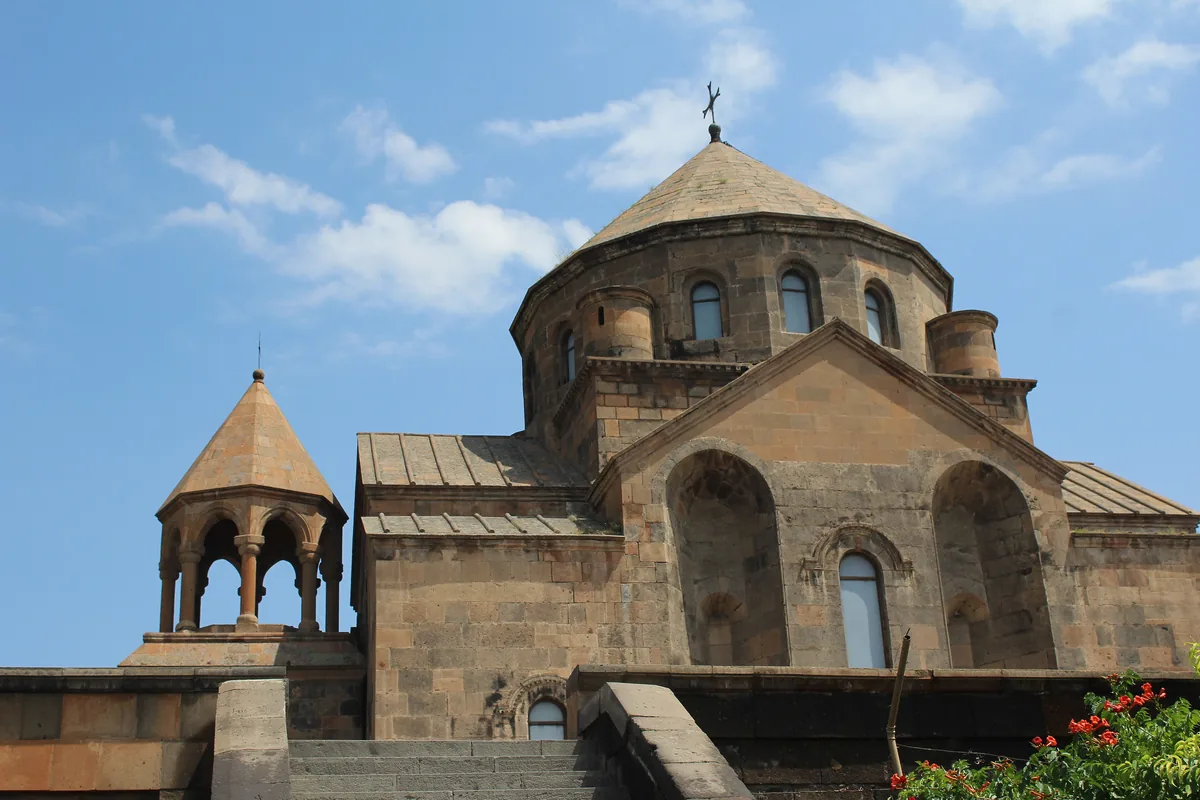
Saint Hripsime
Catholicos Komitas built Saint Hripsime in about 618, over the martyr’s tomb. It is a classic of 7th-century Armenian architecture, and two of its building inscriptions survive. The church stands on the eastern side of town, the side you arrive from Yerevan. Read more in our guide to Saint Hripsime Church.
Saint Gayane
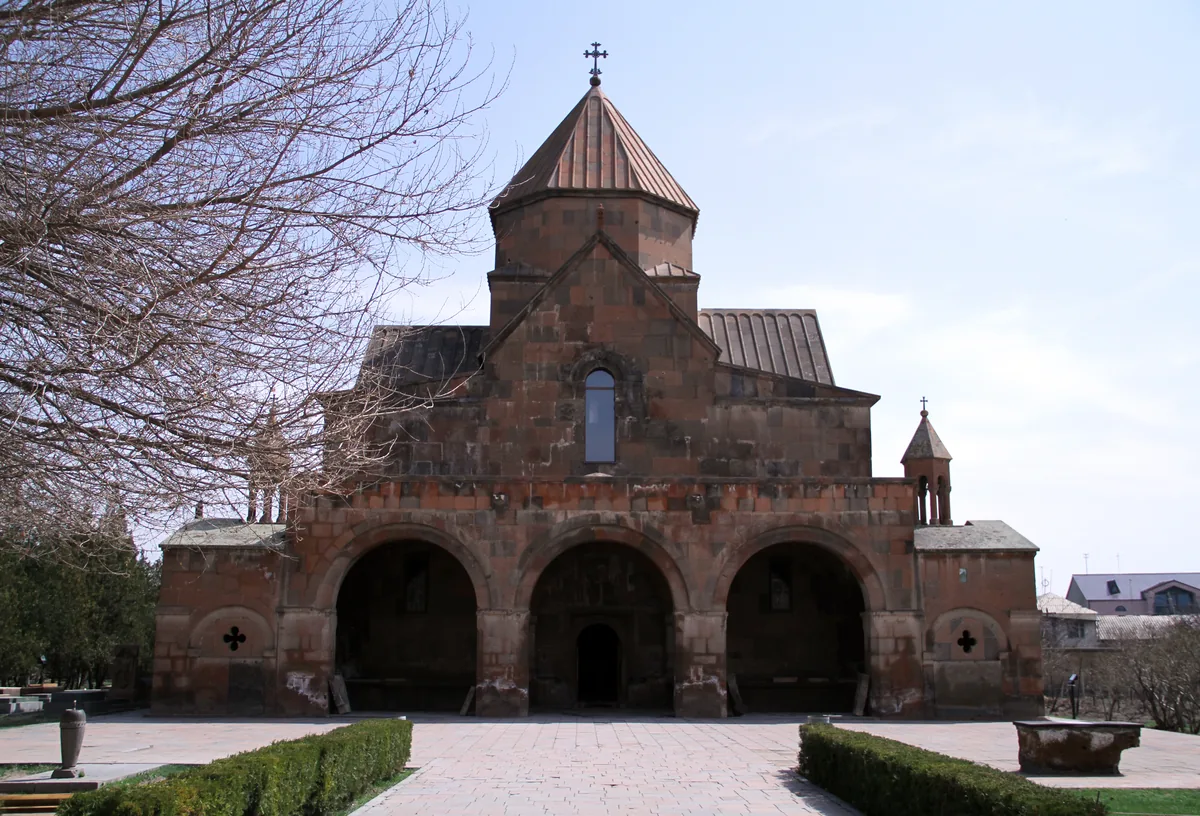
Saint Gayane was built in 630, under Catholicos Ezr I, where the abbess Gayane was martyred. Its arcaded entrance hall was added in 1688, according to its inscription. Later it became a burial place for leading clergy. See our guide to Saint Gayane Church.
Shoghakat
Shoghakat is the youngest of the group. Prince Aghamal Sorotetsi built it in 1694 on the site of an earlier chapel. It is a small church just west of Saint Hripsime, so you can see both in one stop.
How to Get to Etchmiadzin from Yerevan
| Option | From | Time | Cost |
|---|---|---|---|
| Bus 203 | Kilikia Central Bus Station, Admiral Isakov Avenue | 30–35 min | 250–300 AMD, cash |
| Taxi (Yandex Go or GG app) | Central Yerevan | 30–40 min | shown in the app before you book |
| Car | Central Yerevan, west on the main road towards Armavir | 30–40 min | fuel only |
| Group tour | Yerevan centre | half day | varies by operator |
Bus 203 leaves Kilikia at least every half hour, and more often at busy times. According to Transport for Armenia, some daytime buses also start in the city centre and stop at Pak Shuka (the covered market) and France Square.
Fares reported from 2023 to 2026 are 250 or 300 AMD, depending on the vehicle. Pay the driver in cash when you get off, and carry coins or small notes. The last stop is a few metres from the Mother See gate. To return, catch the 203 near where you got off.
Tip: Bus 203 passes the Zvartnots ruins. On the way back, ask the driver to let you off at Zvartnots. After your visit, catch the next bus to Yerevan or book a taxi in an app.
Sunday Liturgy, Dress Code and Photos
Liturgy. The Divine Liturgy in the Mother Cathedral is celebrated every Sunday in the late morning. Lonely Planet gives 11:00, or 10:30 on feast days. The Mother See’s own feast-day schedules in 2026 list 10:30 or 11:00. So check the news page of armenianchurch.org in the week of your visit.
On busy Sundays many people follow the service from the courtyard because the cathedral is full. If you want to see the interior quietly, come on a weekday morning. If you want to see the Church at worship, come on Sunday and arrive early.
Dress. Cover your shoulders and knees, and men should take off their hats. Many Armenian women cover their hair in church. Travel guides disagree on whether visitors must do the same, so carrying a scarf is the safe choice.
Photography. Rules inside the churches and museums can differ. Look for signs or ask staff before you take photos indoors. During services, don’t photograph without permission, and never use flash.
Combining Etchmiadzin with Zvartnots
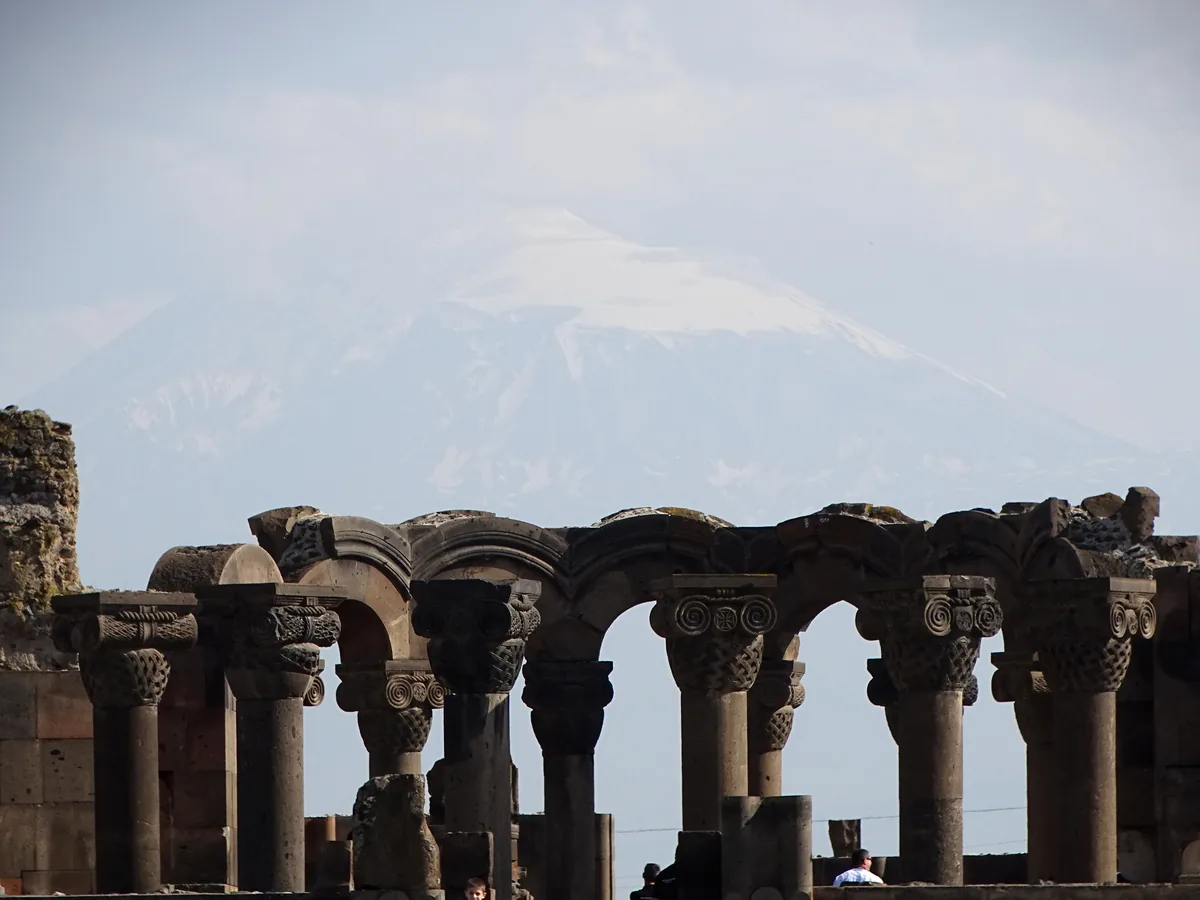
The ruins of Zvartnots Cathedral stand beside the main road, a few kilometres east of Vagharshapat. Catholicos Nerses III began the church in 643, and it was consecrated in 652. It was a huge round church. Many scholars accept Toros Toramanian’s reconstruction with three tiers.
Nobody knows for sure how it fell. However, it is generally believed to have collapsed in an earthquake in the 10th century. Excavations from 1901 to 1907 brought it back to light. Today you see the foundations, carved capitals, a small museum and, on clear days, Mount Ararat behind.
| Zvartnots | Details (November 2026) |
|---|---|
| Hours | Listings differ: the mus.am page says daily 10:00–18:00 (Sunday to 16:00); the managing agency’s page says closed on Monday. Tuesday to Sunday, 10:00–15:00, is safe; phone +374 93 013132 to check |
| Adult ticket | 1,500 AMD (about $4) |
| Child, senior or student | 750 AMD; under 12 free |
| Guided tour | 3,000 AMD in Armenian, 5,000 AMD in English or Russian; book ahead |
A good half-day order is Saint Hripsime first, then the Mother See and the Treasury, then Saint Gayane. Have lunch in town and stop at Zvartnots on the way back. With a car for the whole day, you can add other sights in Armavir province.
So if you are in Yerevan for more than a couple of days, don’t miss Etchmiadzin. Avoid Mondays if you want to see the Treasury. Come on a weekday for a quiet cathedral, or on a Sunday morning to see the Church at worship.
Questions Visitors Ask
Is Etchmiadzin Cathedral open after the restoration?
Yes. It was re-consecrated on 28–29 September 2024 and has been open to worshippers and visitors since. On Sundays and feast days it can be too full to enter during the liturgy.
Is there an entrance fee for Etchmiadzin?
No. The grounds, the cathedral and the other churches are free. The museums charge: the Manoogian Treasury costs 2,000 AMD for foreign visitors (November 2026).
Which bus goes from Yerevan to Etchmiadzin?
Bus 203, from Kilikia Central Bus Station. It takes about 30–35 minutes and costs 250–300 AMD, paid in cash to the driver.
Can I see Etchmiadzin and Zvartnots in one trip?
Yes. Zvartnots is on the same road, a few kilometres before Vagharshapat, and bus 203 passes it. Allow about an hour there.
Are the museums open on Monday?
No. According to the Mother See’s website, its museums open Tuesday to Sunday, 10:30–17:30. You can still walk around the grounds and visit the cathedral.
Sources
- Museums at the Mother See, Mother See of Holy Etchmiadzin (read 2026-11-09)
- Alex and Marie Manoogian Treasury House, Mother See of Holy Etchmiadzin (read 2026-11-09)
- Mother Cathedral of Holy Etchmiadzin, Mother See of Holy Etchmiadzin (read 2026-11-09)
- St. Gayane Monastery, Mother See of Holy Etchmiadzin (read 2026-11-09)
- Cathedral and Churches of Echmiatsin and the Archaeological Site of Zvartnots, UNESCO World Heritage Centre (checked via the nomination file and search results, 2026-11-09)
- Echmiatsin and Zvartnots, worldheritagesite.org (read 2026-11-09)
- Etchmiadzin Cathedral will be closed for visits and ceremonies for a while, Armenpress, 23 November 2018 (read 2026-11-09)
- Armenia’s ancient Etchmiadzin Cathedral reopens after six-year restoration, JAMnews, 9 November 2024 (read 2026-11-09)
- The Reconsecration of Holy Etchmiadzin Cathedral, St. John Armenian Church (read 2026-11-09)
- St. Hripsime, Armenian Studies Program, California State University, Fresno (read 2026-11-09)
- Yerevan to Etchmiadzin, Transport for Armenia (read 2026-11-09)
- Echmiadzin, Wikivoyage (read 2026-11-09)
- Why You Should Visit Zvartnots Cathedral, Absolute Armenia, updated August 2025 (read 2026-11-09)
- Zvartnots Historical-Cultural Museum-Reserve, mus.am (ICOM Armenia) (read 2026-11-09)
- “Zvartnots” Historical-Cultural Museum-Reservation, Service for the Protection of Historical Environment and Cultural Museum-Reservations (via search results, 2026-11-09)
- Mother See of Holy Etchmiadzin, Lonely Planet (via search results, 2026-11-09)
Discover more of Armenia’s sights, food and traditions on iArmenia.