Last updated: 15 November 2026· Facts checked November 2026
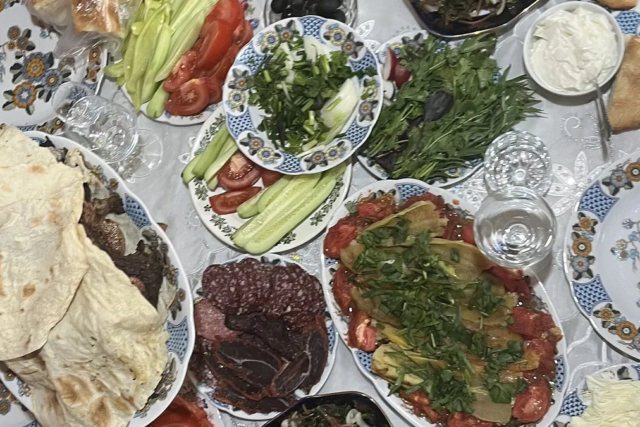
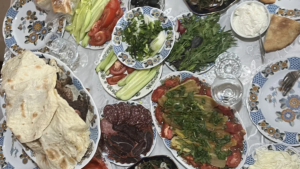
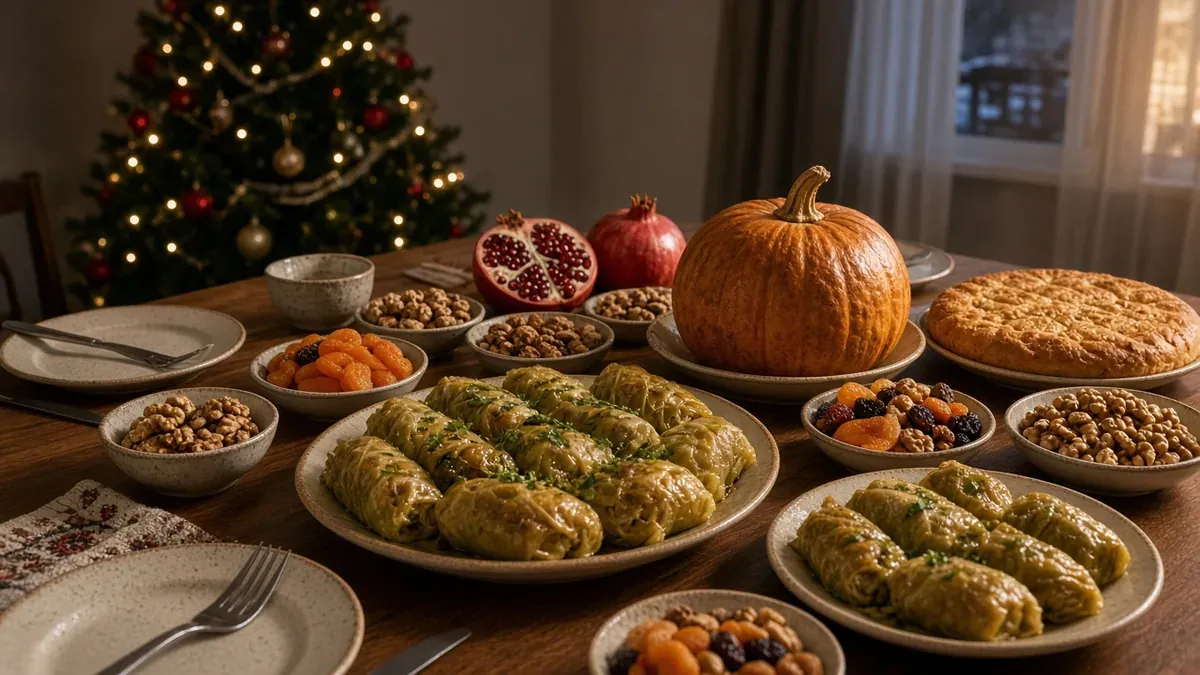
The Armenian New Year’s Table is the long spread a family sets on 31 December. It stays ready for guests for days. It holds lenten tolma, a baked pumpkin and a sweet wheat soup. There is gata with a hidden coin, and bowls of nuts and dried fruit.
The customs of the night, the visits and Grandfather Winter are on the Armenian New Year page. This page stays with the food. It explains each dish, why it is there, and how the old village table differs from a Yerevan table today.
In this guide · 5 sections
Why the New Year’s Table Must Be Full
Armenians say that as the new year begins, so it will continue. In 2002 the journalist Christine Barseghyan wrote about this in Hetq. Earlier generations believed a rich table on New Year’s Eve brought a prosperous year. Families therefore cleaned beans, peas, lentils, rice and grain on 30 and 31 December.
The same idea survives at modern tables. Ruzanna Tsaturyan co-curated the 2018 Smithsonian Folklife Festival programme on Armenia. She told the festival that the table should be so full you cannot put your hand down. Also, everyone must eat a bit of everything.
In fact, the table rarely clears after midnight. Travel Armenia notes that the table stands set almost every day until Christmas on 6 January. Hosts expect visitors, invited or not. So the menu leans on dishes that keep well, taste good cold, and can feed a crowd.
Pasuts Tolma, the Lenten Rolls
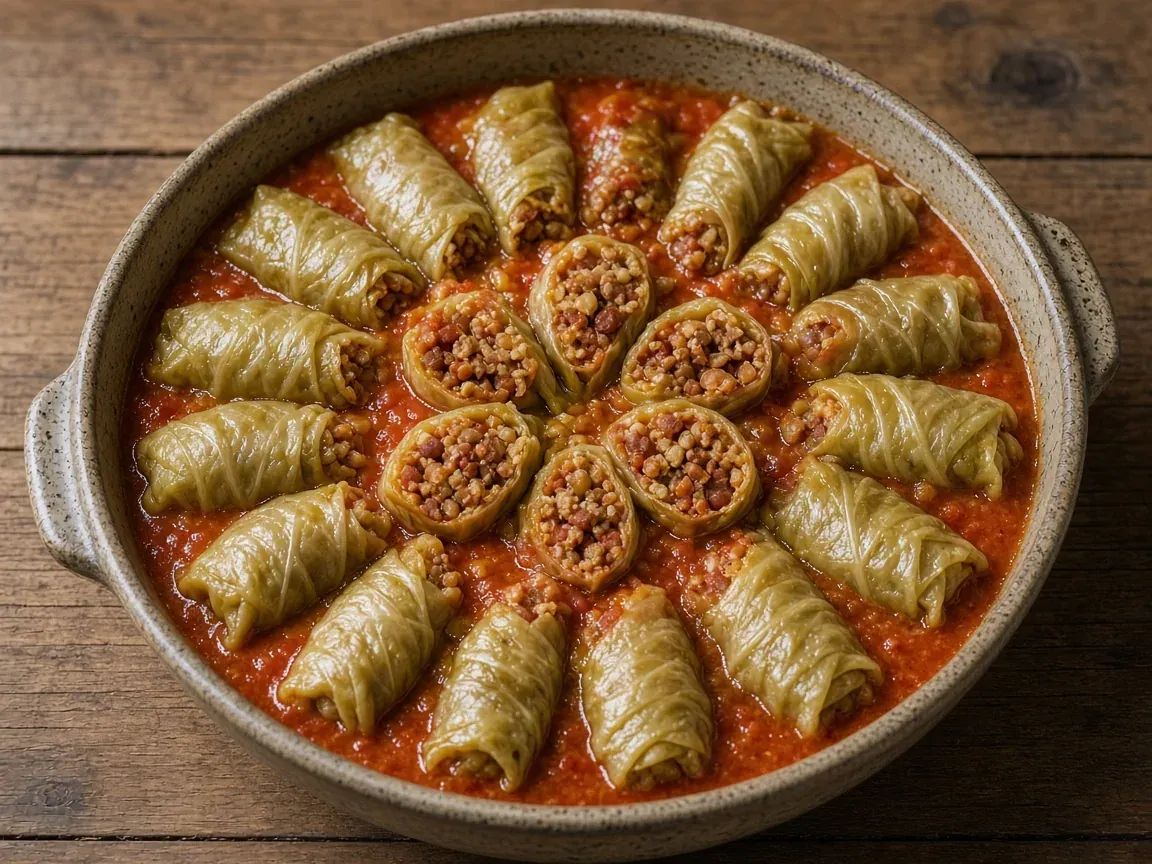
Pasuts tolma (“lenten tolma”) is cabbage rolled around beans and grains instead of meat. Armenia Tourism published an article on 9 December 2025. It calls this tolma even more essential for the New Year than the ordinary kind. Cooks fill the leaves with red beans, lentils, chickpeas and bulgur.
Then many tuck in a piece of dried apricot or plum for a sweet note. The name comes from the fast. Traditionally the days before Christmas were a fast, so the festive roll carried no meat. The dish stood for plenty and a good start to the year.
Ruzanna Tsaturyan’s family recipe, which the Smithsonian printed, uses half a cup each of dried beans, lentils, chickpeas, bulgur and rice. In Armenia cooks roll it in pickled cabbage. They simmer the rolls under a plate in rosehip juice, or in tomato paste thinned with water, for about 30 minutes.
Mothers pass the recipe to daughters by eye, and each region has its own spices.
Meat tolma still appears too. For example, Hetq records meat dolma in Zangezur and Syunik. Ararat and Shirak made the lenten kind. Kufta of lentils and peas was common on many tables as well.
Ghapama and Anushapur
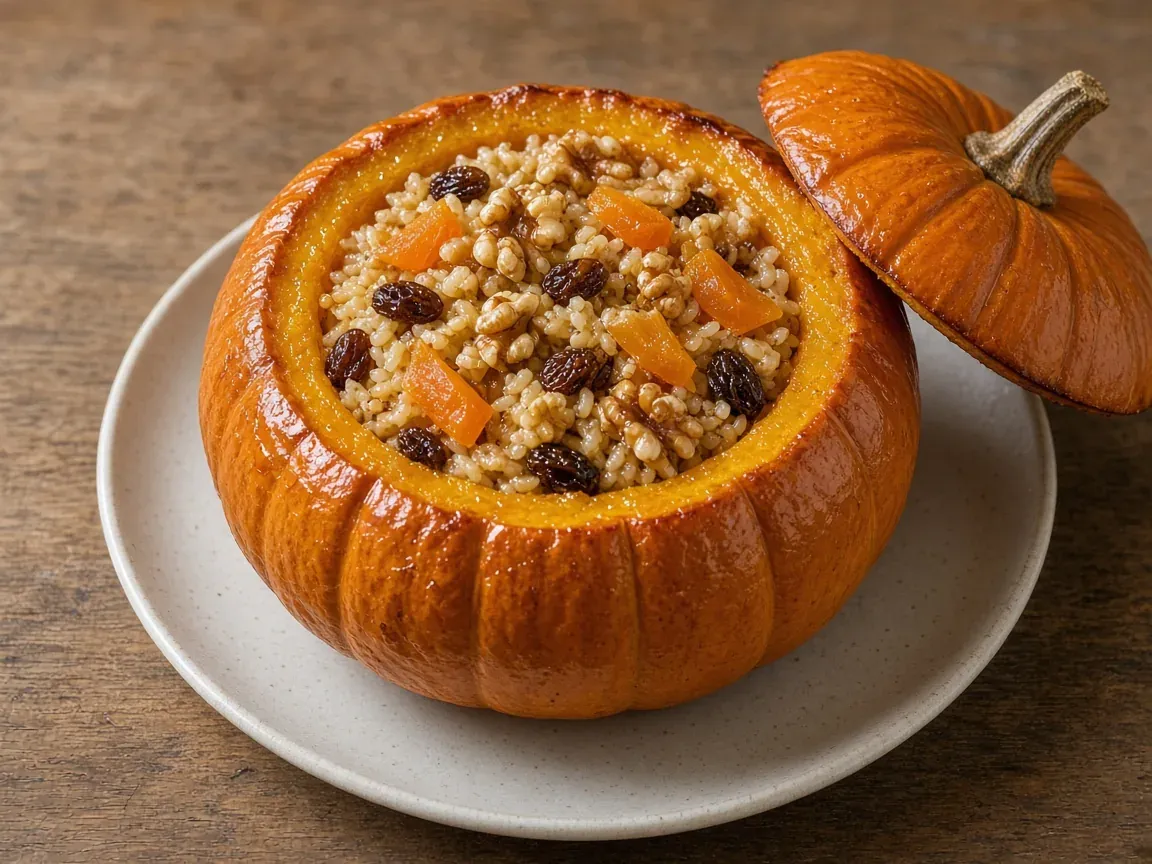
Ghapama is a whole pumpkin, carved and baked with rice, dried fruit and nuts inside. Armenia Tourism calls it a staple of the holiday season and the centrepiece of the table. The dish even has a popular song, “Hey Jan Ghapama”.
Anushapur means “sweet soup”. Hetq describes it as ground wheat cooked with raisins, dried apricot and doshab, a thick fruit syrup. Families made it everywhere so that fields and gardens would be fertile in the coming year. They made harisa, the long-stirred wheat porridge, for the same reason.
However, both dishes now travel. Travel Armenia notes that anushapur and ghapama are slowly moving from home tables to restaurants. Pasuts tolma and old pastries hold their place at home. If you eat out over the holidays, you may meet the pumpkin on a menu first.
The Year Bread and Gata
The most important food of the old holiday was a loaf. Hetq calls it the Year bread. Women baked it with a sign inside, such as a ring, a button, a coin or a bead. Girls of eight to ten sprinkled the yeast into the dough.
At dinner the family shared the loaf among its members, married daughters and absent sons, and sometimes the animals and the fields. Whoever found the sign would be lucky all year. Meanwhile, a sign cut by the knife was a bad omen.
Today gata often takes that role. Travel Armenia writes that the family breaks the gata into one piece per person. Whoever finds the coin or bean has luck ahead. The Smithsonian names a similar sweetbread, tarehats (“New Year’s bread”), with a bean, coin or button baked in.
Ruzanna Tsaturyan once found the charm. She kept it in her wallet until the next tarehats was cut. Hetq also records small wheat and barley figures of people, animals and tools. If they rose well in the oven, the year would go well.
Fruit, Nuts and Aghandz
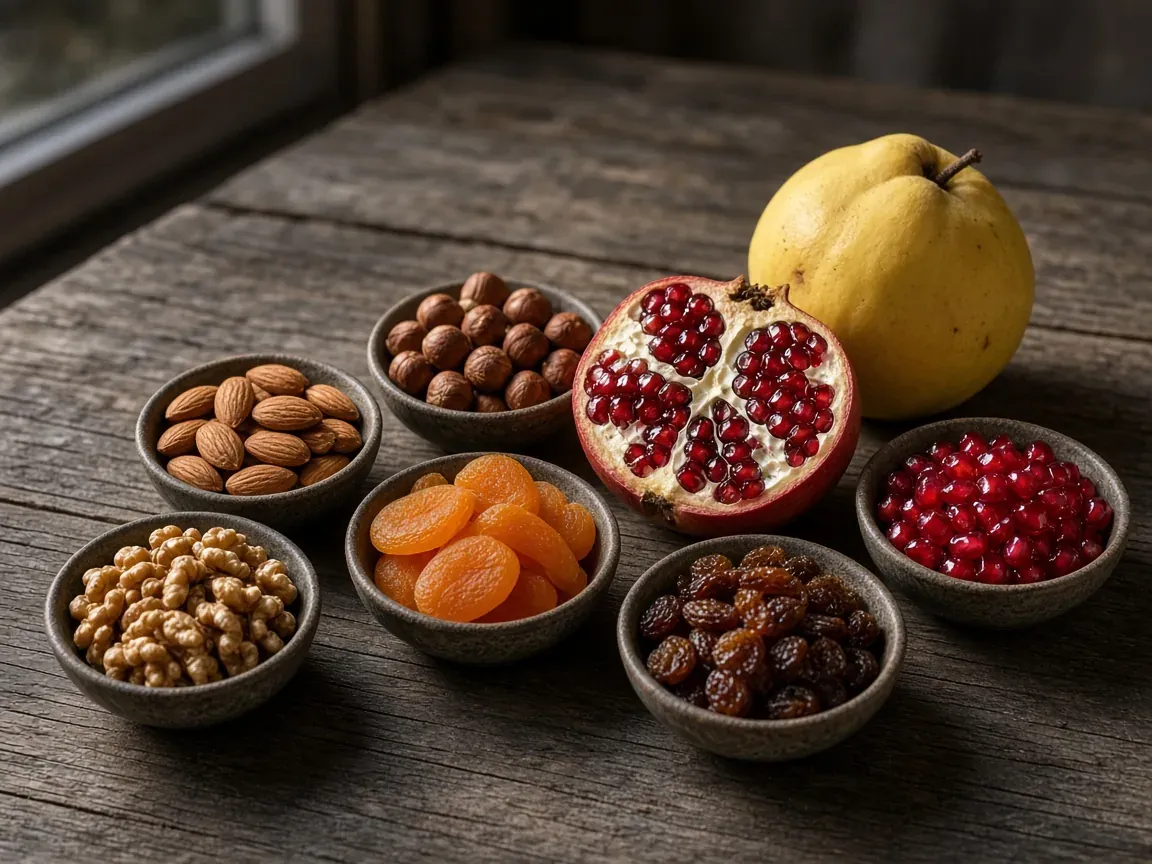
The old table, Hetq writes, was laden with dried fruit and fresh pears, apples, pomegranates, grapes and quince, all signs of fertility. Raisins, nuts and almonds sat beside aghandz, roasted hemp seed with barley or wheat, and holiday sweets called kaghand.
Travel Armenia lists the same bowls on today’s table: nuts, dried fruit, aghandz and fresh fruit. Look for dried apricot and the red seeds of the pomegranate. Both are old Armenian symbols, and both are easy to buy in any Yerevan market in December.
Modern families add what their own year allows. The Smithsonian list for one Yerevan home included ham, stuffed cabbage, cheeses, cured meats, cakes and plenty to drink. Finally, Hetq writes that the eldest blessed the table. He offered honey with the first toast so the year would be sweet.
So, if a family invites you between 31 December and 6 January, come hungry. Taste every dish, and leave a little room for the gata. You might find the coin.
Questions Visitors Ask
What do Armenians eat on New Year’s Eve?
Lenten tolma of cabbage and beans, ghapama, anushapur, gata or a New Year’s bread with a coin inside, and many bowls of nuts and dried fruit. Many homes add meat dishes and salads.
Why is the tolma lenten?
The days before Armenian Christmas on 6 January were traditionally a fast, so the festive rolls carried beans and grains instead of meat.
What is the coin in the bread?
A lucky sign. The person whose slice holds the coin, bean, button or bead is said to have good luck all year.
Sources
- Christine Barseghyan, “As the year begins, so will it continue”, Hetq, 24 December 2002: the old table, anushapur, regional dolma, the Year bread. hetq.am
- Armenia Tourism, “Mouthwatering Foods to Warm You Up in Winter”, 9 December 2025: pasuts tolma, ghapama, gata. armenia.travel
- Smithsonian Folklife Festival, “It’s Still Christmas in Armenia”: Ruzanna Tsaturyan’s table, tarehats and her pasuts tolma recipe. festival.si.edu
- Travel Armenia, “How the New Year is celebrated in Armenia”: the table kept set until Christmas, gata broken for luck, aghandz. travel-armenia.org
More food and holidays are on iArmenia.