Last updated: 20 November 2026
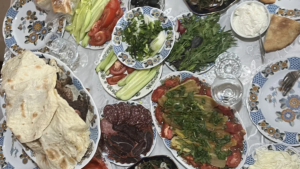
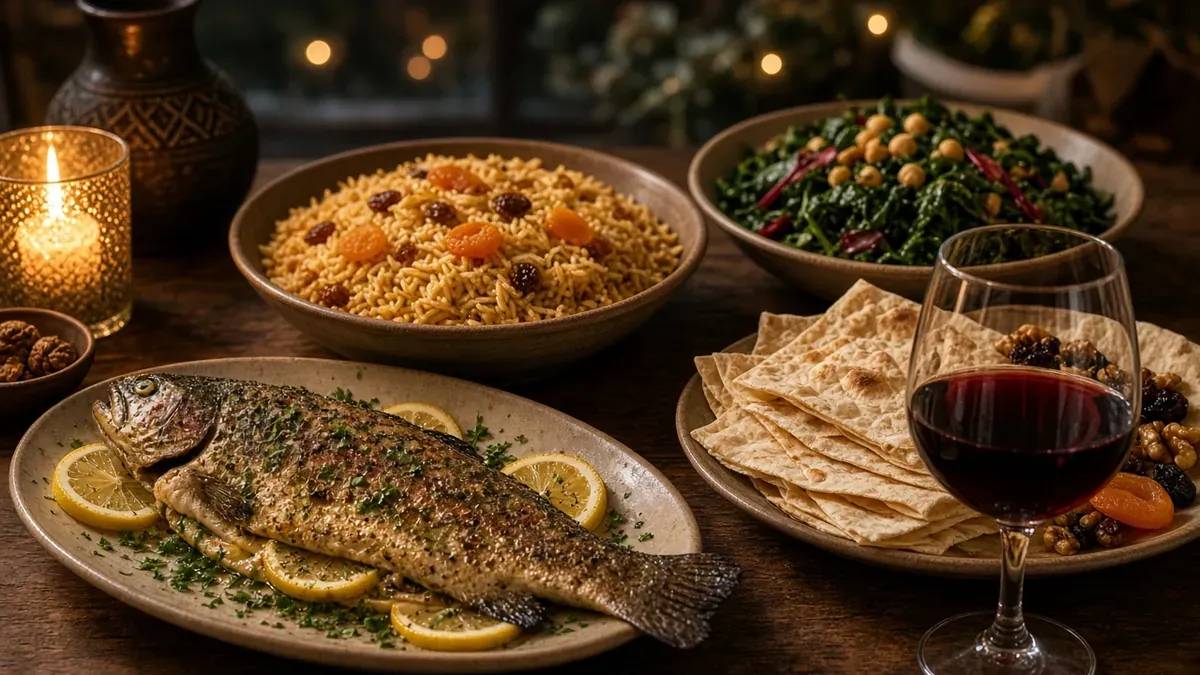
Khetum is the Armenian Christmas Eve dinner, eaten on the evening of 5 January after church. It ends a week of fasting, so it is light and has no meat: fish, rice pilaf with raisins, greens, dried fruit and a glass of red wine.
The big feast comes the next day. Khetum is the quiet meal before it, eaten by candlelight, and every dish on the table has its own meaning.
In this guide · 6 sections
The Evening of the Lamps
Armenians celebrate Christmas on 6 January, together with the baptism of Christ. The church day begins at sunset, so the feast really starts on the evening of 5 January with Chragaluyts, “the lighting of the lamps”.
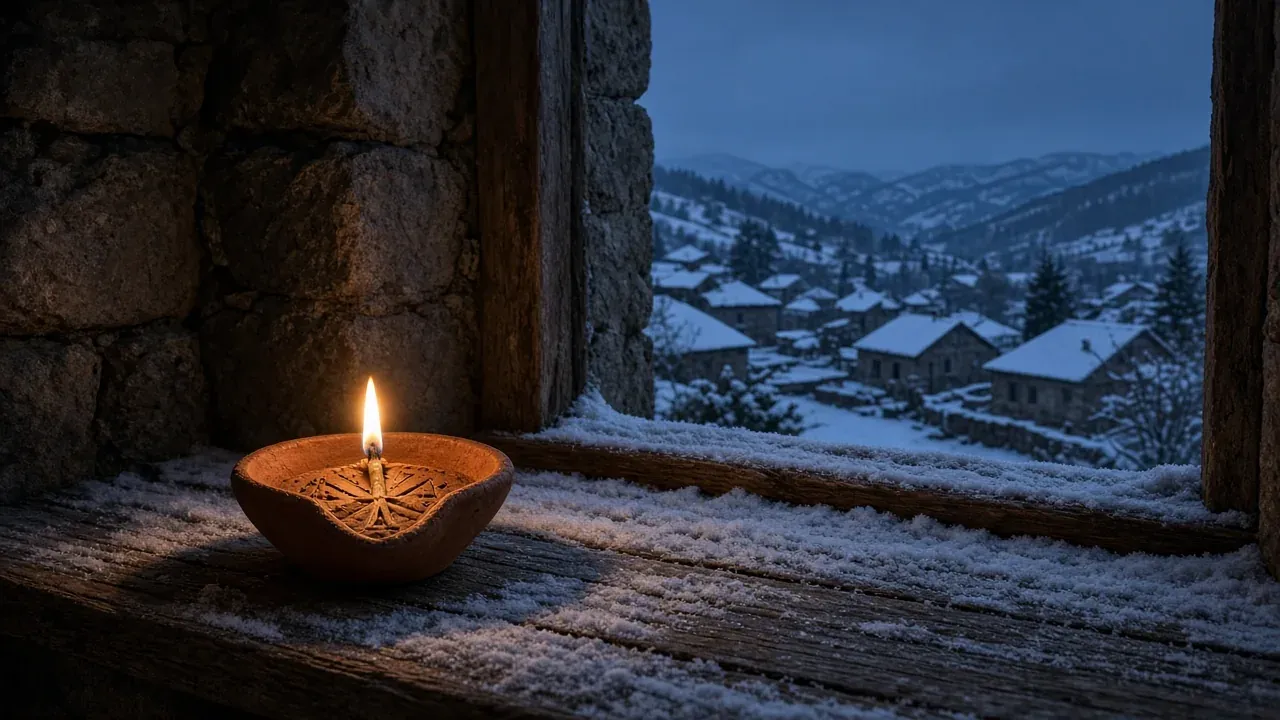
It is one of only two evening Divine Liturgies of the Armenian year, the other being on Easter Eve. At the end, many worshippers carry home a candle lit from the church lamps. The flame stands for the light of the star of Bethlehem.
That evening is also called Khetum. After the service, the family sits down to dinner. The Armenian Wikipedia article on Chragaluyts sums up the rule: the meal is best made of fish and rice pilaf with raisins, and it should not contain meat.
Why the Khetum Table Has No Meat
The days before Christmas are a fast. In an interview Panorama published on 31 December 2024, the fast runs from 30 December until the end of the Christmas Eve liturgy on 5 January. Devout families keep it even through New Year’s night and the days after.
Khetum is the first meal after the fast. As the Food Heritage Foundation puts it, the menu is light and “easy on the stomach after a week of fasting”. The richer dinner, with meat, waits for Christmas Day.
Khetum breaks the fast gently: fish instead of meat, rice with raisins, and dried fruit and nuts for sweetness.
What Is on the Table
Fish
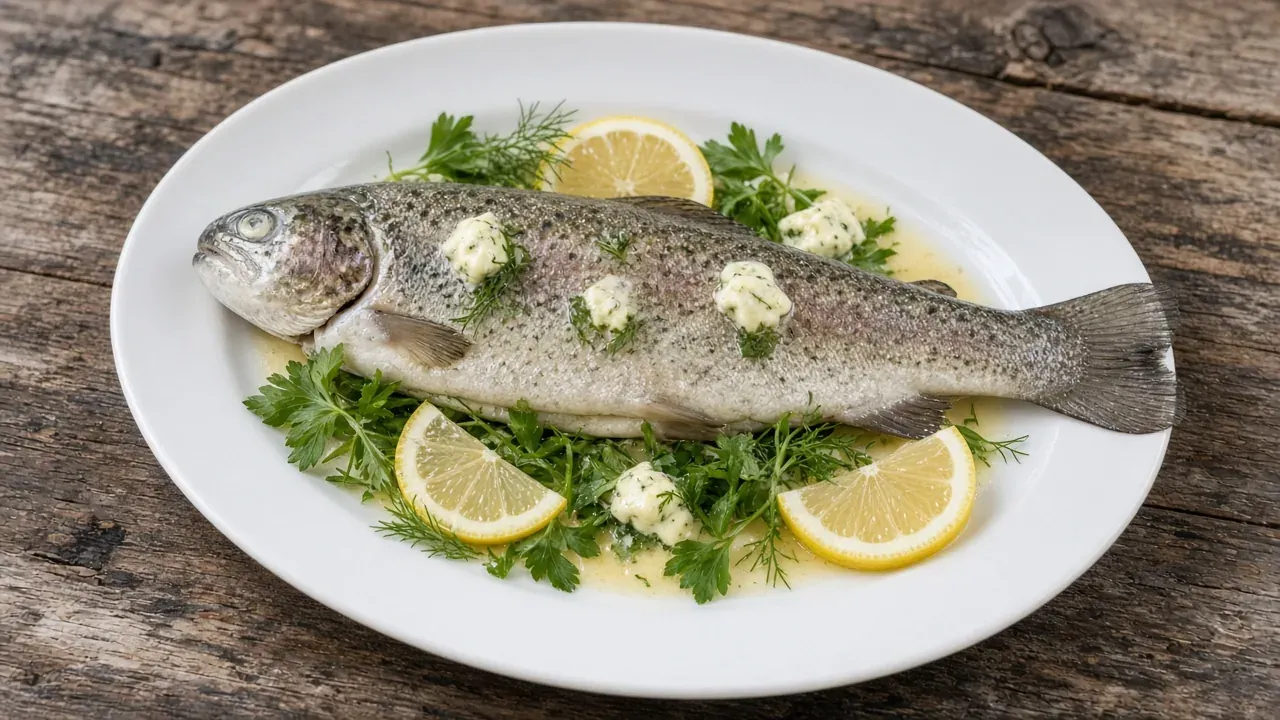
Fish is the centre of the meal and an old symbol of Christianity. Aztag, the Beirut Armenian daily, writes that in many provinces fish was compulsory that evening. It could be boiled, fried or wrapped in dough and baked.
In Armenia today the favourite is trout. News.am Style recommends simply boiled fish with greens and butter, served with lemon. The Smithsonian, describing a family in Yerevan, also names trout and pilaf with raisins for the holiday meal.
Rice Pilaf with Raisins
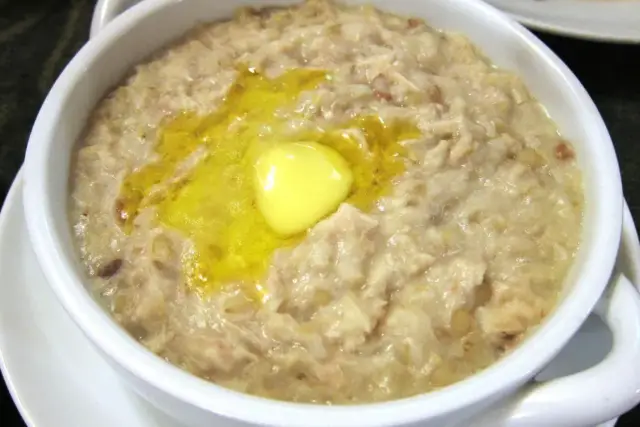
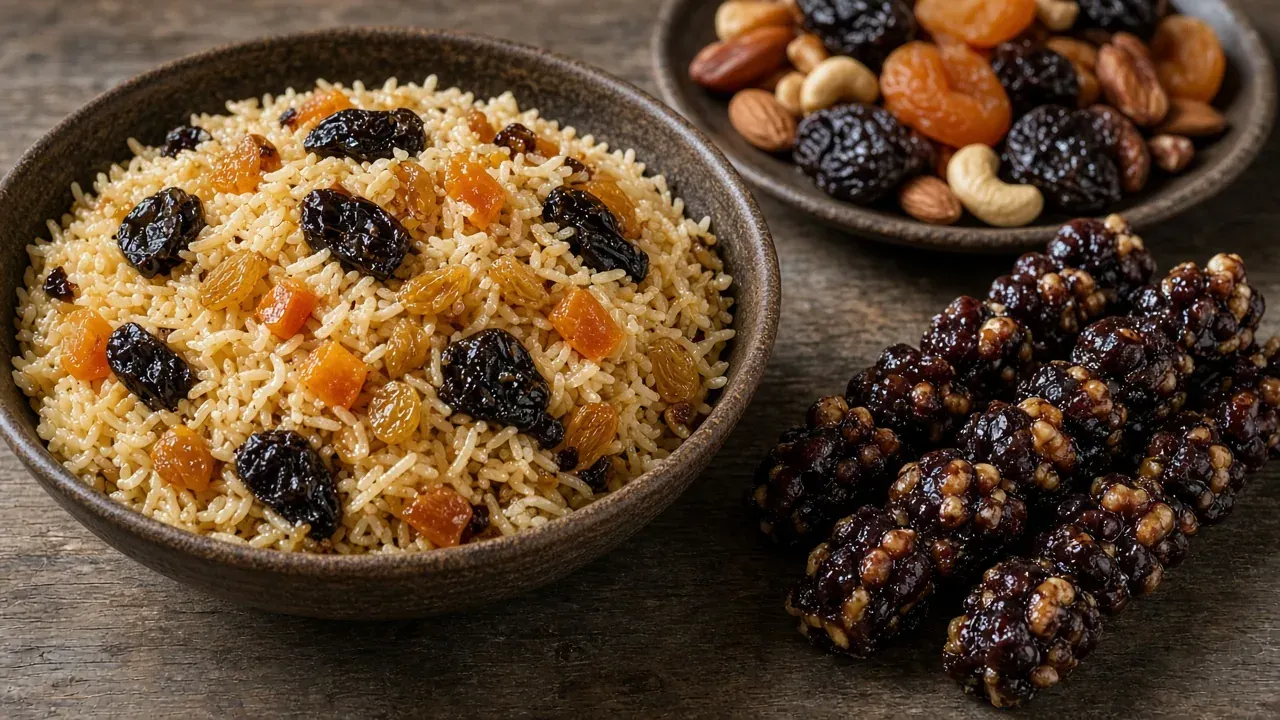
The second dish is pilaf with raisins and dried fruit. Aztag explains the symbol: the rice stands for humanity, and the raisins for the chosen, the people God picked to carry on his work.
The News.am Style recipe uses two cups of rice, 100 g of raisins and 50 g each of dried apricot and prune. You soak the rice in salted water and fry the fruit in butter. Then you layer rice and fruit in a pot, cover it with pieces of lavash and let it steam.
Nevik and Greens
Nevik is Swiss chard cooked with chickpeas, a simple lenten dish. The Food Heritage Foundation lists it with the Christmas Eve dishes. In Armenia, News.am Style also calls for fried greens. Either way, something green sits beside the fish.
Soup, Fruit and Sweets
Some families start with tanapur, also called spas, a warm soup of yogurt and wheat. Then come dried fruits and nuts, and sharots, whole walnuts threaded on a string and coated in thick grape juice.
Anushapur, a sweet wheat pudding with apricots, often appears too. In Armenia many homes add home-made gata. Aztag also remembers stuffed quince with walnuts, raisins and honey on the old Christmas table.
The Day After Khetum
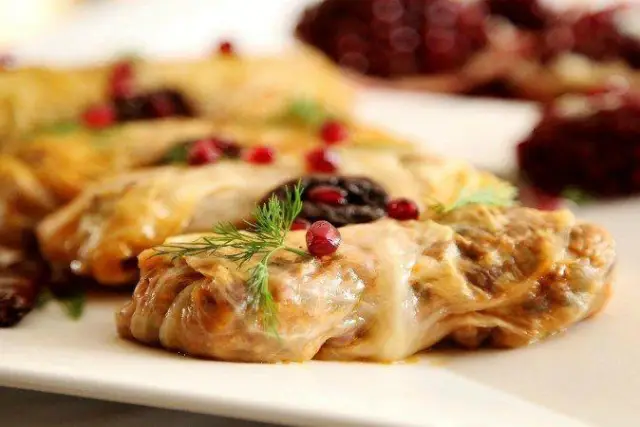
On 6 January the fast is over, and the table changes. Aztag writes that in many provinces the whole family had to sit down to the Christmas meal washed and in new clothes. The old feast brought cabbage tolma, a soup of dried vegetables called mayramachash, and meat from a ram or calf killed the day before.
Diaspora families have their own versions. The Food Heritage Foundation, writing from Lebanon, lists itch (a bulgur salad), su boreg, stuffed carrots, and the cured meats soujouk and basterma for Christmas Day. So the light khetum is only the first step of a long holiday table.
Red Wine and Blessings
Red wine is the one drink every source mentions. It stands for the blood of Christ. According to Aztag, the old Christmas table had no strong spirits, but red wine was allowed for exactly that reason. For a bottle from home, see our guide to Armenian wine.
The holiday goes on for eight days, until 13 January, the feast of the Naming of the Lord. Throughout those days Armenians greet one another with “Kristos tsnav yev haytnetsav”, “Christ is born and revealed”.
Children and the Light
Villages kept a lovely custom on this night. Gohar Gogolyan of Meghradzor told Panorama that children took the light from church in small lamps decorated with crosses. They went from house to house singing avetis, the Christmas carols.
Each child carried a bag or a knitted sock, and families filled it with treats. The children also made rattles out of walnuts. Unlike some other feasts, she says, Christmas was a quiet night, and the children did not make a great noise.
So, if you are in Armenia on 5 January, go to the evening service, then try the khetum dishes at an Armenian home or restaurant. Read more about the season’s food in our guide to Armenian cuisine, and about the whole holiday in Armenian New Year.
Questions Visitors Ask
When is khetum?
On the evening of 5 January, after the Chragaluyts service of Christmas Eve.
What do Armenians eat on Christmas Eve?
Fish, usually trout, rice pilaf with raisins and dried fruit, greens, dried fruit and nuts, and red wine. There is no meat.
Why fish?
It ends the Christmas fast without meat, and the fish is an old symbol of Christianity.
Sources
- Wikipedia (Armenian), “Ճրագալույց” (Chragaluyts), read 20 November 2026. hy.wikipedia.org
- Panorama.am, “Folk traditions of Christmas” (interview via Qahana.am), 31 December 2024. panorama.am
- Aztag Daily, “Feasts and traditions: Christmas”, read 20 November 2026. aztagdaily.com
- News.am Style, “The main dishes of the Christmas table”, read 20 November 2026. style.news.am
- Food Heritage Foundation, “Khetum – Armenian Christmas dinner”, read 20 November 2026. food-heritage.org
- Smithsonian Magazine, “It’s Still Christmas in Armenia”. smithsonianmag.com
More Armenian food is on iArmenia.