Last updated: 18 November 2026· Facts checked November 2026
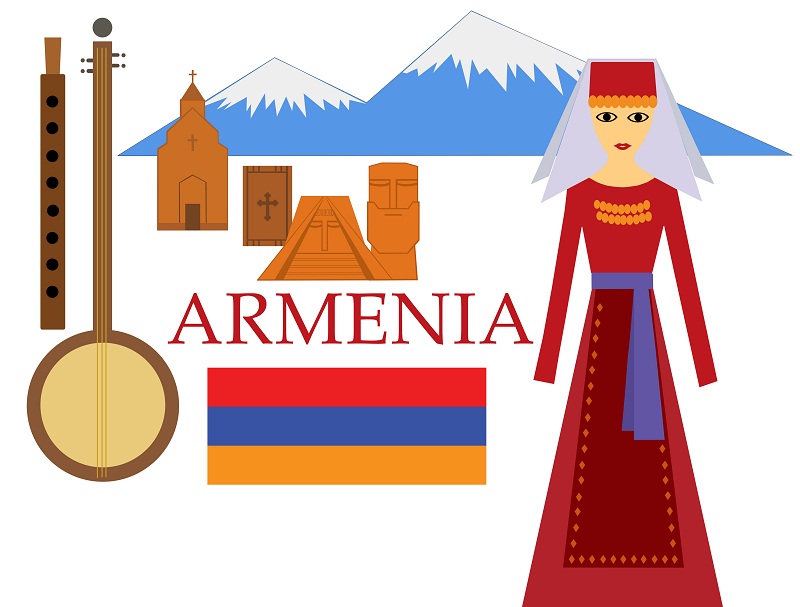
Armenian symbols are the signs you will see again and again in Armenia: the tricolour flag, Mount Ararat on the coat of arms, the swirling eternity sign, the pomegranate and the apricot. Some are set down in law, and others come from centuries of carving, cooking and custom.
This page explains what each one means and where to look for it. The Armenian flag, the pomegranate and the apricot also have pages of their own.
In this guide · 3 sections
The State Symbols of Armenia
Armenia has three state symbols: the flag, the coat of arms and the anthem. The Constitution names the first two, and separate laws describe all three in detail. Since July 2026 the country has also marked State Symbols Day on 23 August, under the rewritten Law on Holidays and Memorial Days.
The Flag
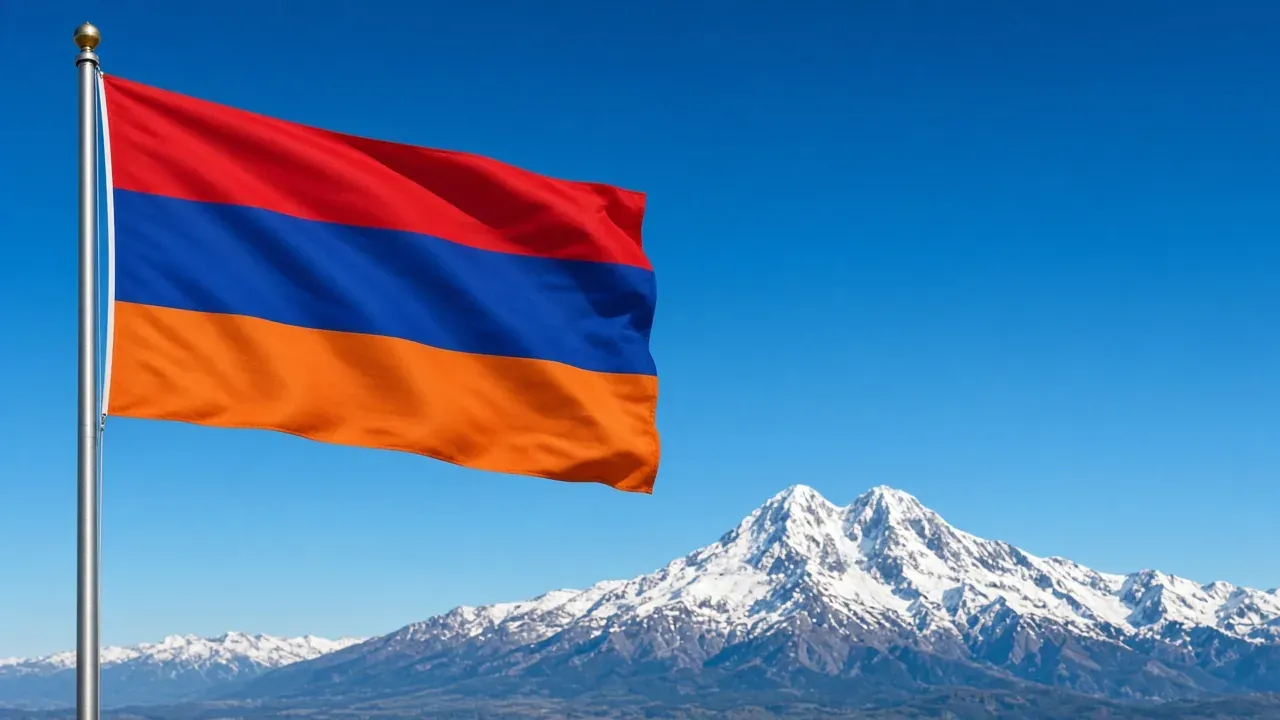
The flag has three equal stripes, red, blue and orange from top to bottom, and its width is half its length. The Supreme Soviet adopted it on 24 August 1990, and a new law followed on 15 June 2006. The Office of the President explains each colour.
- Red – the Armenian Highland and the people’s struggle for survival, the Christian faith, independence and freedom
- Blue – the will to live beneath peaceful skies
- Orange – the creative talent and hard work of the people
The Coat of Arms
The coat of arms was adopted on 19 April 1992. It renders the arms of the First Republic of 1918–1920, which the architect Alexander Tamanian and the artist Hakob Kojoyan designed. At its centre, an orange Mount Ararat carries Noah’s Ark on a shield.
Around the mountain sit the arms of four royal dynasties of historical Armenia: the Bagratunis, the Arshakunis, the Artashesians and the Rubenids. An eagle on the left and a lion on the right hold the shield.
Below it are a sword, a branch, a sheaf of wheat, a chain and a ribbon. Gold is the main colour, and the four quarters repeat the red and blue of the flag.
In fact, you carry this symbol whenever you handle Armenian paperwork. The law on the coat of arms puts a single-colour version on Armenian passports and on official seals and papers.
The Anthem
The anthem is “Mer Hayrenik” (“Our Fatherland”), with words by Mikael Nalbandian and music by Barsegh Kanachian. The Supreme Soviet adopted it on 1 July 1991, based on the anthem of the First Republic, and the current law dates from 25 December 2006. Its last verse speaks of the tricolour as a precious symbol.
The Eternity Sign
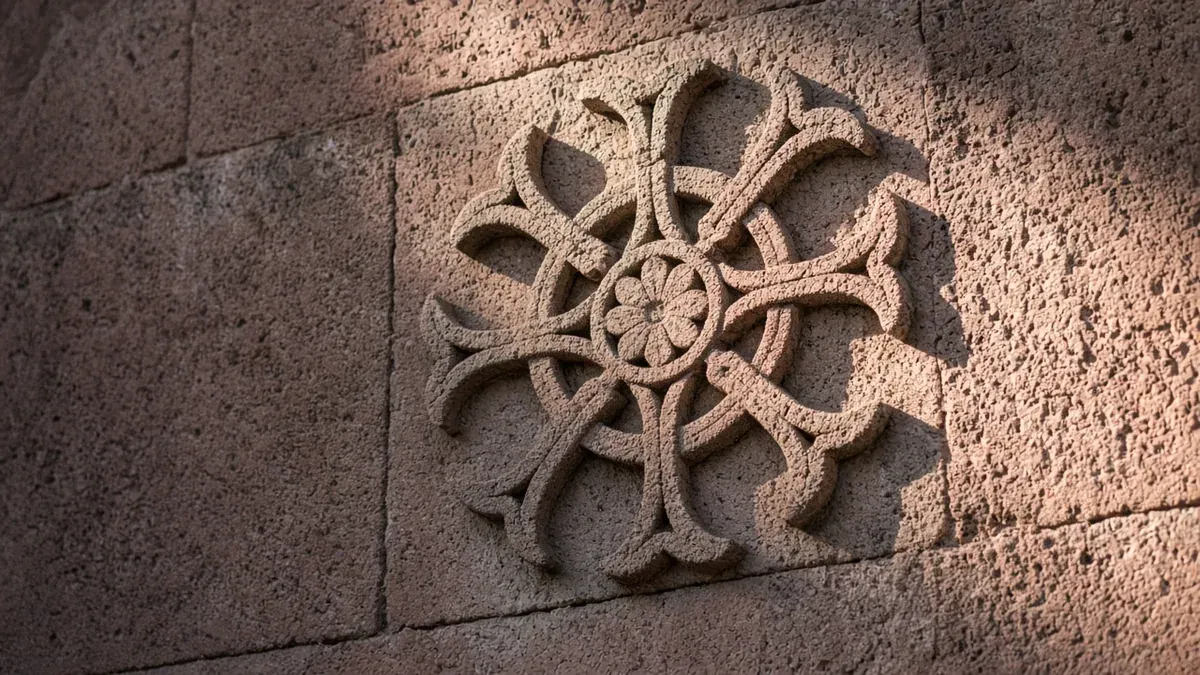
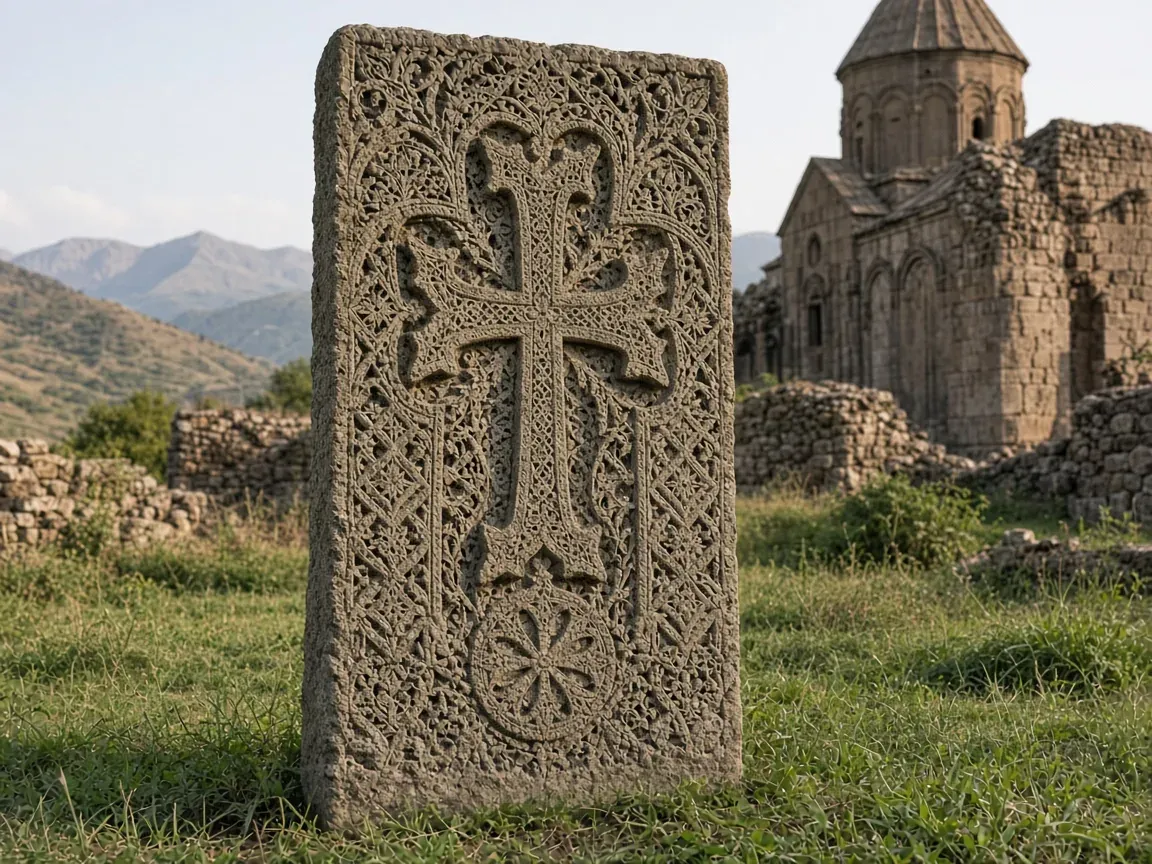
The eternity sign, haverzhutyan nshan (“sign of eternity”), is a wheel of interlaced curved bands, often with eight arms, turning clockwise or anticlockwise. The Armenian archive Mer Patmutyuny explains that it has no beginning and no end. It therefore stands for eternal life, rebirth and the bond between heaven and earth.
The sign appeared on Armenian steles from about the 1st century BC and later became part of khachkar carving. You find it on church walls, tombstones and manuscripts. Among the churches that carry it is the Mashtots Hayrapet Church in Garni, the village of Garni Temple.
Today the sign also appears on the logos of government agencies and on commemorative coins. Some Armenian neopagan groups use it too, and they call it arevakhach (“sun cross”). So you will meet the same swirl on a medieval wall and on a modern business card.
On the Khachkars
Khachkars are Armenian cross-stones, carved outdoor steles up to 1.5 metres high. UNESCO describes them as a cross resting on the symbol of a sun or wheel of eternity, with plant and geometric patterns around it. It inscribed the craft on its Representative List in 2010.
Carvers usually use local stone and work it with chisels, sharp pens and hammers, then grind the surface with fine sand. Next they fill small breaks with clay or lime plaster and paint the stone. UNESCO adds that a finished khachkar is raised in a small religious ceremony, blessed and anointed. People believe it can bring help, protection, long life and remembrance, and pray through it for the soul.
The Smithsonian Folklife Festival notes that khachkars first appeared in the 9th century and that the genre lasted until the late 18th century. After a gap of almost 200 years, a khachkar-style memorial rose in Ejmiatsin in 1965 and started a revival in the early 1970s.
UNESCO counts more than 50,000 khachkars in Armenia and says no two are alike. Then look at the base of the cross on any khachkar you pass. The wheel under the arms is very often the eternity sign.
On a khachkar, the cross usually stands on a wheel of eternity. Look under the arms of the cross, not above them.
The Pomegranate and the Apricot
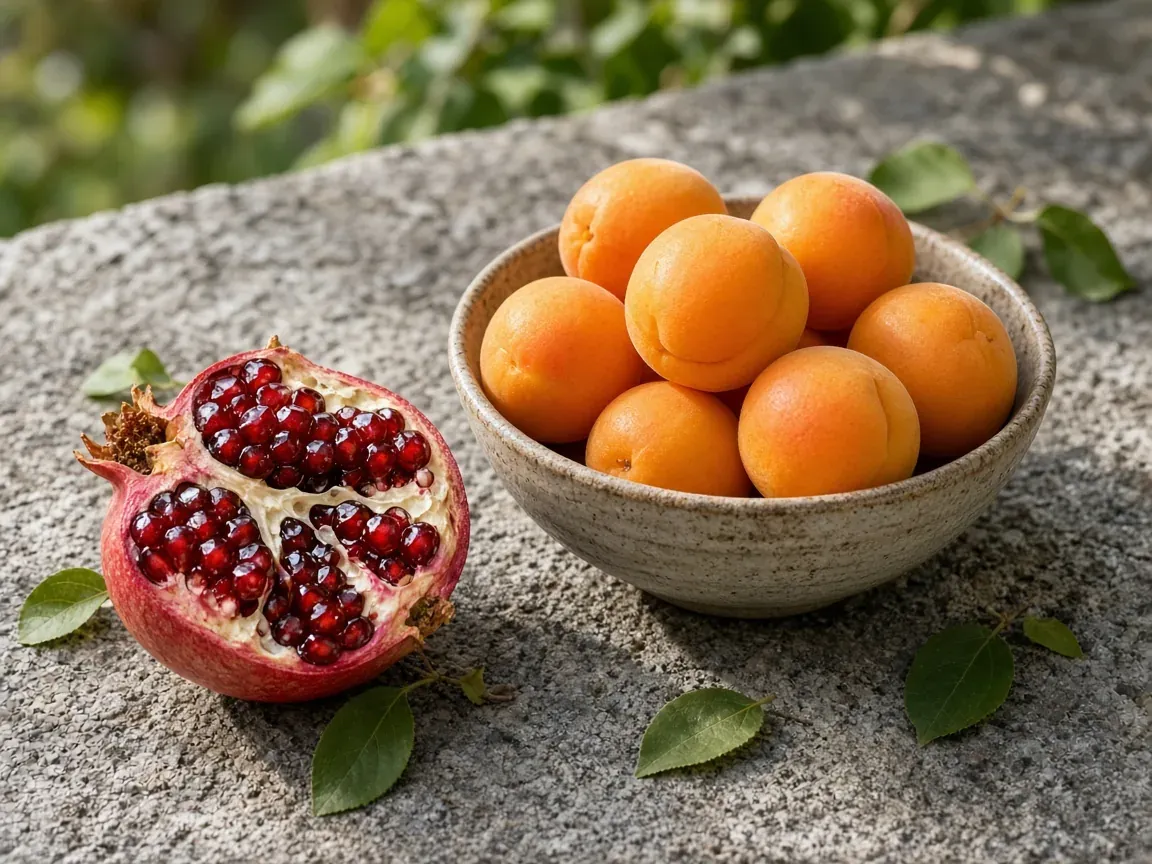
The pomegranate, nur in Armenian, is the fruit of plenty. The biodiversity portal of Armenia says it has been part of Armenian culture since pagan times. Its many seeds stand for many children and the continuation of life.
The portal adds that the seeds in one fruit also became a sign of unity. In the past, people scattered pomegranate seeds before a bride to wish her fertility. After Armenia adopted Christianity, the fruit stayed a sign of holiness and eternal life, and you can see it in church sculpture and manuscript miniatures.
The apricot carries Armenia in its very name, Prunus armeniaca. However, a 2018 study in Frontiers in Plant Science says the Latin name wrongly suggests an Armenian origin. The fruit first grew in Central Asia, and Armenia was the route by which it entered Europe. Roman authors already called it “Mela armeniaca” around AD 50.
Also, the orange stripe of the flag and the orange of the apricot are easy to connect, but the President’s office does not make that link. It gives orange its own meaning: the creative talent and hard work of the people.
So, when you visit Armenia, look for the flag on the squares, the eternity sign on the stones, and the pomegranate on the table. Each one tells part of the same story.
Questions Visitors Ask
What do the colours of the Armenian flag mean?
Red is the Armenian Highland and the struggle for survival, faith and freedom; blue is peaceful skies; orange is the people’s creativity and hard work.
What is the Armenian eternity sign?
A swirling wheel of interlaced bands with no beginning or end. It stands for eternal life and appears on khachkars, churches and modern logos.
Why is Mount Ararat on the coat of arms?
The law places Mount Ararat with Noah’s Ark at the centre of the shield, surrounded by the arms of four historical Armenian dynasties.
Sources
- Office of the President of Armenia, “State symbols of the Republic of Armenia”, read 18 November 2026: flag, coat of arms, anthem. president.am
- National Assembly, Law on the Coat of Arms: use on passports and official seals. parliament.am
- Law on Holidays and Memorial Days, HO-345-N of 3 July 2026, article 27 (State Symbols Day, 23 August), ARLIS. arlis.am
- UNESCO, “Armenian cross-stones art. Symbolism and craftsmanship of Khachkars”, inscribed 2010. ich.unesco.org
- Smithsonian Folklife Festival, “Armenia: Khachkar”, 2018: first khachkars, the 1965 revival. festival.si.edu
- Mer Patmutyuny, “Eternity sign carved in stone, Dadivank”, read 18 November 2026. merpatmutyuny.am
- Wikipedia, “Armenian eternity sign”, read 18 November 2026: dates, churches, modern use. en.wikipedia.org
- Biodiversity of Armenia portal, “Culture”: the pomegranate in Armenian culture. biodiversity-armenia.am
- Herrera S. et al., Frontiers in Plant Science, 2018: the origin of the apricot. frontiersin.org
More culture and traditions are on iArmenia.