Last updated: November 2026
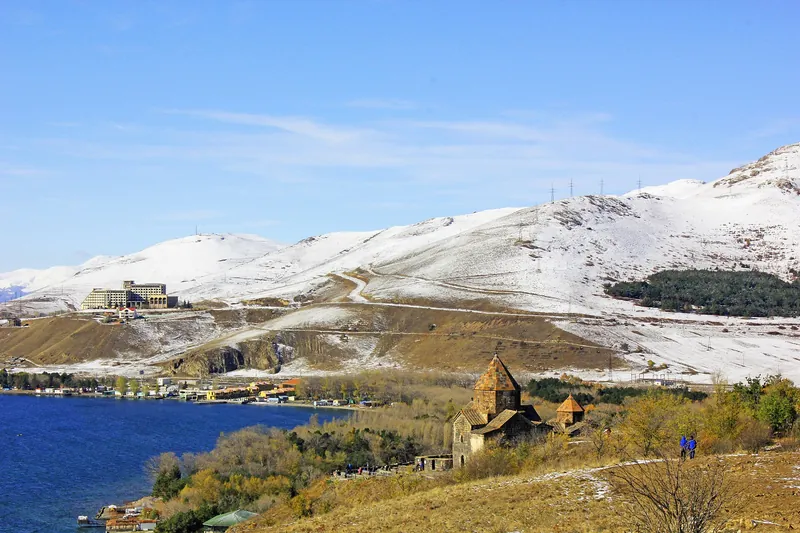
Lake Sevan is Armenia’s largest lake and one of the largest high-altitude freshwater lakes in Eurasia. It lies about 1,900 metres up, an hour’s drive from Yerevan. Its colour shifts from jet black to turquoise, depending on the weather.
In summer Sevan is the country’s beach. The rest of the year it is a quiet place of monasteries, cold wind and fish restaurants. Here you will find what to see, where to swim, how to get there and when to go.
Key Facts
- Where: Gegharkunik province, eastern Armenia. Sevan town is about 65 km northeast of Yerevan on the M4 road.
- Size: about 1,242 km², 74 km long and up to 32 km wide; average depth 27 m, maximum about 79 m.
- Altitude: about 1,900 m above sea level (1,900.8 m in July 2026).
- Protected: Sevan National Park since 1978; Ramsar-listed wetland since 1993.
- Must-see: Sevanavank monastery (874) on the Sevan peninsula; Noratus khachkar field near Gavar; Hayravank.
- Swimming season: July and August. The water rarely gets much above 20°C.
- Cost: Sevanavank and Noratus are free; state public beaches are free, private resort beaches charge.
- Getting there: under an hour by car; about 1 hour 15 minutes by minibus from Yerevan; summer weekend train.
In this guide · 6 sections
History of Lake Sevan
The “Gegham Sea”
Armenia has no sea, so Sevan plays the part. Armenians call it the “Gegham sea”. For many families, a summer weekend at a lakeside cabin is as fixed a tradition as khorovats on Sunday.
The Legend of Lake Sevan
According to a folk legend, a village with forests and hills once stood where the lake is now. Villagers drew water from a spring and always put the stopper back. One evening a woman forgot. The water flooded the valley, the angry villagers cursed whoever had left it open, and she turned to stone.
Another tale explains the name. Settlers from Van missed their warm homeland in this cold place and cried “Sev Van” (“black Van”). It is a folk explanation of the name.
Draining the Lake
The lake is also central to the country’s water supply and its ecology. In Soviet times, water was drained for irrigation and hydropower from the 1930s onward.
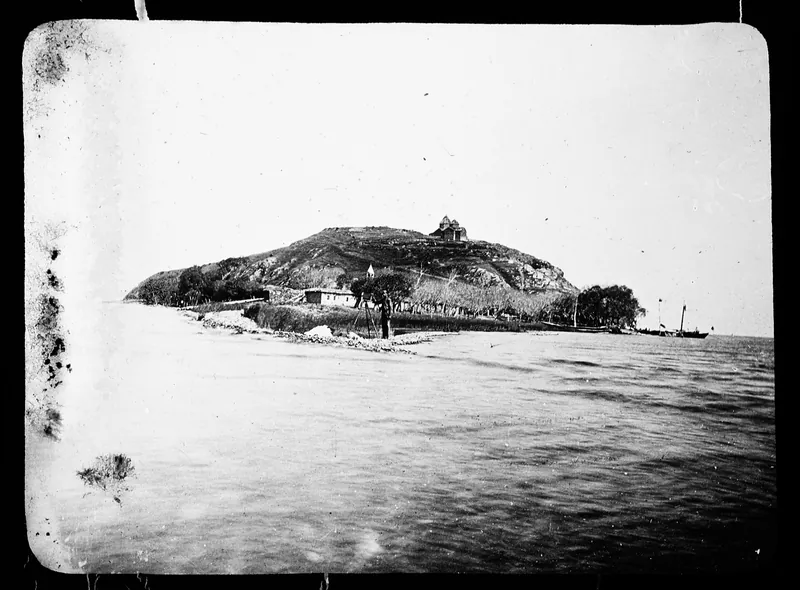
The level of Lake Sevan fell by almost 20 metres between 1936 and 2000.
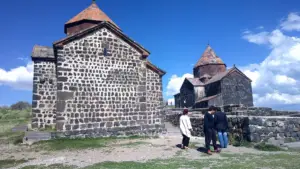
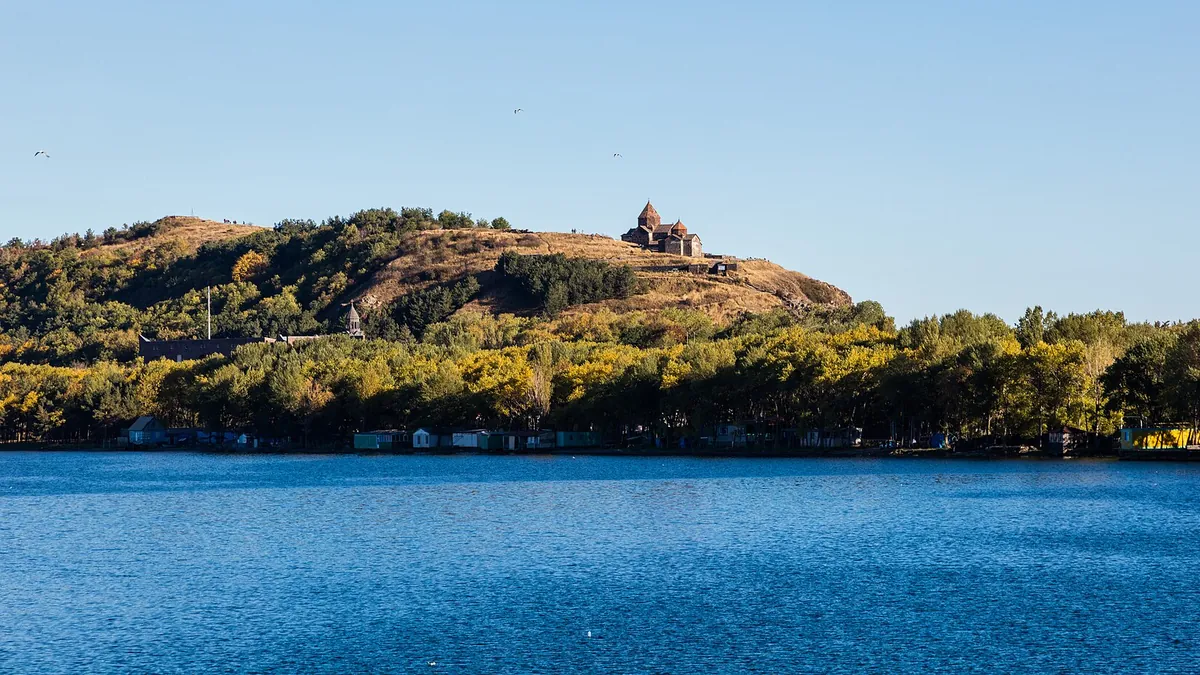
That drop joined the former Sevan island to the shore. That is why Sevanavank now stands on a peninsula.
Raising the Lake Again
Since the 2000s, Armenia has been slowly raising the lake again. The target is 1,903.5 m. Progress depends on rain and on how much water is released for farming.
In 2026 the government cut the irrigation allowance from 180 to 143.6 million m³. By July the lake had risen 59 cm since January, one of its fastest rises in decades. Rising water floods trees and old buildings along the shore. As a result, you will see dead trees standing in the water in places.
What to See at Lake Sevan
Sevanavank Monastery
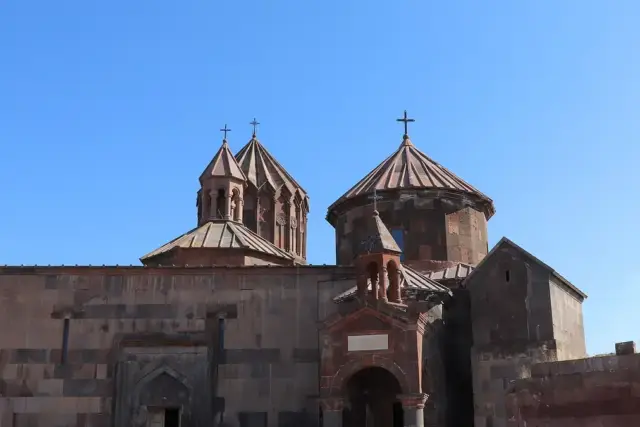
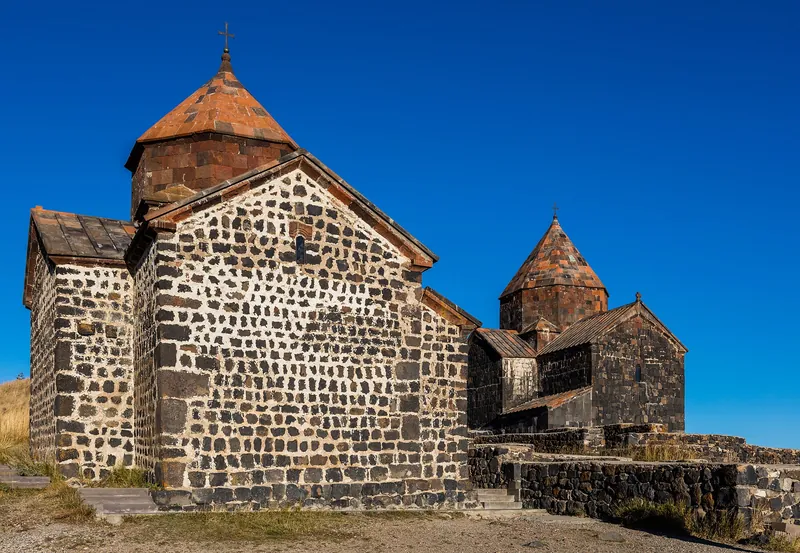
The Sevanavank monastery was founded in 874 by Princess Mariam, daughter of Ashot I. Two small dark-stone churches survive on top of the peninsula. They are Surp Arakelots (“Holy Apostles”) and Surp Astvatsatsin (“Holy Mother of God”).
You reach them by a long flight of steps from the car park. It is an active monastery, so dress modestly, with shoulders and knees covered. Entry is free.
The views over the lake from the top are the reason most people climb. Go early or late in the day to avoid the tour groups and the midday glare.
Hayravank
Hayravank is a small 9th-century monastery on a rocky point on the west shore. It stands about halfway between Sevan town and Gavar. It sees far fewer visitors than Sevanavank and has the same lake views.
Noratus Cemetery
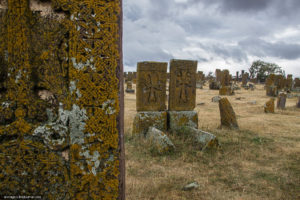
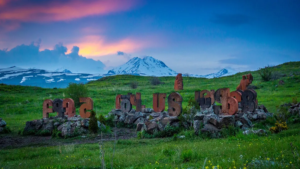
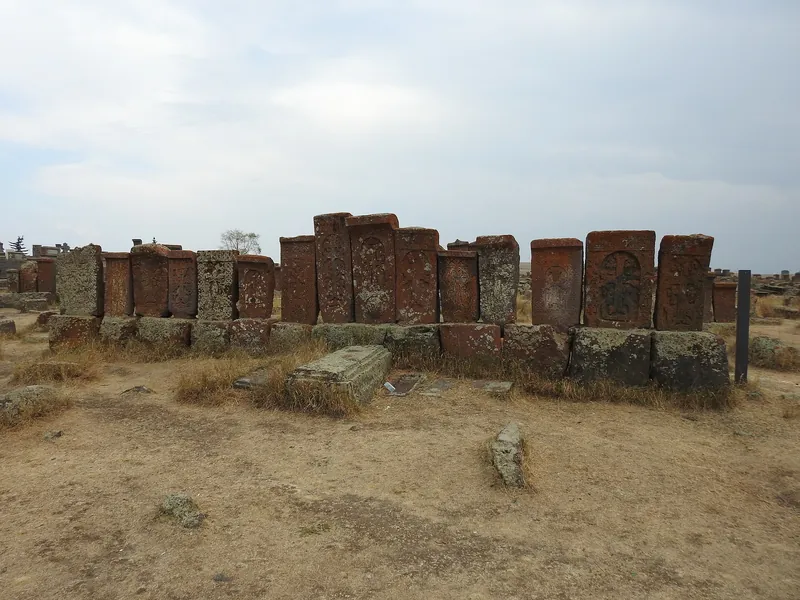
Near the town of Gavar, Noratus is the largest surviving field of medieval khachkars (“cross-stones”) in Armenia. More than 900 stones stand over about 7 hectares, carved from the 10th to the 17th century. The oldest known dated one, from 996, is now in Yerevan’s History Museum.
Allow an hour here. Walk to the far end, where the stones are older and the crowds thinner.
The East and South Shores
Most visitors never get past the peninsula. If you have a car, try the east shore between Tsovagyugh and Shorzha (officially renamed Shoghakat). It has the quietest wild beaches and the clearest water.
The south shore around Martuni is rural and almost empty outside July. Sevan National Park also runs hiking routes on the Artanish peninsula. In fact, the lake attracts more than 250 bird species, including the Armenian gull.
Beaches and Swimming at Lake Sevan
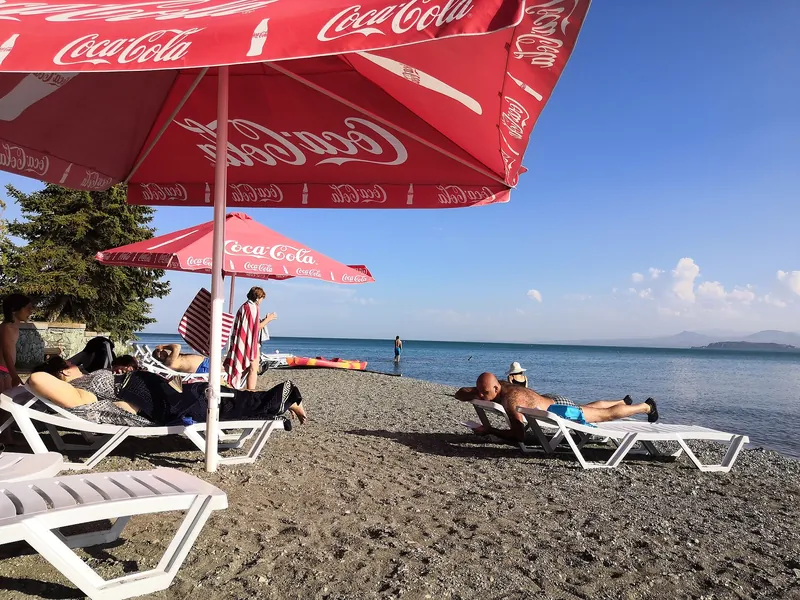
The busiest stretch is the 2.5 km of north shore running northwest from the peninsula. It is lined with resorts, cafés and jet-ski rentals. Here you also find the “domiks” (“small cabins”) Armenian families have rented for decades.
In July and August the shore is lively, crowded on weekends and loud at night. Vendors walk the beaches selling grilled corn, sunflower seeds and fried fish.
- Water temperature – roughly 18–20°C on average in July and August, colder after wind or rain. It feels refreshing on a hot day and cold the rest of the time.
- Cost – the state public beaches are free, and in summer 2026 they had water rescuers on duty. Private resort beaches charge for entry or loungers; prices vary, so ask at the gate.
- Safety – many beaches have no lifeguards, the water deepens and chills quickly, and the weather changes fast at this altitude. Don’t swim far out alone and don’t swim after drinking.
- Sun – at 1,900 m the UV is strong even when the air feels cool. Use sunscreen and a hat.
- Litter – some beaches are cleaner than others. Take your rubbish with you.
Water Sports
Sevan is also Armenia’s water-sports centre. Sailing, windsurfing, kayaking and paragliding are offered on the north shore in summer, and the lake hosts triathlons. Ask at the resorts near the peninsula, because operators change from year to year.
Sevan Fish and Crayfish
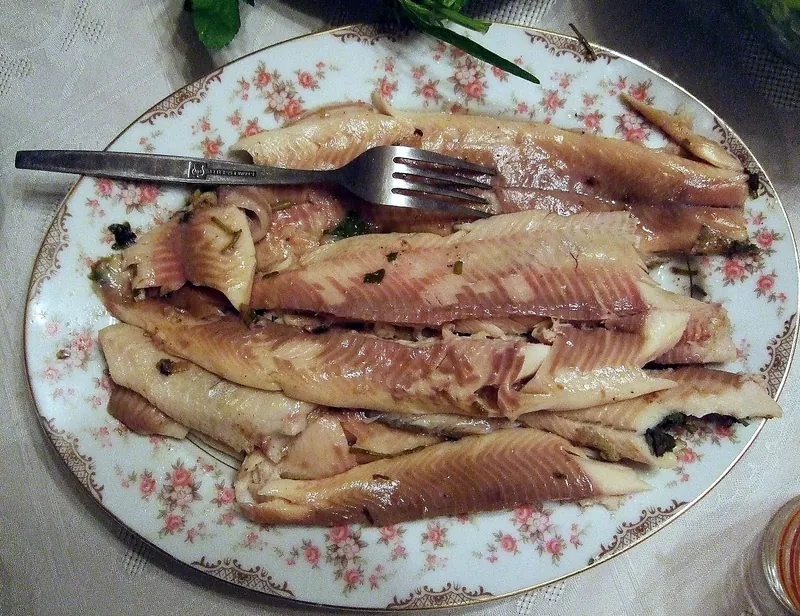
Eating fish by the lake is part of the trip. The restaurants on the road north of the peninsula serve fried or grilled fish, crayfish and lavash, often with a lake view.
- Ishkhan (“prince”, Sevan trout) – the lake’s famous endemic fish. Its wild stocks collapsed in the 20th century, and today it is also reared in hatcheries. In May 2026 the Ministry of Environment released about 120,000 young trout into the lake. Ask where the trout on your plate comes from.
- Sig (whitefish) – introduced from Lake Ladoga in the 20th century and now the main commercial catch. In 2026 commercial fishing is allowed from 6 February to 20 November.
- Crayfish – Sevan supplies most of Armenia’s crayfish, usually served boiled by the kilo with beer.
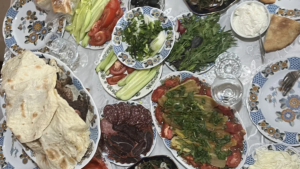
You will find sig and ishkhan among the classics of Armenian cuisine too.
How to Get to Lake Sevan from Yerevan
By Car or Taxi
Sevan town is about 65 km from Yerevan on the M4 motorway, under an hour in normal traffic. The road continues past the peninsula and through the Dilijan tunnel to Dilijan. So Sevan fits easily into a day trip north.
A taxi booked through the Yandex Go or GG apps is the easiest door-to-door option. The app shows the fare before you book. Arrange the return separately or ask the driver to wait.
By Minibus (Marshrutka)
Minibuses to Sevan town leave Yerevan through the day, roughly from 8:00 to 20:00. They depart from the Northern Bus Station and from near Yeritasardakan metro. The trip takes about an hour to an hour and a quarter, and the fare is low.
Minibuses heading to Dilijan or Ijevan will also drop you on the main road near the peninsula. From Sevan town to Sevanavank is a short taxi ride. Check current times and fares on the t-armenia.com timetable or at the bus station.
By Summer Train
In summer, South Caucasus Railway runs a slow, cheap and scenic train from Yerevan’s main station. It goes to Sevan and to Shorzha on the east shore. In 2026 it ran on Fridays, Saturdays and Sundays from 12 June.
The ride takes about 3.5 hours each way. Dates, times and fares change every year, so check them on the South Caucasus Railway website before you go.
On a Tour
Almost every Yerevan agency runs a day tour combining Sevan with Dilijan and the Haghartsin monastery. Others pair it with the Tsaghkadzor ski resort. However, tours usually stop only at Sevanavank.
When to Visit Lake Sevan
- July–August – beach season; warm days (around 19°C average highs in Sevan town, hotter in the sun), busy weekends, every resort open.
- June and September – the best months for sightseeing: green hills, fewer people, but the water is cold.
- October–April – long, cold winters, with January averages well below freezing and strong wind. Parts of the lake freeze most winters, though full ice cover is now rare. Many resorts close, but the monasteries and fish restaurants stay open and the snowy views are spectacular.
Bring a warm layer in any season. Even in August, the evenings by the lake can be chilly.
Where to Stay
To stay overnight, you can choose from simple cabins and campsites on the beaches to larger resort hotels on the north shore. There are also a few hostels in Sevan town.
In July and August, book ahead, especially for weekends. Outside summer many places close, so check before you go.
A Day Trip Around the Lake
- Leave Yerevan early and drive to the Sevan peninsula (1 hour). Climb to Sevanavank before the groups arrive.
- Follow the west shore south to Hayravank (30 minutes).
- Continue to Noratus near Gavar for the khachkars (20 minutes).
- Back north for a fish lunch near the peninsula, a swim in summer, then either return to Yerevan or continue through the tunnel to Dilijan.
So when you are in Armenia, don’t miss Lake Sevan. Climb to Sevanavank, walk among the Noratus khachkars, and try the fish by the water before you head home.
Questions Visitors Ask
Can you swim in Lake Sevan?
Yes. July and August are the swimming months, when the water is around 18–20°C. Use the main beaches, swim close to shore and be aware that many beaches have no lifeguards.
How far is Lake Sevan from Yerevan?
About 65 km to Sevan town, under an hour by car or about 1 to 1.5 hours by minibus.
Is it worth visiting Lake Sevan outside summer?
Yes, if you come for the monasteries and the scenery rather than the beach. It is cold and windy, but Sevanavank and Noratus are far quieter. Snow on the surrounding mountains makes the lake even more striking.
Is there an entrance fee for Lake Sevan or Sevanavank?
No. The lake, Sevanavank, Hayravank and Noratus are free. You pay only for private beaches, parking at some spots and activities.
Sources
- Lake Sevan, Wikipedia (size, depth, history of the water level, national park, fish)
- Lake Sevan water level rises, Armenpress, July 2026
- About 120,000 trout fry released into Lake Sevan, Ministry of Environment of Armenia, May 2026
- Legends of Armenia: lakes and waterfalls, Armenian Geographic (the Lake Sevan legends)
- Noratus Cemetery, Crossing Frontiers, The Courtauld; The meaning behind Armenia’s khachkars, Bradt Guides
- Water rescuers at the public beaches of Lake Sevan, Rescue Service of Armenia, July 2026; Public beaches open at Sevan, JAMnews
- Sevan level readings, 2026 and 2026 irrigation limit, EcoLur
- Commercial fishing limits for 2026, ARKA
- National parks in Armenia, armenia.travel (official tourism site)
- Sevanavank and Noratus Cemetery, Wikipedia
- Lake Sevan, Wikivoyage (beaches, swimming season, food)
- Lake Sevan travel guide, Absolute Armenia, updated August 2025 (minibus, train, taxi)
- Yerevan–Sevan–Shorzha summer train 2026, Trenopedia
- Sevan (town), Wikipedia (distance, climate averages 1991–2020)
Discover more of Armenia’s sights, food and traditions on iArmenia.