Last updated: 12 November 2026· Facts checked November 2026
Dilijan (Դիլիջան) is a forest town in Tavush province, about 100 km north-east of Yerevan by road. It is known for the monasteries of Haghartsin and Goshavank, Lake Parz and the trails of Dilijan National Park.
You can get there in about 1.5–2 hours by car via Lake Sevan, or in about 2 hours by minibus from Yerevan’s Northern Bus Station. Also, one full day covers the main sights. Two or three days give you time to hike as well.
In this guide · 6 sections
Key Facts About Dilijan
- Where: Tavush province, about 100 km from Yerevan on the M4 via Sevan
- Minibus: from Yerevan’s Northern Bus Station, about 2 hours, usually 1,000–1,500 AMD (as of November 2026)
- Shared ggTaxi minivan: from the top of Mashtots Avenue below the Matenadaran, booked in the ggTaxi app
- Taxi: roughly 10,000–17,000 AMD one way; check the price in the app first
- Top sights: Sharambeyan Street, Haghartsin, Goshavank, Jukhtak Vank, Lake Parz
- Time needed: 1 day minimum; 2–3 days with hiking
- Best time: late spring and autumn; winter is snowy and quiet
Where Dilijan Is
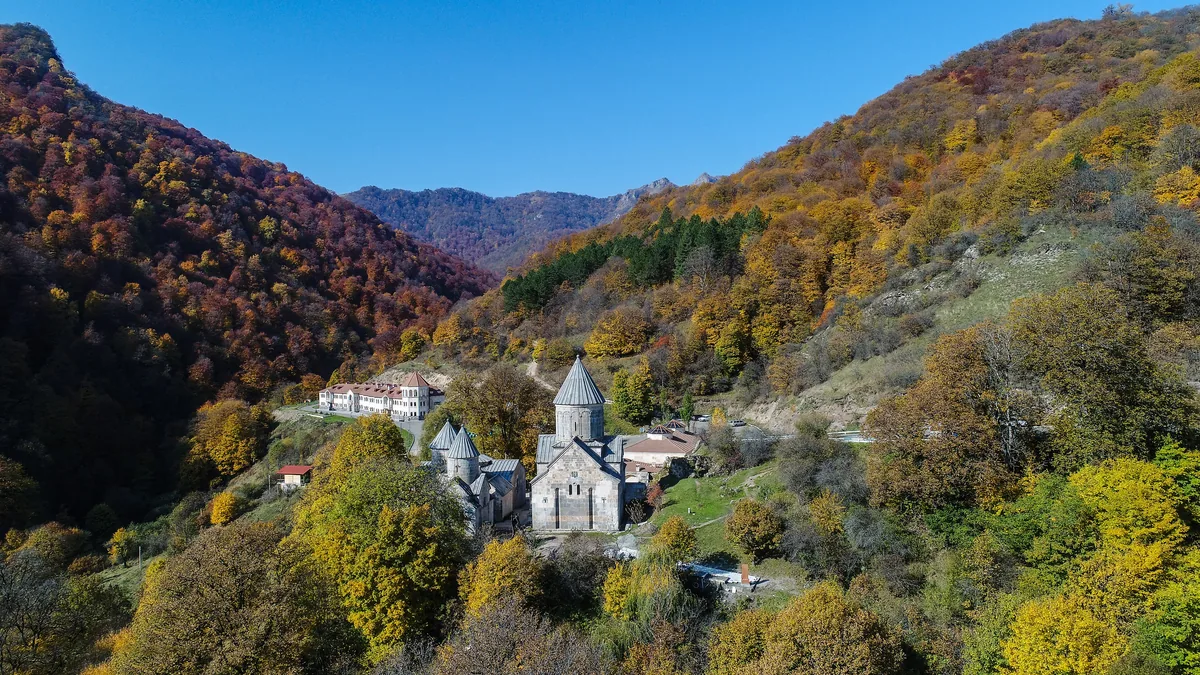
Dilijan lies in the valley of the Aghstev river, between about 1,100 and 1,500 m above sea level. In fact, beech and oak forest covers the hills around it. Armenians have long called it a mountain resort, and you may hear it called the “Switzerland of Armenia”.
From Yerevan the M4 runs north-east to Lake Sevan. It then climbs to the Sevan–Dilijan tunnel, about 2.3 km long, and drops into the forest. Many travellers stop at Sevanavank on the way.
Modern Dilijan also has two big new institutions. UWC Dilijan, an international boarding school, opened in 2014. The Central Bank of Armenia runs its Training and Research Center here. Neither is a visitor attraction, but they explain the new buildings on the hillsides.
How to Get to Dilijan from Yerevan
| Option | From | Time | Cost (approx.) |
|---|---|---|---|
| Minibus (marshrutka) | Northern Bus Station | about 2 h | 1,000–1,500 AMD |
| ggTaxi shared minivan | Top of Mashtots Ave, below the Matenadaran | about 1.5–2 h | about 1,600 AMD (Transcaucasian Trail guide) |
| Taxi (ggTaxi, Yandex Go) | Central Yerevan | about 1.5 h | 10,000–17,000 AMD |
| Car | M4 via Sevan | about 1.5–2 h | fuel |
The Northern Bus Station is far from the centre, so most people take a taxi there. However, minibuses leave roughly every hour from morning until late afternoon. However, published times differ, and the last bus back from Dilijan may leave around 4 pm.
Route numbers quoted online also differ. Today, ask for “Dilijan” at the station instead. Have small notes ready, because fares reported in 2025–2026 range from 1,000 to 1,500 AMD.
In Dilijan, minibuses stop at the small bus station on the M4, next to the roundabout with the Vanadzor road. As a result, the centre is within walking distance, and taxis wait at the station. Minibuses also run to Vanadzor in about an hour, and Yerevan–Ijevan minibuses pass through.
Things to Do in Dilijan
Old Dilijan and Sharambeyan Street
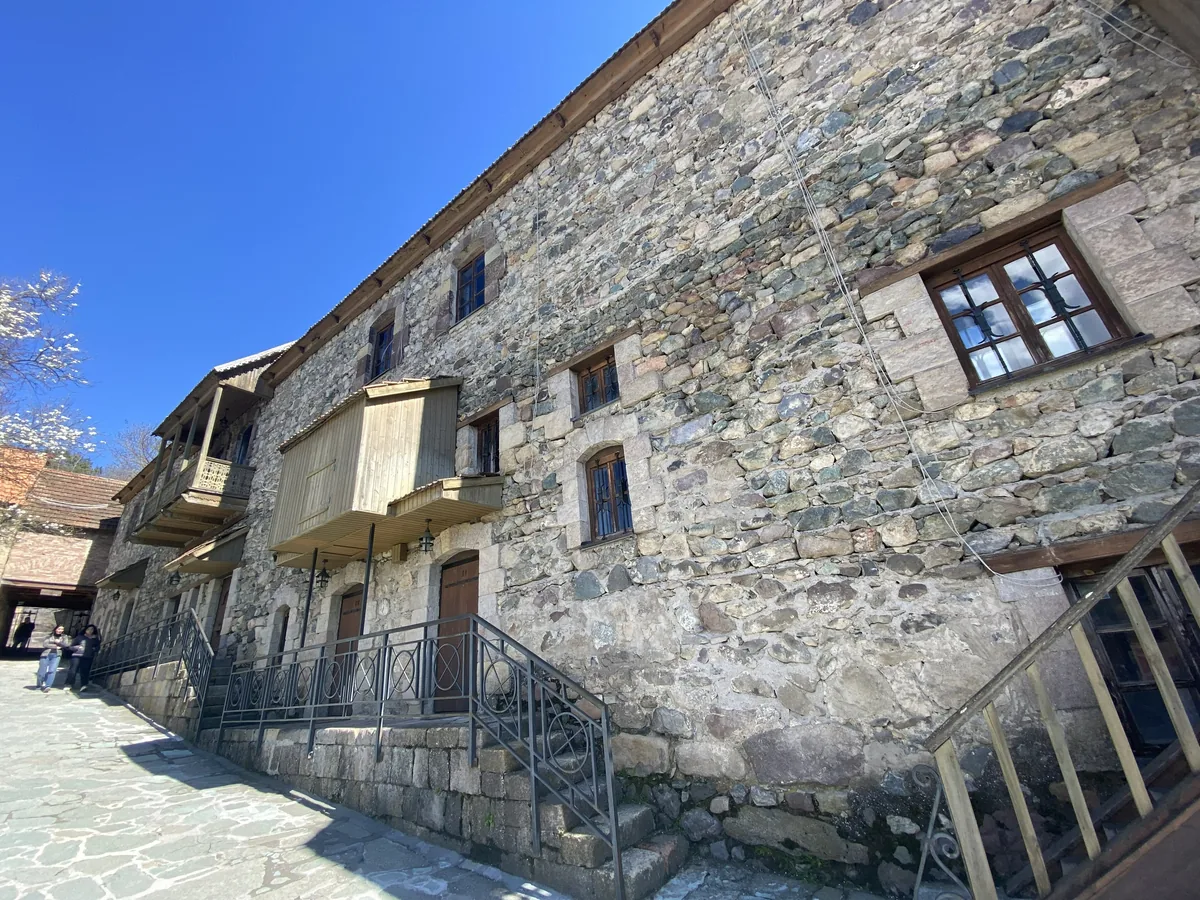
Sharambeyan Street is a pedestrian lane of restored 19th-century houses with wooden balconies. For example, it has craft workshops, small galleries and souvenir shops. The Tufenkian Old Dilijan Complex hotel occupies part of the street. It is the most photographed corner of town.
Museums of Dilijan
The Dilijan Museum of Regional Studies (Local Lore Museum and Art Gallery) is at 28 Myasnikyan Street. It has three floors. The lower floor shows local archaeology and ethnography, with some finds from the 3rd millennium BC. Above are Soviet-era Armenian paintings and European art of the 16th–19th centuries.
According to the museum’s website (November 2026), it opens Tuesday to Sunday, 10:00–17:40. In addition, a full ticket costs 4,000 AMD for foreign visitors.
In February 2026 the Dilijan branch of the Sharambeyan Folk Arts Museum reopened after restoration. It is now the Armenian Textile Museum, the country’s first museum devoted to textiles. It shows carpets, flat-woven rugs, embroidery and lace in an 1896 mansion. Its hours are not published online, so ask at the information centre.
The Town Park and the Mimino Statues
The town park has a pond and walking paths. Meanwhile, across the bridge over the pond is the tourist information centre. According to the Tourism Committee, it has hiking maps and rents bikes and scooters.
Just off the central square stand statues of the characters from Mimino, the 1977 Soviet comedy featuring Frunzik Mkrtchyan. They are a favourite photo stop for visitors who know the film.
Where to Eat
Expect Armenian home cooking and khorovats, the Armenian barbecue. The Tufenkian Old Dilijan Complex on Sharambeyan Street has a restaurant and bakery serving Western Armenian dishes. The town also has cafés and well-stocked supermarkets for picnic supplies.
Monasteries Around Dilijan
Haghartsin Monastery
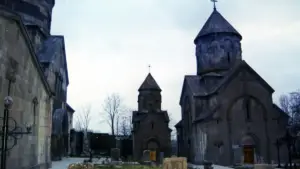
Haghartsin stands in a forested side valley about 13–14 km from town. Therefore, it was built between the 10th and 13th centuries. The church of Saint Gregory is the oldest. Saint Stepanos dates from 1244 and the largest church, Saint Astvatsatsin, from 1281. The refectory was built in 1248.
According to the legend, an eagle circled above the dome during the consecration. Moreover, folk etymology reads the name as “playing eagle”. Visitors also try to pass through the hollow trunk of an old walnut tree, which is said to grant a wish.
The ruler of Sharjah paid for a major restoration of Haghartsin, which began in 2008. In fact, the complex formally reopened in October 2013.
The Transcaucasian Trail recommends stopping here for gata, the Armenian sweet bread. There is no public transport, so take a taxi from Dilijan.
Goshavank
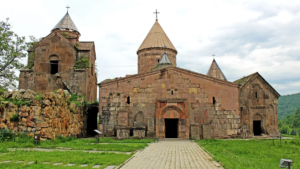
Goshavank is in the village of Gosh, about 15 km east of Dilijan. The scholar and lawmaker Mkhitar Gosh began it in 1188, after an earthquake destroyed the older Getik monastery. It was first called Nor Getik (“New Getik”), and took his name after his death in 1213.
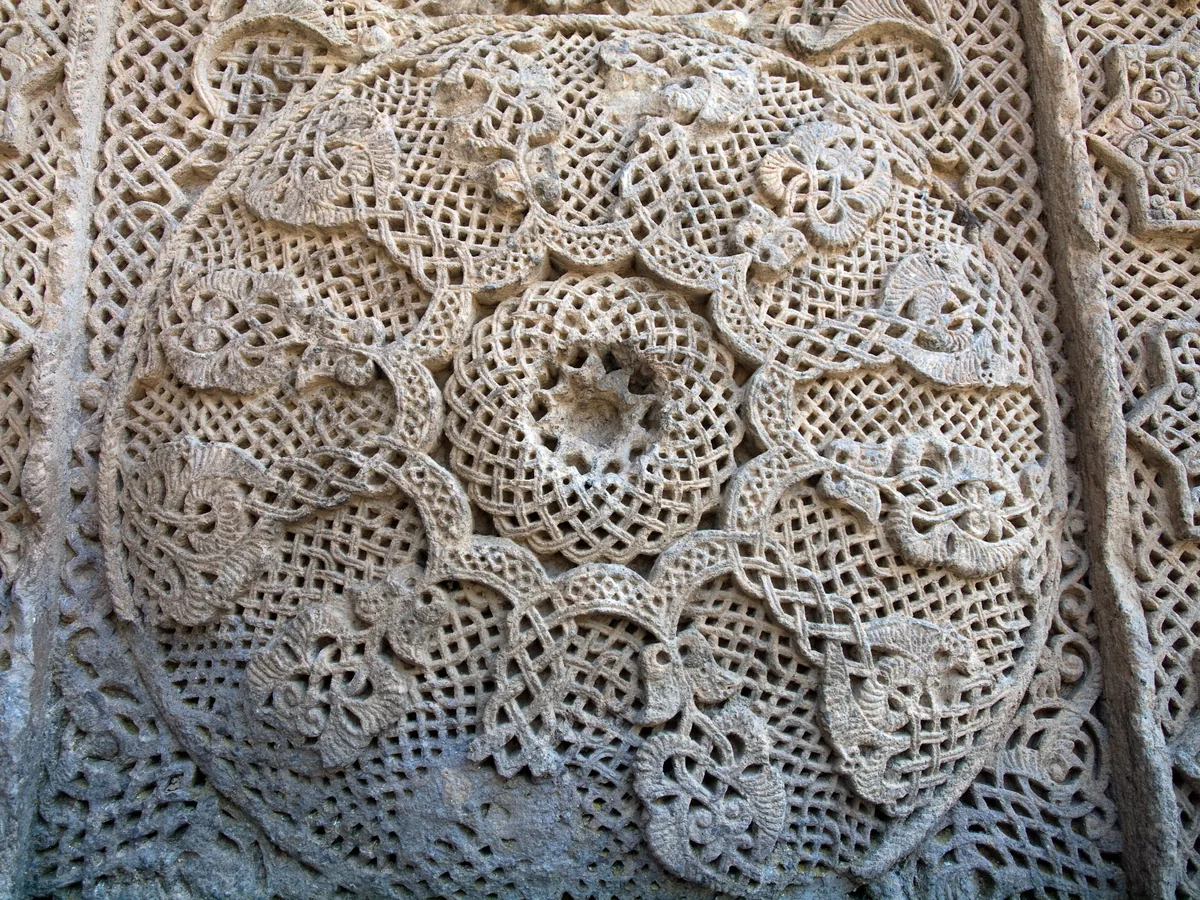
The main church, Saint Astvatsatsin, dates from 1191–1196. Also, you can also see later churches, a ruined school and finely carved khachkars, two of them from 1291. From the village a marked trail climbs 4.2 km to little Gosh Lake.
Jukhtak Vank and Matosavank
These two small monasteries hide in the woods on the north-western edge of town. In fact, you reach them only on foot, on the marked “Medieval Monasteries Trail”. Jukhtak Vank (“pair monastery”) has two churches. An inscription dates the smaller one to 1201, and the larger may be older.
Matosavank was completed in 1247. However, on the Transcaucasian Trail it is a side loop from Jukhtak Vank that adds about an hour, plus time to explore.
Lake Parz and Dilijan National Park
The clear lake
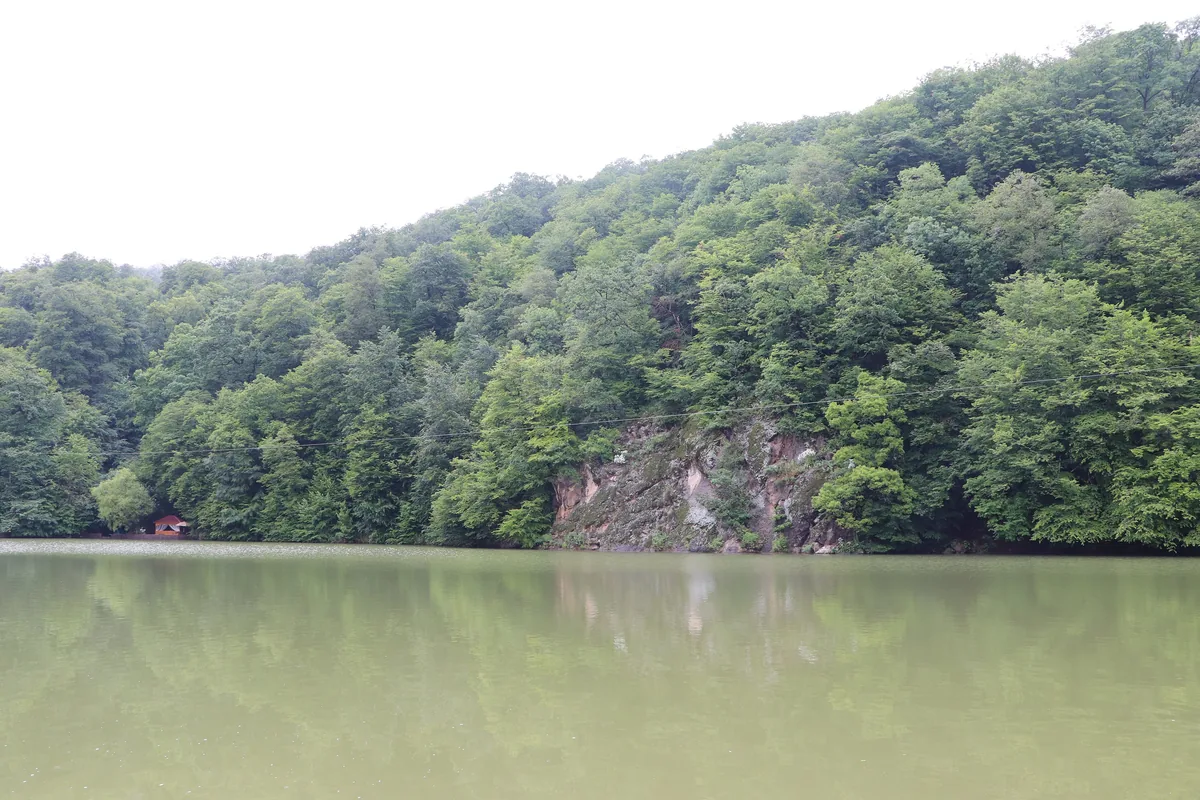
Parz (“clear lake”) is a small forest lake north-east of town. Today, in season it has a zip line and a ropes course, and an easy path loops around the shore. There is no public transport. Go by taxi or car, or walk in on the Transcaucasian Trail from Dilijan or Gosh.
Hiking in Dilijan National Park
Dilijan National Park was created in 2002 from a state reserve founded in 1958. As a result, it covers 33,765 hectares of beech and oak forest and meadow, including a rare yew grove. The Transcaucasian Trail crosses the park on paths marked with red and white blazes.
| Trail section | Distance |
|---|---|
| Gosh Lake to Goshavank (Gosh village) | 4.2 km |
| Goshavank to Lake Parz | 7.2 km |
| Lake Parz to Dilijan | 13.3 km |
| Dilijan to Jukhtak Vank | 7.1 km |
| Jukhtak Vank to Haghartsin | 19.8 km |
Download the route before you go; the trail’s website offers GPX files. For example, brown bears, wolves and lynx live in the park, so stay on the trails. The trail builders also warn of steep ground, river crossings and guard dogs near herds.
When to Visit Dilijan
Spring is green but the wettest season. June and July bring wildflowers, and summer is cooler than Yerevan. Late October to early November is the peak of the autumn colours. The Dilijan Wine Fest has been held in early August in recent years.
Visiting in Winter
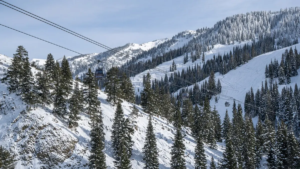
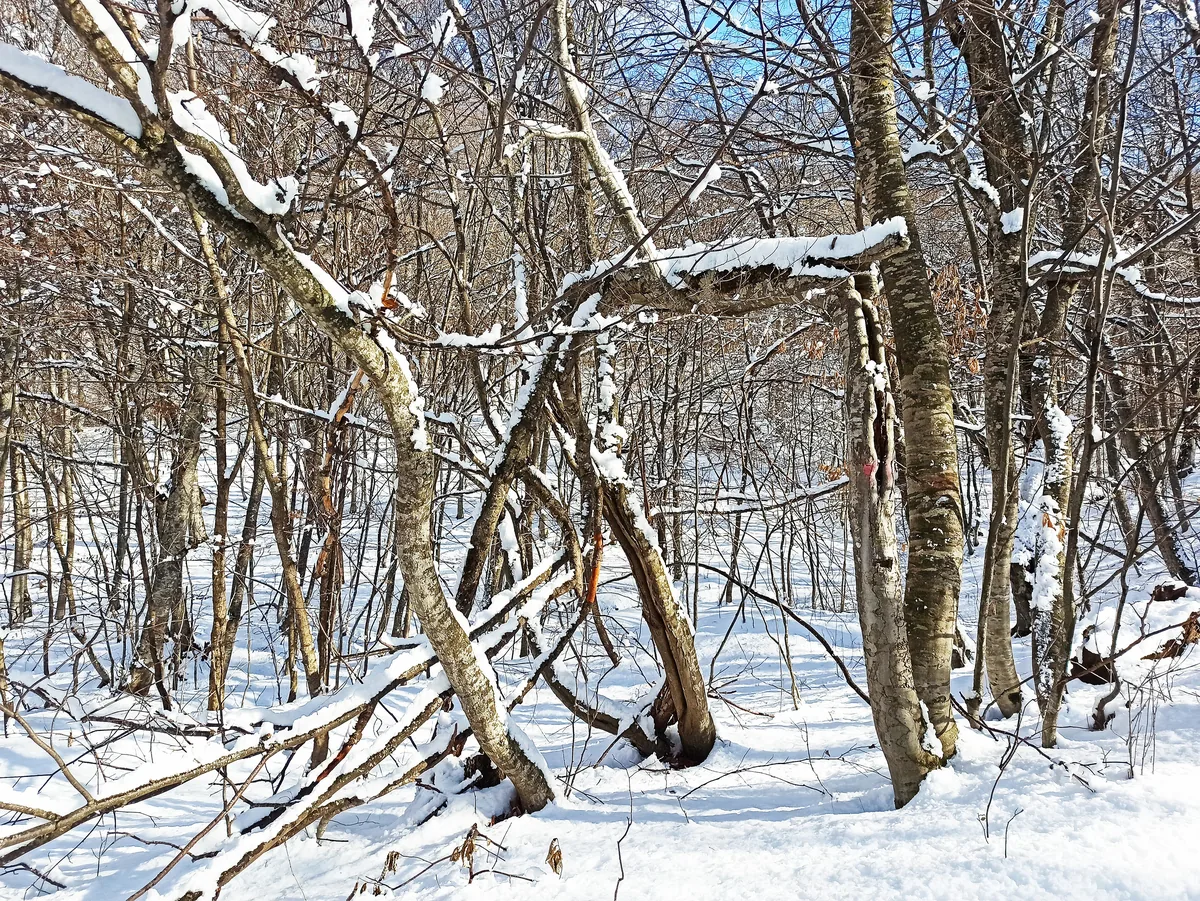
Winter brings snow and frost, and many tourist services close. The town, Sharambeyan Street, the museums and Haghartsin are still worth a visit. In fact, snowy forest makes the monasteries even quieter. Plan for these points:
- Road reports – the bends of the M4 near Dilijan are often listed as difficult for trucks in snow. Check the Rescue Service’s daily report on rescue.mia.gov.am the day you travel.
- Side roads – after snowfall the roads from the M4 to Haghartsin and Lake Parz have been reported difficult for all vehicles.
- Trails – paths can be icy or deep in snow; ask at the information centre before hiking.
- Daylight – leave Yerevan early and know when the last minibus goes back.
How Many Days You Need
- Day trip from Yerevan – Sevanavank on the way, then Haghartsin, Old Dilijan and Goshavank or Lake Parz. Long, but possible with a car or tour.
- One night – the town and Haghartsin on day one; Lake Parz and Goshavank, or the trail between them, on day two.
- Two or three nights – add Jukhtak Vank, Gosh Lake and a longer section of the Transcaucasian Trail.
Without a car, hire one taxi in Dilijan for Haghartsin, Goshavank and Lake Parz. Agree the price and waiting time before you set off.
So, whether you come for the monasteries, the forest trails or a quiet snowy weekend, don’t miss Dilijan on your trip north. Visit once and you will understand its old nickname.
Questions Visitors Ask
How do I get from Yerevan to Dilijan by bus?
Take a minibus from the Northern Bus Station, or book a shared ggTaxi minivan from below the Matenadaran. Allow about 2 hours. The minibus usually costs 1,000–1,500 AMD, paid in cash.
Can I visit Dilijan as a day trip?
Yes, especially with a car or tour, and it combines well with Lake Sevan. By minibus you will have time for the town and perhaps one monastery by taxi.
Can I reach Haghartsin or Lake Parz by public transport?
No. Take a taxi from Dilijan, or walk on the marked trails.
Is Dilijan worth visiting in winter?
Yes, if you want snowy forest and quiet monasteries. Check the Rescue Service road report first, and expect trails and side roads to be harder going after snowfall.
Sources
- Spending a day in Dilijan, Armenia, Tourism Committee of Armenia (read 2026-11-09)
- Dilijan Museum of Regional Studies, official website (read 2026-11-09)
- The Dilijan branch of the Sharambeyan Folk Arts Museum reopens as the Armenian Textile Museum, Intangible Cultural Heritage of Armenia, 7 February 2026 (read 2026-11-09)
- Dilijan National Park: map and trail notes and practical information, Transcaucasian Trail (read 2026-11-09)
- National parks, Ministry of Environment of Armenia (read 2026-11-09)
- Haghartsin Monastery Complex and Goshavank Monastery Complex, Armenia’s Hidden Gems, American University of Armenia (read 2026-11-09)
- When Sharjah Ruler helped save damaged ancient Armenian church from collapse, Khaleej Times (read 2026-11-09)
- Yerevan to Dilijan, Transport for Armenia (read 2026-11-09)
- How to get from Yerevan to Dilijan, Absolute Armenia, updated October 2025 (read 2026-11-09)
- Restaurants, Tufenkian Old Dilijan Complex (read 2026-11-09)
- Roads in Armenia, Rescue Service of the Ministry of Internal Affairs, January 2026 bulletin (read 2026-11-09)
In addition, the town centre is small enough to walk. For example, Sharambeyan Street is only a few blocks long. As a result, you do not need a car once you are in the old town. Meanwhile, Haghartsin and Goshavank do need a taxi or a hike. Therefore, arrange that ride before you leave Yerevan. Moreover, weekends are busier at the monasteries. However, a weekday morning is quieter. In fact, late spring and autumn are the easiest seasons on the trails. Today, the park paths are marked in red and white. Also, taxis in town are easy to find on Sharambeyan Street. Besides, a morning start avoids the afternoon tour buses. Likewise, Goshavank is quieter than Haghartsin. Indeed, two days is a comfortable pace.
Discover more of Armenia’s sights, food and traditions on iArmenia.