Last updated: 16 November 2026· Tickets checked 16 November 2026
Areni is a wine village in Vayots Dzor, in southern Armenia, beside the Areni-1 cave. In that cave archaeologists found the oldest known leather shoe and the oldest relatively complete winery yet discovered.
You come for the cave, the vineyards along the Arpa River and the grape that carries the village’s name. The tasting rooms belong on the Armenian wine page. This page is the place, the finds and how to visit.
Key Facts
- Where: Vayots Dzor province, on the Arpa River in southern Armenia
- Oldest shoe: leather, dated 3627–3377 BC, found in 2008
- Oldest winery: press, vat and jars dated 4100–4000 BC, announced by UCLA in January 2011
- Cave tickets: 1,000 AMD without a guide, 1,500 AMD with a guide (official site, read 16 November 2026)
- Hours: 10:00–19:00 from 1 March to 31 October; winter hours [CHECK]
- Wine festival: 3 October 2026, 11:00–20:00, free
In this guide · 3 sections
The Areni-1 Cave
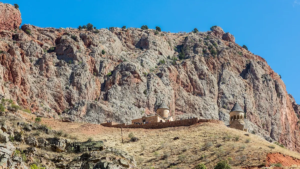
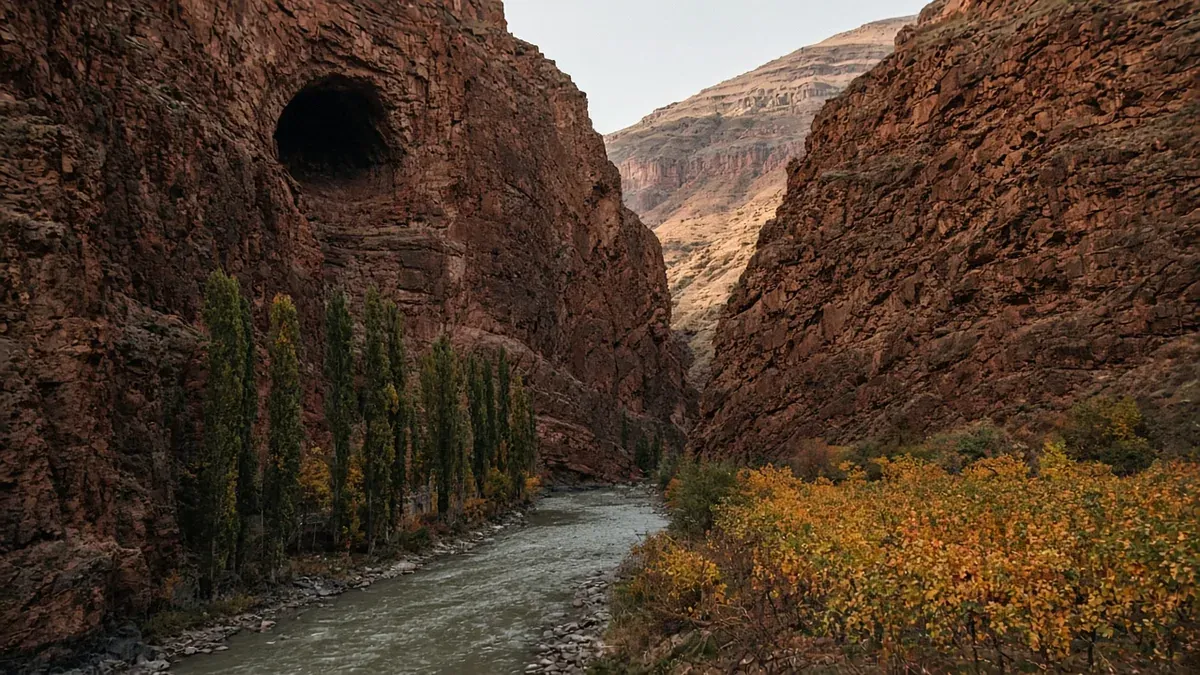
The cave sits in a canyon just outside the village. UCLA describes the spot as a place where the Lesser Caucasus mountains approach the northern end of the Zagros, near Armenia’s border with Iran. The dry air inside preserved things that rot almost everywhere else.
The excavation began after a find in 2007 of what looked like ancient grape seeds. Gregory Areshian and Boris Gasparyan led the dig. Over the next seasons the team turned up both of the discoveries that made Areni famous.
The Oldest Leather Shoe
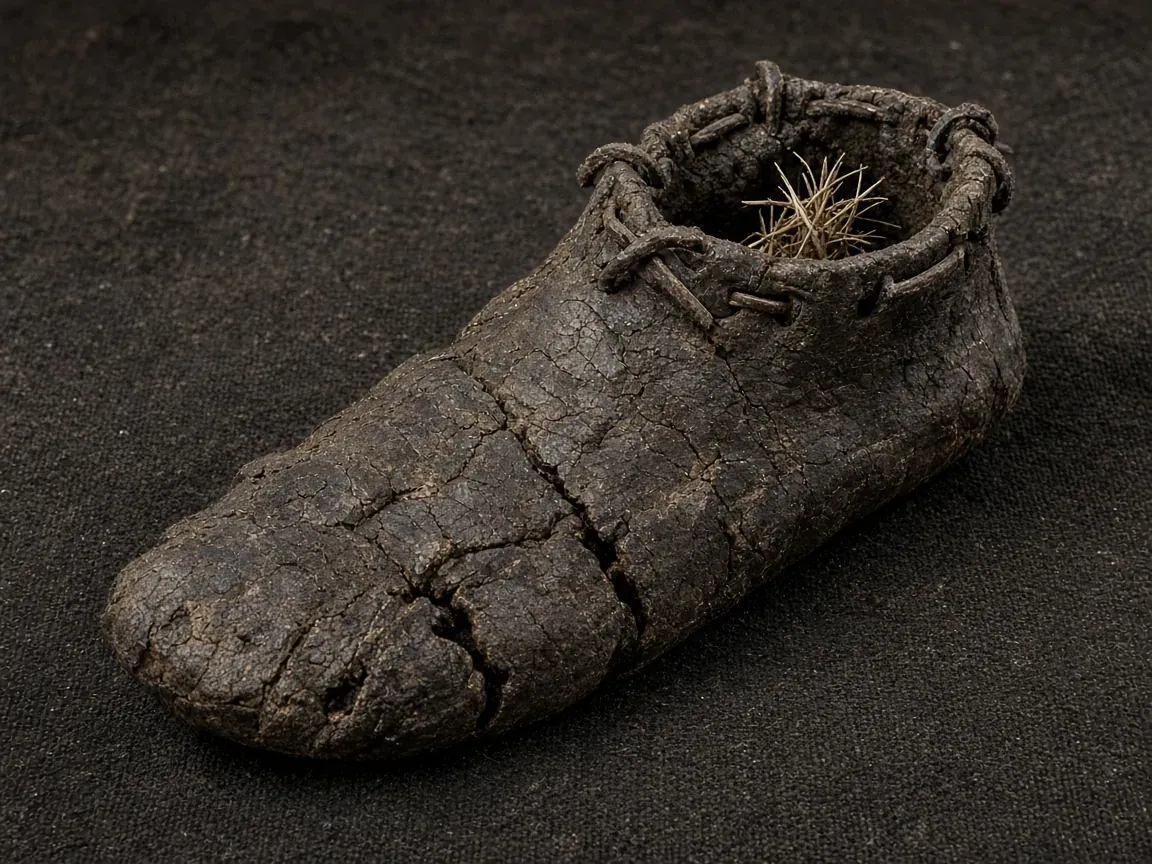
In 2008 the team recovered a complete shoe at the base of a Copper Age pit. Ron Pinhasi and colleagues published it in PLOS ONE in 2010. Laboratories at Oxford and the University of California, Irvine dated three leather samples to 3627–3377 BC.
The shoe is 24.5 cm long, about a European size 37. Its maker cut it from a single piece of leather that wrapped around the foot. In fact, it still holds the shape of its wearer’s right foot, worn at the heel and the big toe.
Someone had stuffed the shoe with loose grass. The authors think the grass kept its shape, or prepared it for storage. Then they dated the grass too, and it matched the leather.
You may have read about other ancient shoes. The authors set this one beside shoes from the Italian and Swiss Alps and sandals from southern Israel, all from the same 4th millennium BC. So they argue that people already wore more than one kind of footwear then, and that more regional styles will turn up wherever the ground preserves them.
The Areni shoe is about 5,500 years old, and it was still stuffed with grass when it came out of the ground.
The Oldest Winery
In January 2011 a UCLA-led team announced what it called the oldest relatively complete wine production facility yet found. Radiocarbon dates from Irvine and Oxford put it at 4100 to 4000 BC, in the Late Chalcolithic, or Copper Age.
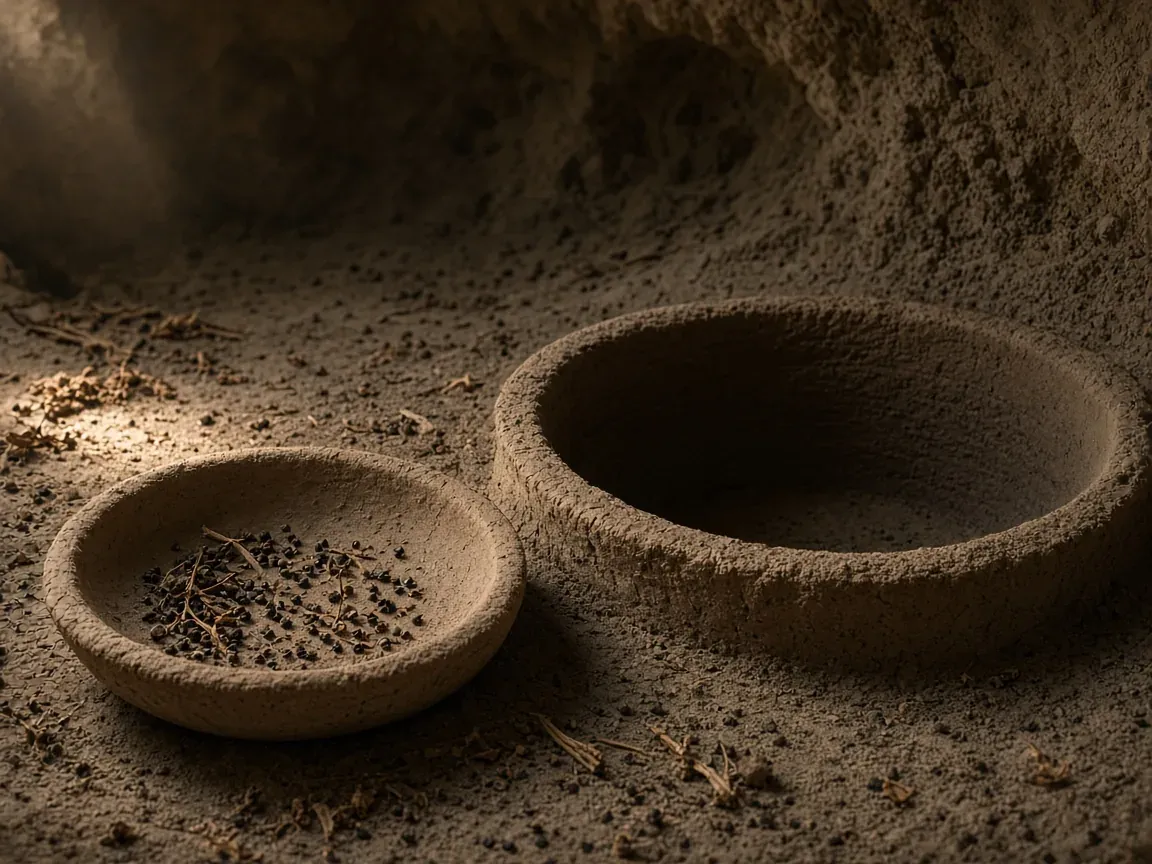
The team found a shallow basin of pressed clay, about 3 by 3.5 feet. Its thick rim held the juice and drained it into a deep vat. Grape seeds, pressed grapes and dozens of dried vines lay all around it.
The vat stood just over two feet high and would have held 14 to 15 gallons. Chemists at UCLA found malvidin on the potsherds, a pigment of grapes and pomegranates. No pomegranate remains were in the area. As a result, the team concluded the vessels held something made from grape juice, most likely wine.
Paleobotanists from three institutions identified the seeds as Vitis vinifera vinifera, the domesticated grape still used for wine today. Areshian added that presses built the same way were in use across the Mediterranean and the Caucasus as late as the 19th century. So the basin you read about here is a design that lasted almost six thousand years.
There was no tool for crushing the grapes. “People obviously were stomping the grapes with their feet,” Areshian told the UCLA newsroom. The dig also produced a cylindrical drinking cup of animal horn and a complete clay drinking bowl.
How to Visit Areni
The cave’s official site lists its tickets in dram. On 16 November 2026 a visit without a guide cost 1,000 AMD, and a guided visit 1,500 AMD. School-age children, students, soldiers, police and emergency staff pay 200 AMD with a certificate.
The site also sells longer options. A 2,000 AMD ticket adds the Gnishikadzor archaeological complex with a guide, for groups of five or more. A 5,000 AMD ticket adds the Winemaking History Hall and a VR experience. A 10,000 AMD ticket adds a tasting that the site calls educational rather than a conventional session.
The site’s notice of 1 March 2023 gives daily hours of 10:00–19:00 from 1 March to 31 October. However, it does not state winter hours, so check before a visit between November and February. Also, Armenian citizens enter free from 10:00 to 14:00 on the second Saturday and fourth Sunday of each month.
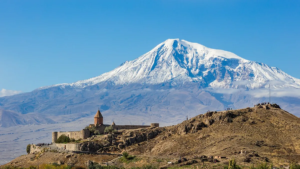
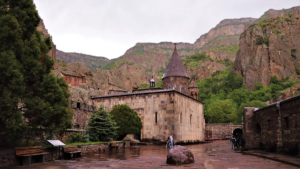
Areni sits on the road south from Yerevan. Many visitors pair the cave with Khor Virap Monastery on the way and Noravank in the gorge nearby. Wear shoes with grip, because the cave floor is uneven and dusty.
The Village and Its Wine Festival
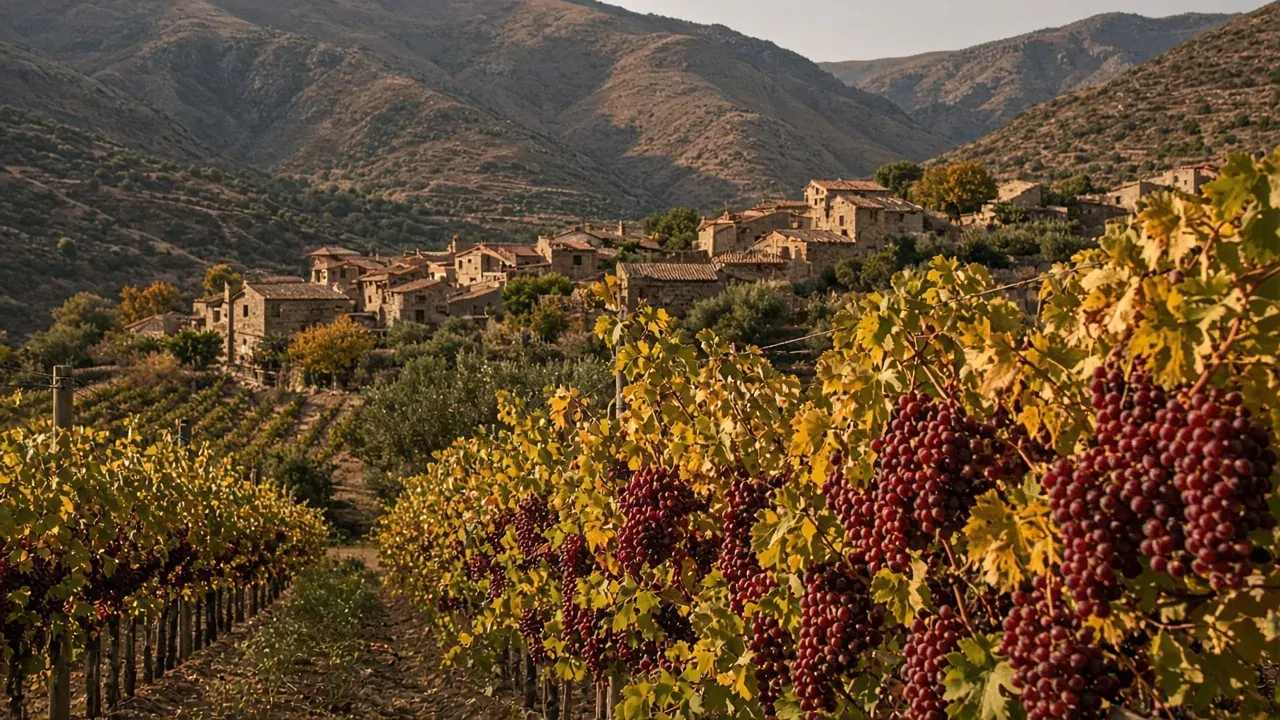
The village is still known for winemaking. Armenia Tourism calls Areni the cradle of Armenian winemaking and says nearly every household makes wine at home. Its festival page says that over the past 15 years the village has added 18 guesthouses and five home restaurants.
The Areni Wine Festival is held there each October. In 2026 it fell on Saturday 3 October, from 11:00 to 20:00, with free entry. Armenia Tourism says the festival aims to introduce the world to Armenia’s 6,100-year winemaking heritage. The wine festival page on this site has more on the day itself.
So, drive south, step into the cave where people pressed wine 6,100 years ago, and then visit Areni’s cellars to taste what the village still makes today.
Questions Visitors Ask
How old is the Areni winery?
About 6,100 years. Radiocarbon dating put the press and vat at 4100–4000 BC.
Can you see the shoe in the cave?
No. The shoe was recovered from the cave in 2008, and today it is shown in the hall “In the Footsteps of Early Man: The Stone Age” at the History Museum of Armenia in Yerevan.
How much is the Areni-1 cave ticket?
1,000 AMD without a guide and 1,500 AMD with a guide, on the official site on 16 November 2026.
Sources
- Pinhasi R. et al., “First Direct Evidence of Chalcolithic Footwear from the Near Eastern Highlands”, PLOS ONE, 2010. pmc.ncbi.nlm.nih.gov
- UCLA Newsroom, “Chemical analysis confirms discovery of oldest wine-making facility”, January 2011, via the UCLA Center for Near Eastern Studies. international.ucla.edu
- Areni-1 Cave, official tickets page, read 16 November 2026. arenicave.am
- Areni-1 Cave, “Changing hours of visiting Areni-1 cave”, 1 March 2023. arenicave.am
- Armenia Tourism, “Areni Wine Festival”, read 16 November 2026. armenia.travel
- Panorama.am, “‘Areni footwear’ undergoes ultrasound examination”, 19 November 2025. panorama.am
More places are on iArmenia.