Last updated: 19 November 2026· Hours and tickets checked November 2026
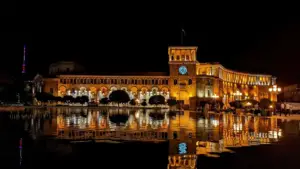
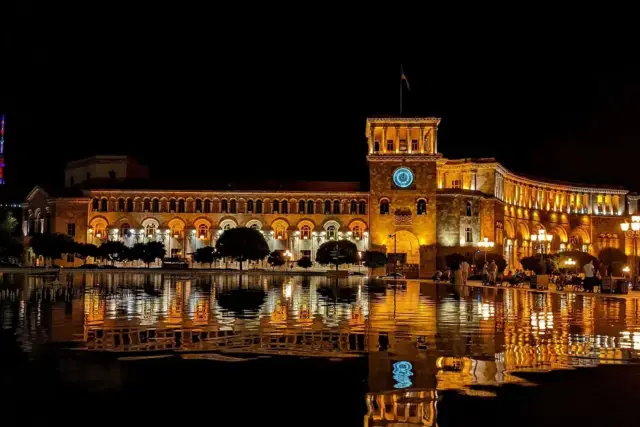
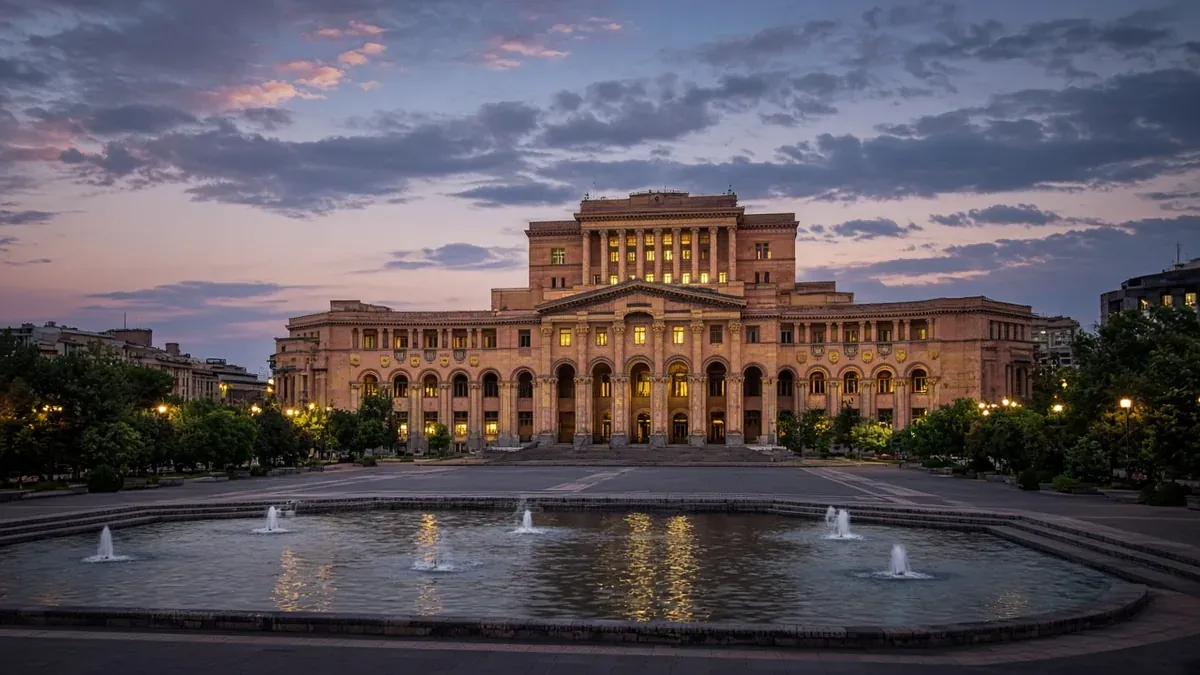
The History Museum of Armenia stands on Republic Square in the very centre of Yerevan. Inside are about 400,000 objects, from stone hand axes to Bronze Age wagons, Urartian bronzes, medieval carving and the coins of two thousand years.
It is the country’s main museum of archaeology and history. If you want to understand what you will see at Garni, Erebuni or a village church, start here, because the whole story is laid out in order, room by room.
Key Facts
- Address: 4 Republic Square, Yerevan
- Founded: 9 September 1919; opened 20 August 1921
- Collection: about 400,000 objects
- Hours: Tuesday to Saturday 11:00–18:00, Sunday 11:00–17:00; closed Mondays
- Ticket: 2,500 AMD; children under 12 free (November 2026)
In this guide · 6 sections
A Museum Older Than the Square
The museum was founded by Law 439 of the parliament of the First Republic of Armenia on 9 September 1919. At first it was called the Ethnographic-Anthropological Museum-Library, and its first director was the ethnographer Yervand Lalayan. It opened to visitors on 20 August 1921.
Its name changed five times after that. It became the State Central Museum in 1922, the Cultural-Historical Museum in 1931 and the Historical Museum in 1935. In 1962 it was the State History Museum, and since 2003 it has been the History Museum of Armenia.
The museum also gave birth to others. In 1935 its art department became the core of today’s National Gallery of Armenia, which received 1,660 objects. Its literature collection, with 1,298 manuscripts, went to what is now the Charents Museum of Literature and Art.
What Is in the Collection
The museum looks after a national collection of about 400,000 objects. According to the museum itself, coins and banknotes make up 45% of it, archaeology 35%, documents 12% and ethnography 8%. The collection still grows from excavations, purchases and gifts.
The galleries run in time order, from the Stone Age to the 15th–18th centuries and on to the 19th century, a section reopened in January 2026. So you can walk through Armenian history in a single visit, one era per hall.
Founded in 1919, opened in 1921, and home to about 400,000 objects – the History Museum of Armenia is the country’s national collection of its own past.
Highlights of the History Museum of Armenia
The Stone Age and the Areni Shoe
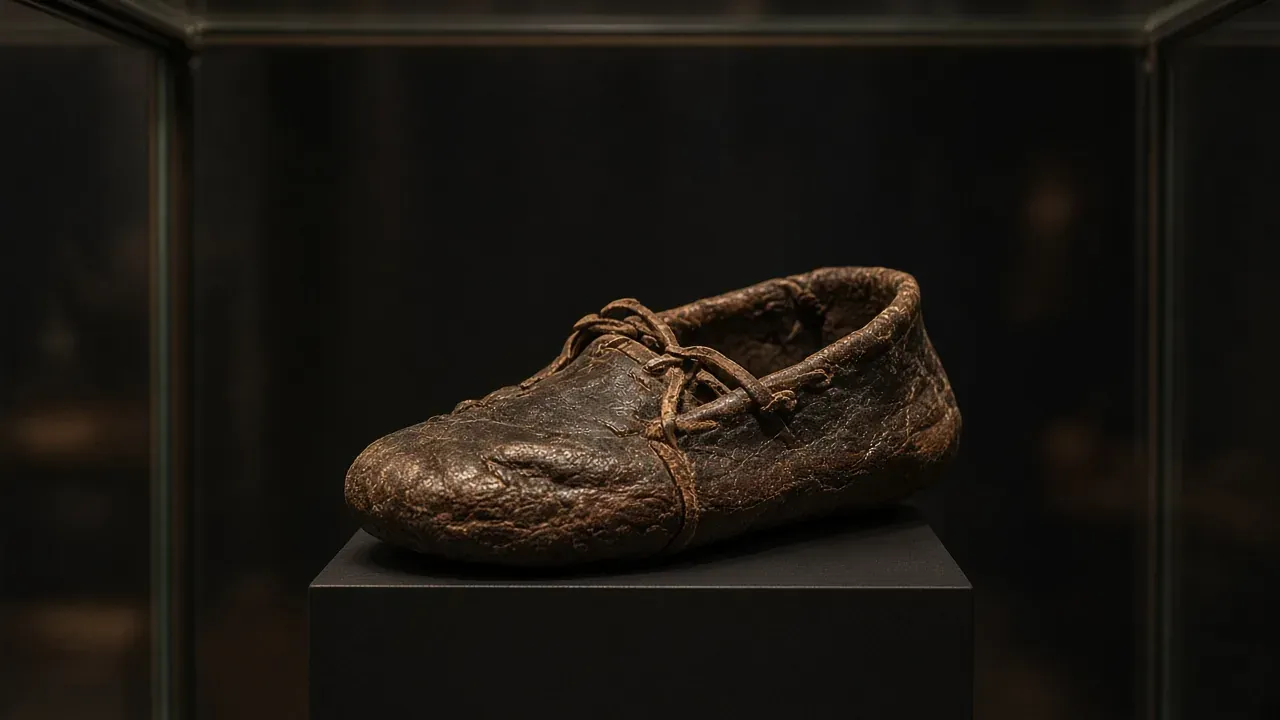
The first halls hold Acheulean hand axes of obsidian and basalt from sites such as Satani Dar. The museum calls them among the best tools of their time in Eurasia. Here, in the hall “In the Footsteps of Early Man: The Stone Age”, is the leather shoe from the Areni-1 cave.
The shoe was found in 2008 and dates to about 3600–3500 BC. Since September 2022 it has been shown in a case built to keep it stable. In November 2025, museum specialists and the University of Halle examined it by ultrasound to plan its care.
Bronze Age Wagons from Lchashen
The Bronze Age and Early Iron Age finds are the largest and most varied part of the archaeology collection. They come from Shengavit, Karashamb, Lori-Berd and above all Lchashen, on the shore of Lake Sevan.
Among them are wooden carts and chariots, ritual hearths, bronze figurines, weapons and jewellery. The museum’s own virtual tour of these finds is called “Lchashen: Submerged Treasury”, and it is a good way to see them before you go.
Urartu and the Kingdom of Van
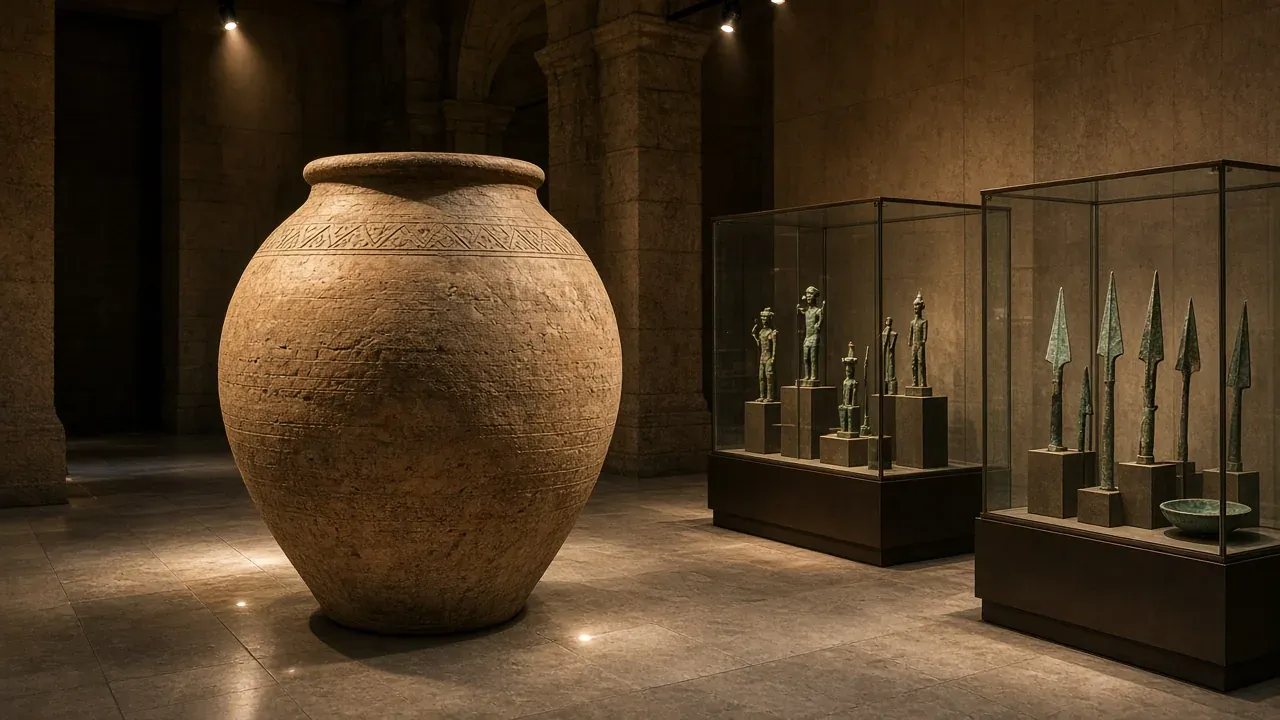
The Urartian halls cover the 9th to the early 6th century BC. Finds from Karmir Blur, Arin Berd and Argishtikhinili include cuneiform inscriptions, bronze weapons with reliefs, gold and silver jewellery and huge storage jars. Some of those jars, called karas, were marked for 800 to 1,200 litres.
Arin Berd is the hill of Erebuni Fortress, so this room is the best preparation for a visit there. After that come the Achaemenid and Hellenistic halls, with finds from Artashat, Armavir and Garni.
Coins of Two Thousand Years
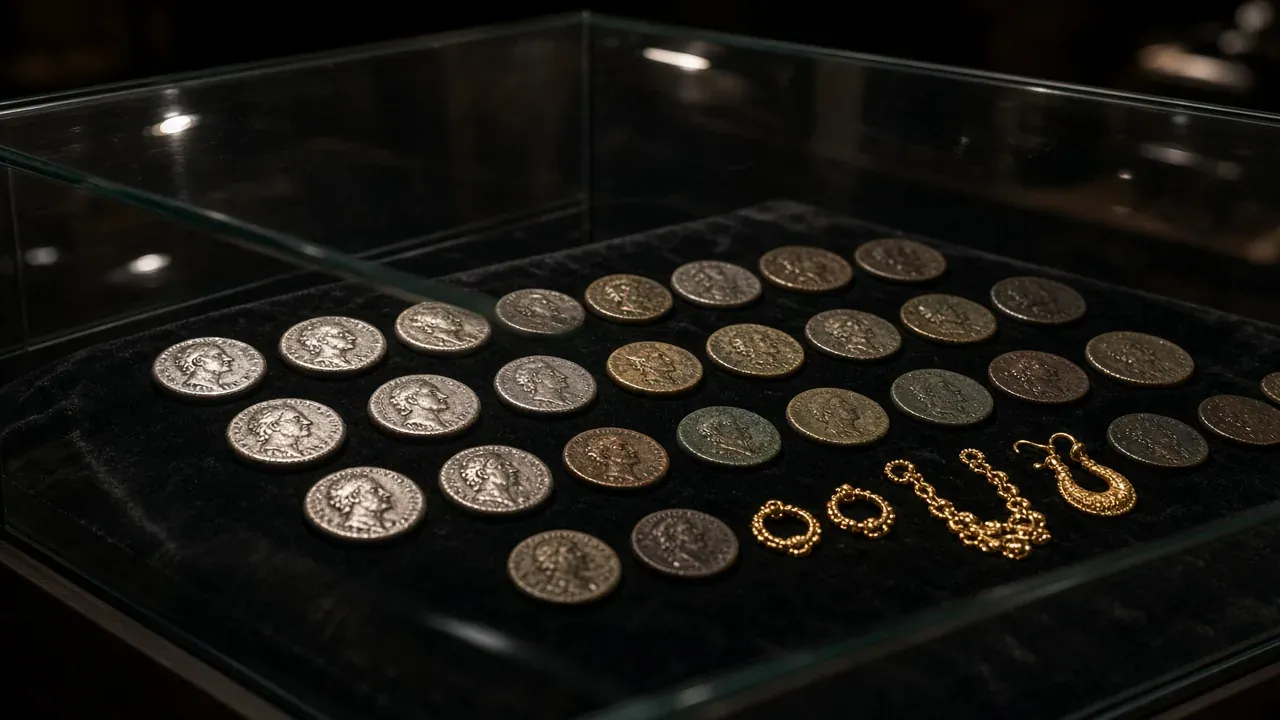
The coin collection runs from the 5th century BC to the 20th century. It holds Greek, Roman, Byzantine, Sasanian, Arab, medieval Armenian and Cilician coins, among many others. In 1926 about 1,700 coins came from the museum at Ani.
Over 1,700 donors from Armenia and the diaspora helped build the national coin collection. Gifts were especially generous in the 1960s to the 1980s. Famous hoards include Hellenistic silver from Sarnakunk, found in 1945, and Byzantine gold from Norashen, found in 1979. The first large sets of banknotes and stamps came in the 1920s, from the State Bank and the Central Post.
Special Exhibitions in 2026
On 21 September 2026, Independence Day, the museum opened “Myths, Cults and Cosmology: Museum Island Berlin at the History Museum of Armenia”. It brings together objects from the six museums of Berlin’s Museum Island and from the museum’s own halls, for the first time in one place.
The exhibition marks 35 years of Armenian independence and 200 years of Museum Island. It has its own ticket, listed below. Earlier this year the museum also added a carved wooden church door panel dated 1188 to its permanent collection.
Hours and Tickets
These are the museum’s own figures, read on its website on 19 November 2026.
- Tuesday to Saturday – 11:00 to 18:00, last entry 17:15
- Sunday – 11:00 to 17:00, last entry 16:15
- Closed – Mondays, national holidays and memorial days; one hour earlier on the day before a holiday
- Permanent exhibition – 2,500 AMD
- Berlin Museum Island exhibition – 4,000 AMD
- Guided tour – 5,000 AMD in English, Russian or French; 4,000 AMD in Armenian
- Children under 12 – free
Tickets can be bought online, and a ticket without a guide stays valid for 180 days from purchase. Half-price tickets are for Armenian students, pensioners and schoolchildren over 12.
Tips for Your Visit
Allow at least two hours, because the halls are many and the story is long. The National Gallery of Armenia is on the same square [CHECK], so you can see both in one day. Republic Square metro station is a short walk away.
Come on a weekday morning for quiet halls, and book a guide if you want the story behind the objects. Afterwards, the Matenadaran is a natural next stop for medieval manuscripts, and the walk up to it shows you the centre of Yerevan.
Questions Visitors Ask
Where is the History Museum of Armenia?
At 4 Republic Square in central Yerevan, a short walk from Republic Square metro station.
How much is a ticket?
2,500 AMD for the permanent exhibition and 4,000 AMD for the Berlin Museum Island exhibition (November 2026). Children under 12 enter free.
Is the museum open on Mondays?
No. It is open Tuesday to Sunday and closed on Mondays, national holidays and memorial days.
Sources
- History Museum of Armenia, “History and Mission”, read 19 November 2026. historymuseum.am
- History Museum of Armenia, “Hours and Admission”, read 19 November 2026. historymuseum.am
- History Museum of Armenia, “Archaeological collection” and “Numismatic collection”, read 19 November 2026. historymuseum.am
- History Museum of Armenia, exhibitions list and “Myths, Cults and Cosmology” announcement, read 19 November 2026. historymuseum.am
- Public Radio of Armenia, “5,500-year-old leather shoe to be displayed in Yerevan”, 7 September 2022. armradio.am
- Panorama.am, “‘Areni footwear’ undergoes ultrasound examination”, 19 November 2025. panorama.am
- Wikidata, History Museum of Armenia (Q1138228): coordinates. wikidata.org
More museums and sights are on iArmenia.