Last updated: November 2026
Armenian Easter, or Surb Zatik (“Holy Easter”), is the feast of Christ’s Resurrection and one of the most joyful days of the Armenian year. It is a moveable feast, so its date changes every year. In 2027 Armenian Easter falls on Sunday 28 March.
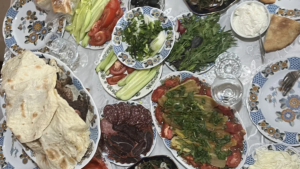
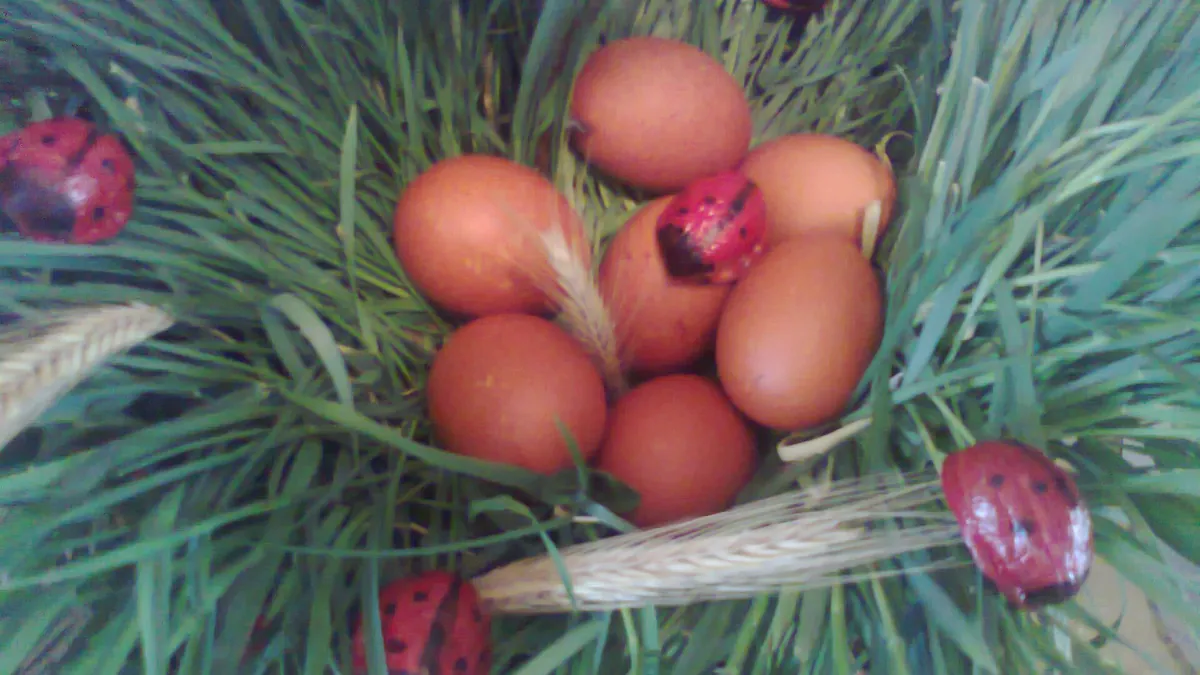
Armenia adopted Christianity as its state religion in 301, and the Armenian Apostolic Church still keeps the ancient Easter rites. At home, Easter means red eggs, egg fights, green wheat sprouts and a festive table of fish and rice with raisins.
Key Facts
- Easter 2027: Sunday 28 March; Easter Eve service on Saturday 27 March
- Rule: the first Sunday after the spring full moon, the same day as Western Easter
- Type: one of the five great feasts of the Armenian Apostolic Church
- Day off? Easter is a Sunday; Easter Monday is not an official non-working day (as of November 2026)
- Greeting: “Kristos haryav i merelots!” (“Christ is risen from the dead!”)
- Festive food: red eggs, rice with raisins, fish, red wine, chorek
In this guide · 6 sections
When Is Armenian Easter?
Armenian Easter is celebrated on the first Sunday after the full moon that follows the spring equinox. As a result, it always falls in late March or April. In Armenia and most dioceses, it coincides with Catholic and Protestant Easter.
| Year | Armenian Easter | Palm Sunday |
|---|---|---|
| 2026 | 5 April | 29 March |
| 2027 | 28 March | 21 March |
| 2028 | 16 April | 9 April |
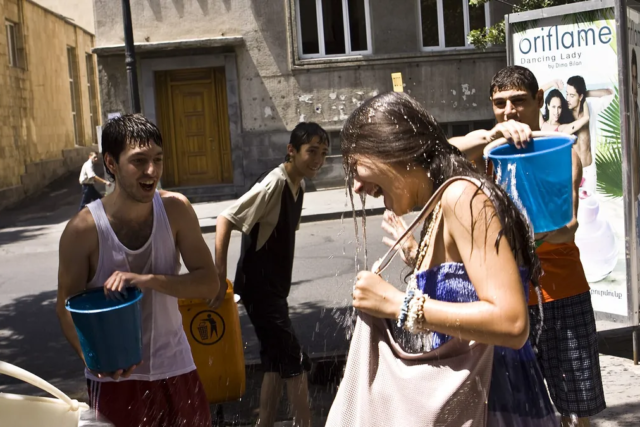
Other feasts move with Easter. For example, Vardavar comes 98 days later, on 4 July in 2027.
Origins of Armenian Easter
The Feast of the Resurrection
Easter celebrates the day Christ rose from the dead, three days after his crucifixion. For the Armenian Church, it is one of the five great feasts, called taghavar (“tabernacle”) feasts:
- Christmas and Theophany – 6 January
- Easter – the Resurrection of Christ
- Vardavar – the Transfiguration
- Assumption of the Holy Mother of God – with the blessing of grapes
- Khachverats – the Exaltation of the Holy Cross
Why Easter Is Called Zatik
The Armenian word zatik is usually traced to the verb zatel, “to separate”. At first it named both the Jewish Passover and the Christian Easter. Some linguists propose other origins. Interestingly, zatik is also the Armenian name of the ladybird. In English, too, the “lady” in its name is the Virgin Mary.
Holy Week and Easter Eve
Great Lent
Before Easter, believers keep a forty-day fast to purify body and spirit, just as Christ fasted in the desert. In 2027, Great Lent begins on Monday 8 February, the day after Barekendan, the last day of feasting before the fast.
Palm Sunday
One week before Easter comes Tsaghkazard, Palm Sunday. Churches hand out blessed willow branches, and children often wear willow wreaths. In 2027 it falls on 21 March.
Holy Thursday and Good Friday
On Holy Thursday the priest washes the feet of twelve worshippers, as Christ did at the Last Supper. That night comes Khavarum (“darkness”), a vigil of laments in which candles are put out one pair at a time. On Good Friday a flower-covered tomb is carried through the church.
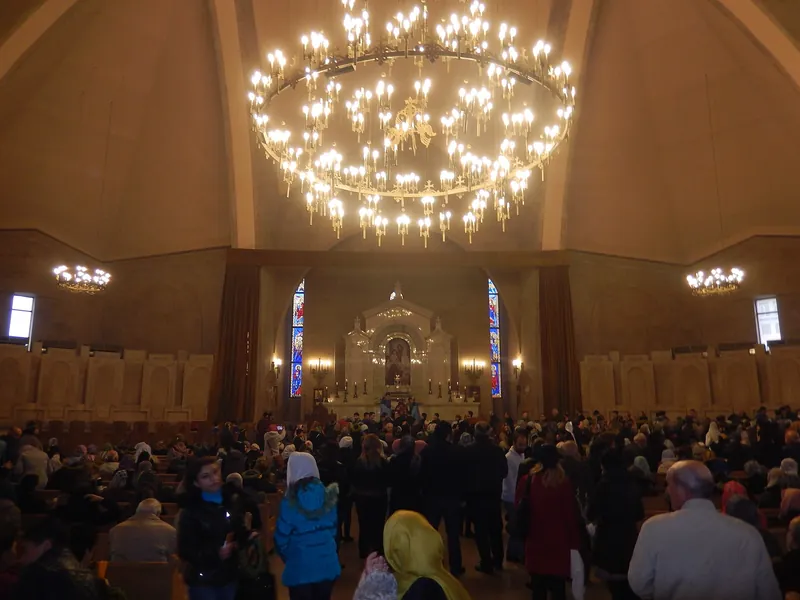
Holy Saturday: Jrakaluyts
On Saturday evening the church stays dark until the reading from Isaiah: “Arise, shine; for your light has come.” Then the lights go on and the candle-lighting service, Jrakaluyts, begins. After the Easter Eve liturgy, worshippers greet each other with the news of the Resurrection.
Armenian Easter Traditions
The Easter Greeting
On Easter you greet people with “Kristos haryav i merelots!” (Քրիստոս հարյավ ի մեռելոց, “Christ is risen from the dead!”). The reply is “Orhnyal e Harutyuny Kristosi!” (Օրհնյալ է հարությունը Քրիստոսի, “Blessed is the Resurrection of Christ!”).
Red Eggs and Egg Fights
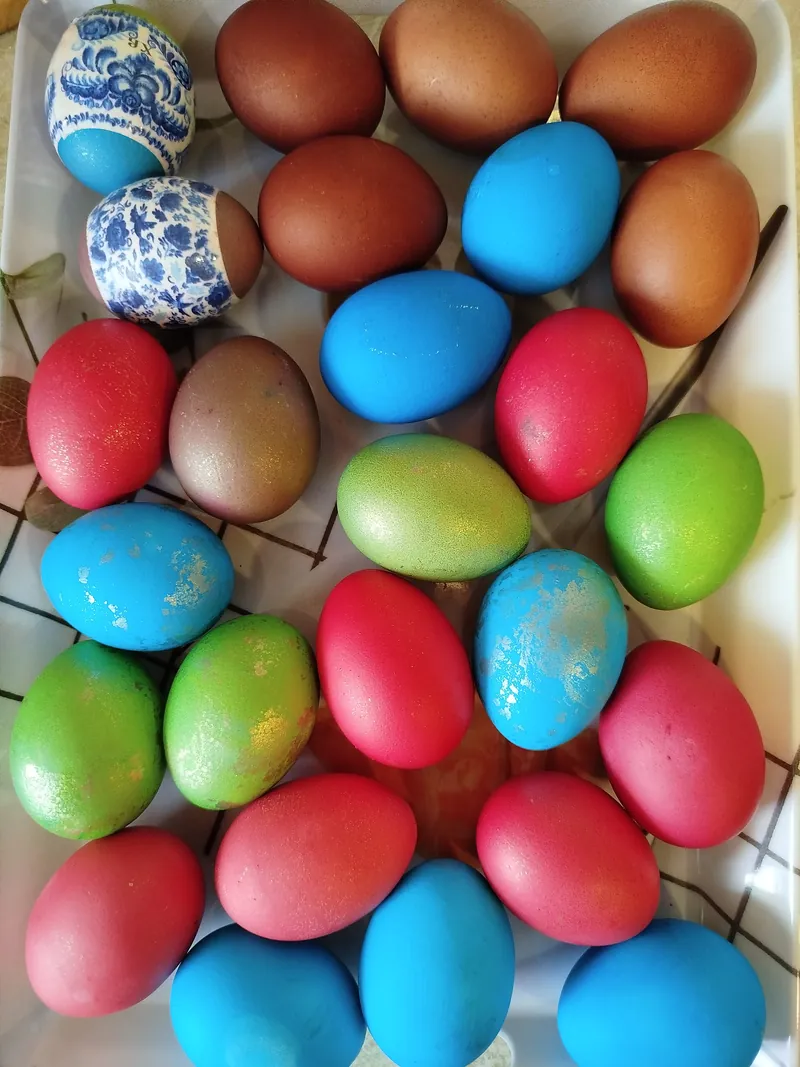
Armenians dye Easter eggs red, the colour of Christ’s blood. The traditional dye is onion skins: you boil the skins until the water turns red, then add the eggs. Eggs coloured this way go perfectly with lavash and fresh tarragon.
Then comes the egg fight. Two players tap their hard-boiled eggs together, and the one whose egg cracks loses it to the winner. Children love this game, and some keep their strongest egg for days.
The red egg stands for Christ’s blood, and its shell for his tomb: cracking it means victory over death.
Wheat Sprouts
During Lent, many families sprout wheat or lentils on a tray. By Easter the seeds look like a tray of green grass, a symbol of new life. On Easter day the red eggs are laid on it. Some people also take their sprouted wheat to church to be blessed.
The Easter Table
Every dish on the Easter table has a meaning:
- Rice with raisins – rice stands for humanity and raisins for Christians. Some cooks add just 12 raisins, for the twelve apostles.
- Ishkhan – the Sevan trout, served baked or grilled.
- Red wine – a symbol of Christ’s blood.
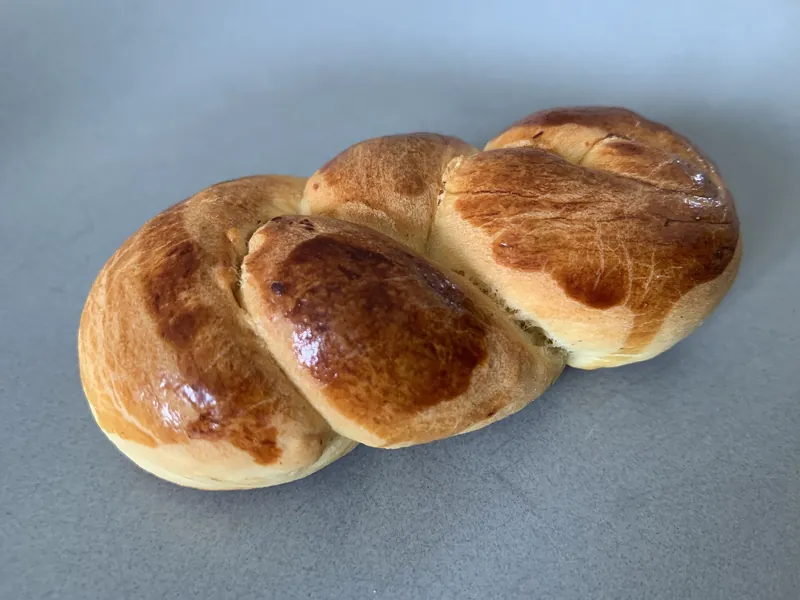
- Chorek – a soft, sweet Easter bread, baked once a year.
Merelots: The Day After Easter
The Monday after Easter is Merelots, the Day of Remembrance of the Dead. After the morning liturgy, a requiem service is held. Then families visit cemeteries with the priest to bless the graves of their relatives. In 2027 Merelots falls on 29 March.
Armenia’s holidays law, as amended in July 2026, names the days after the five taghavar feasts as Merelots days. However, it does not make them non-working days, and calendars show 29 March 2027 as a normal working day. The government can still declare an extra day off, as it has done for Easter Monday in some years. So check the calendar closer to the date.
How Armenians Celebrate Easter Today
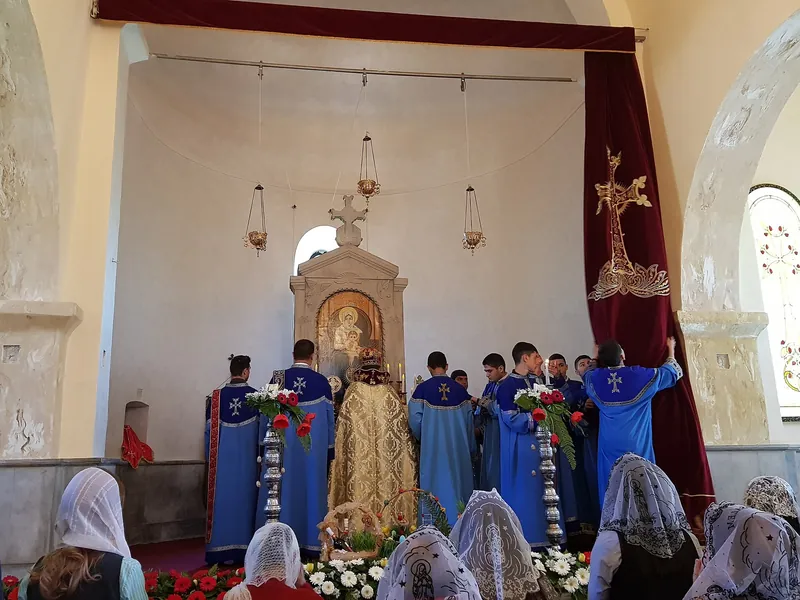
The main services are held at the Mother See of Holy Etchmiadzin, led by the Catholicos of All Armenians. In Yerevan, Saint Gregory the Illuminator Cathedral fills up for the Easter Eve liturgy. Visitors are welcome; dress modestly and arrive early.
After church, families sit down to the Easter meal and visit relatives. The forty days after Easter have no fasts. They lead to Ascension Day, Hambardzum, on 6 May 2027.
So if you are in Armenia at Easter, go to the candle-lit Easter Eve service, try an egg fight and taste rice with raisins. Don’t forget to answer “Orhnyal e Harutyuny Kristosi!”
Questions Visitors Ask
When is Armenian Easter in 2027?
On Sunday 28 March 2027, with the Easter Eve service on 27 March and Merelots on Monday 29 March.
Is Armenian Easter on the same day as Orthodox Easter?
Not usually. The Armenian Church in Armenia uses the Gregorian calendar, so Easter falls with Western Easter. The Armenian Patriarchate of Jerusalem keeps the Julian calendar.
Is Easter Monday a public holiday in Armenia?
No. It is not among the 13 non-working days in the holidays law (as amended in July 2026). The government can still declare a one-off day off. See all Armenian holidays.
Sources
- Easter and Holy Week, Diocese of the Armenian Church of America (Eastern)
- How Armenians celebrate Easter, Armenian Prelacy (April 2026)
- Church calendar, March 2027, Armenian Apostolic Church of Holy Resurrection, Sydney
- How do Armenians celebrate Easter?, Armenia Discovery
- Holidays and memorial days, Yerevan Municipality
- Law on Holidays and Memorial Days of the Republic of Armenia (HO-200), current text as amended by HO-345-N of 3 July 2026, in force 24 July 2026, ARLIS legal database (Armenian)
- Public holidays in Armenia, Wikipedia (law’s list of non-working days; day swaps)
- The Armenian word for Easter, Armenian Prelacy
- զատիկ (zatik), etymology, Kaikki.org (Wiktionary data)
- Feast days, Armenian Prelacy (the five major feasts)
- Tabernacle feasts, St. Sarkis Armenian Church
- Easter, Holy Resurrection Day, Intangible Cultural Heritage of the Republic of Armenia
- Days of the Dead – Merelots, St. John Armenian Church
- List of dates for Easter, Wikipedia (Gregorian Easter 2028)
- Easter Monday in Armenia, Office Holidays
Discover more Armenian holidays, food and traditions on iArmenia.